


By Kian Chadegani
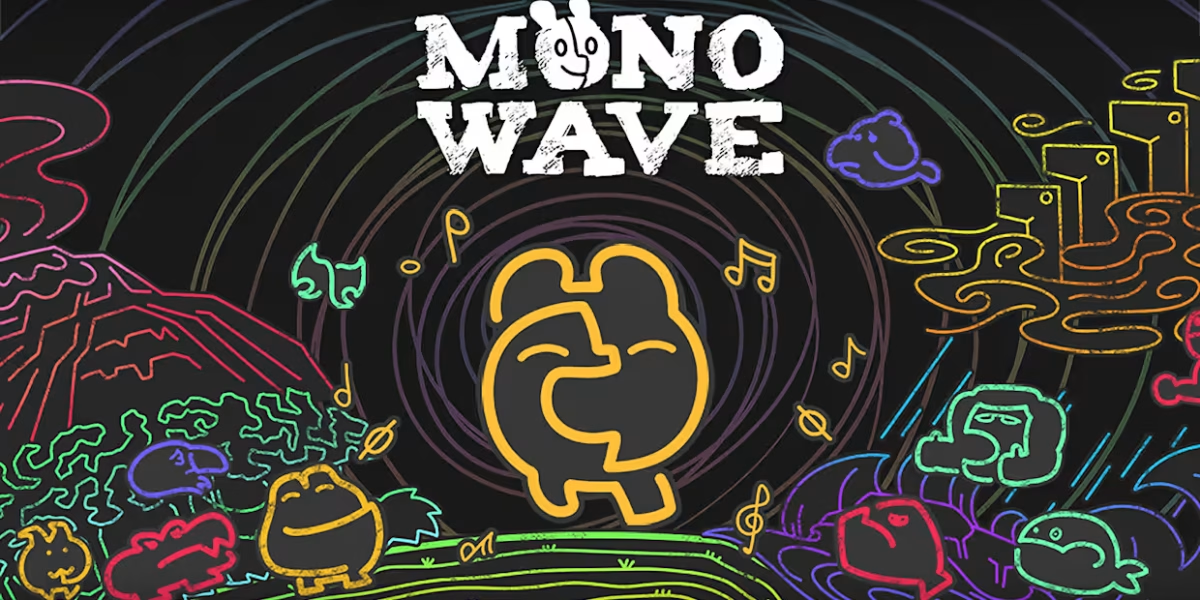
MONOWAVE takes its personality from a minimalist approach to color and visual design, yet what is first an attractive creative choice ultimately becomes the main constraint of the game. But the more the experience unfolds, the more that simplicity seems to work against it, and the question becomes: is there enough to make MONOWAVE’s intriguing premise truly memorable?
More Than Just a Splash of Color
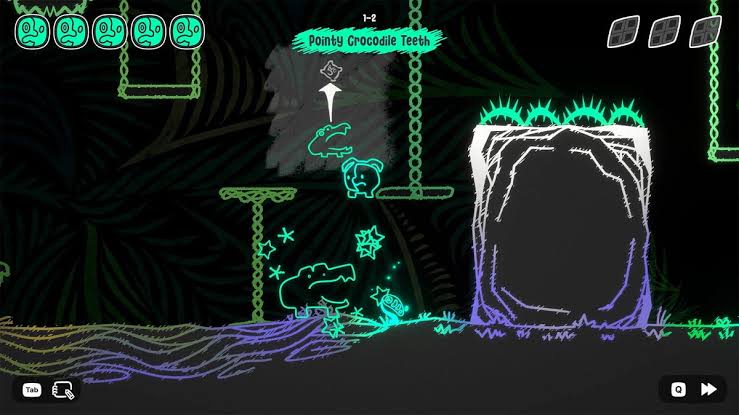
MONOWAVE has a very innovative approach to color, going beyond visual display. Rather than merely using colors for visual appeal, the game weaves them into the very fabric of the design, with each color possessing a unique skill or trait. This makes color a key element of the experience, rather than just a method to make environments look better, creating a direct link between what players see and how they interact with the world.
This technique has a lot of possibilities in terms of how colors can express emotions, differentiate elements, and create an intuitive visual language. This game ties look to function so players can learn some of the mechanics by watching rather than reading long descriptions. This is especially helpful for younger viewers, who might be more familiar with visual clues than with more complicated instructions.
The approach also provides some opportunities for MONOWAVE as an educational experience. The simple layout and emphasis on finding and interpreting colors could give children a user-friendly introduction to some visual concepts. That doesn’t mean it’s a completely realized instructional tool, but it does mean that the game’s core concept has uses beyond amusement.
Color is not a stylistic option; it is the language of the game itself to its players at the core of MONOWAVE.
Smooth Gameplay, but Not Enough Depth
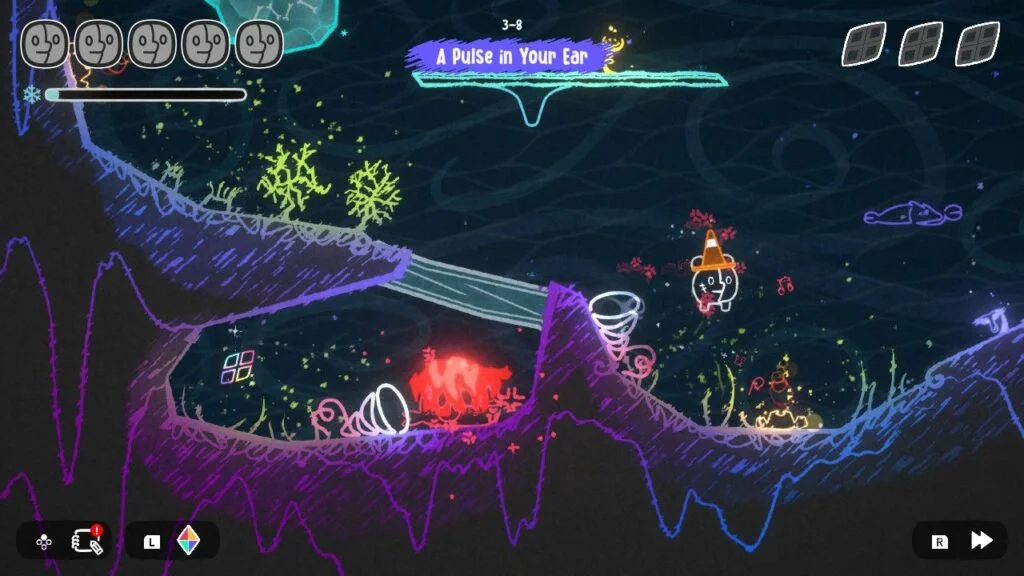
MONOWAVE is meant to be a simple and approachable game where the extra complexity doesn’t get in the way of the primary gameplay. At first this simplicity works in the game’s favor. Getting into it isn’t hard, and there isn’t a lot standing between players and understanding how everything works so they can feel familiar with its core concepts.
The difficulty is that this accessibility comes at the cost of genuine depth. Complexity is not always a weakness in game design. Many of the most popular games have made incredibly compelling experiences out of just a few elements. What separates good minimalism from naively simple design however is the extent to which a game can pull off with those restricted resources.
But if players learn too much about the game too early, the initial excitement can swiftly die down. Unfortunately, this is the point where MONOWAVE fails. Once you understand its essential mechanics, there is little possibility for the experience to grow or bring in truly new ideas. The gameplay remains serviceable and easy to grasp, but it seldom expands upon its foundations in ways that invite more interaction.
The bottom line isn’t that MONOWAVE is badly played, it’s because the gameplay doesn’t change with time. It starts as an accessible and appealing experience, but slowly reveals a lack of substance that makes it harder and harder to stay engaged.
A Promising Idea That Never Reaches Its Potential
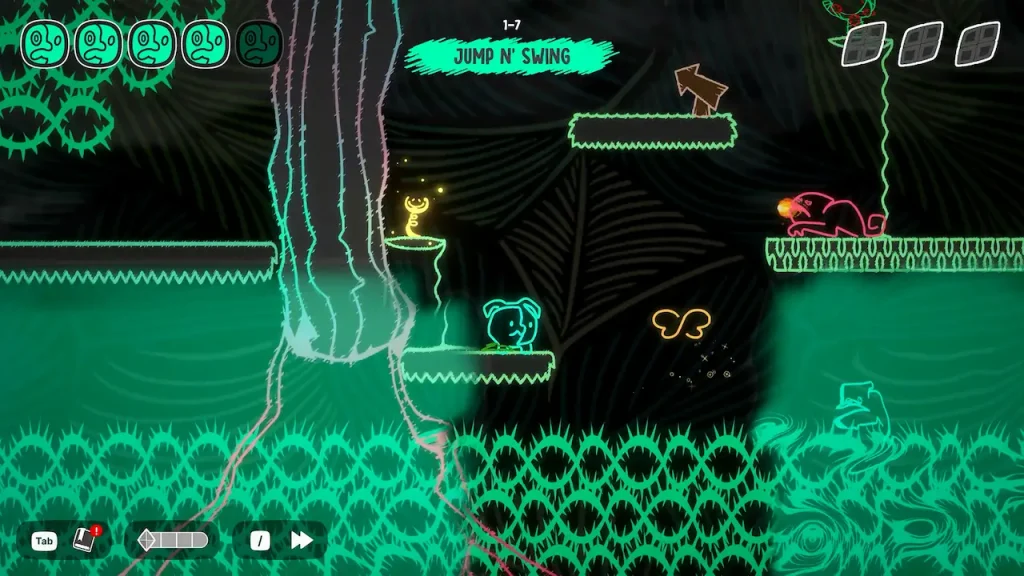
The trouble with MONOWAVE goes deeper than its repetitious gameplay. Overall, the idea of constructing mechanics based on multiple colors which are all tied to a specific talent or attribute is an interesting notion with lots of potential for exploration. Unfortunately, the game seldom explores that idea beyond its most basic manifestation.
Instead than inviting players to discover how these many aspects might combine, MONOWAVE mostly sticks with the same pattern set early on. Much of the interest is in figuring out how the color mechanics work in the first place. Once the initial intrigue wears off, however, there’s little to keep players engaged.
This also influences the game’s tempo. What originally makes MONOWAVE accessible becomes a constraint. The mechanics are simple to learn, but without meaningful modifications and fresh ways to use them, the experience has trouble carrying its momentum. Soon enough you get the sense that you’ve seen much of what the game has to offer.
And that’s where the true disappointment comes in. It’s not that MONOWAVE needs more content, it needs to do more with the content it has. Its color-based features may have led to more varied obstacles and interesting interactions, but the game never really digs into those opportunities enough.
An Unclear Audience and a Struggle to Keep Players Engaged
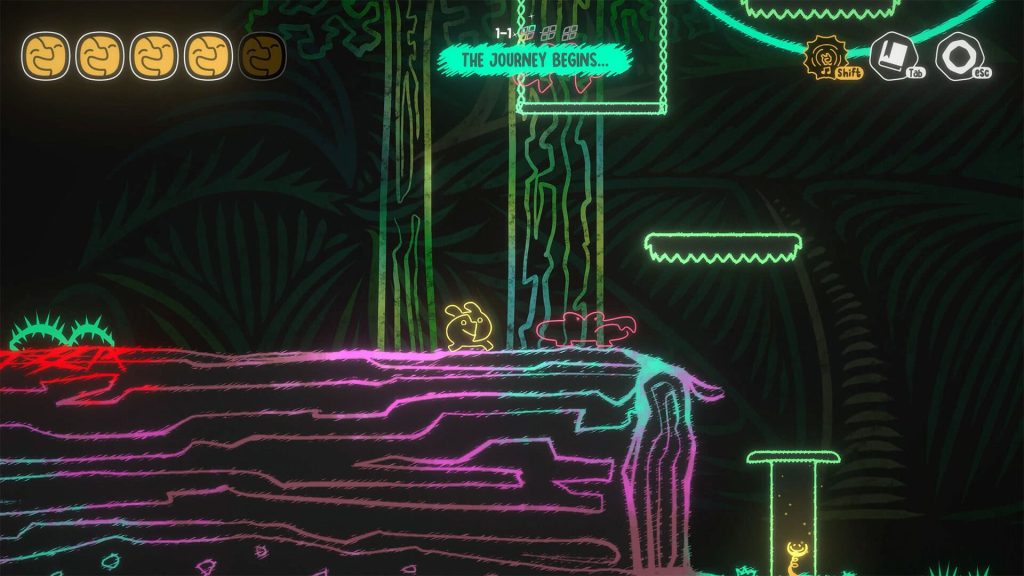
Another problem with MONOWAVE is that it never really decides who it is aiming to appeal to. While its simple mechanics and colorful presentation appear well suited to a younger audience, this same simplicity is unlikely to cut it with the grown-ups or anyone searching for a more comprehensive gameplay experience.
This leaves MONOWAVE in an embarrassing situation. There’s enough accessibility here to cater to a broad spectrum of gamers, but not enough compelling incentive for any one group to stick around.
What’s crucial here is not making a game easy to learn but making it worth playing for hours. Accessibility gets players in an experience, but not necessarily a reason to stay in it. MONOWAVE does a decent job with the former, but has a hard time with the latter.
If it was meant to be a simple experience for kids to learn from, the minimalism would be more understandable, and could even be one of its merits. But lacking a concept of its target audience, MONOWAVE appears torn between multiple aspirations. It never fully commits to any of these, making it hard for the game to carve out a strong identity or to develop up a lasting connection with any one group of players.
Visuals – Simplicity That Serves a Purpose
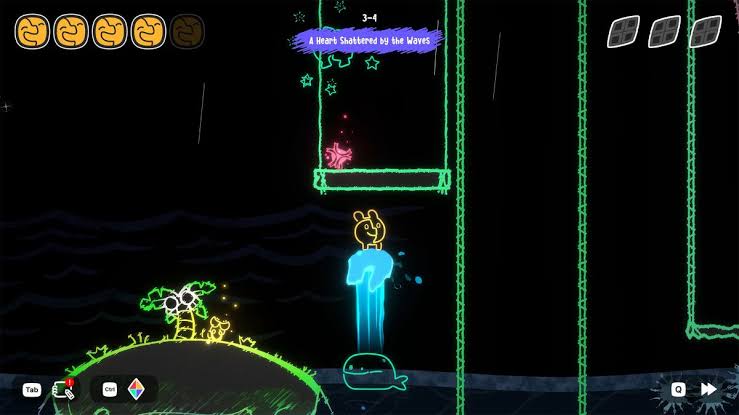
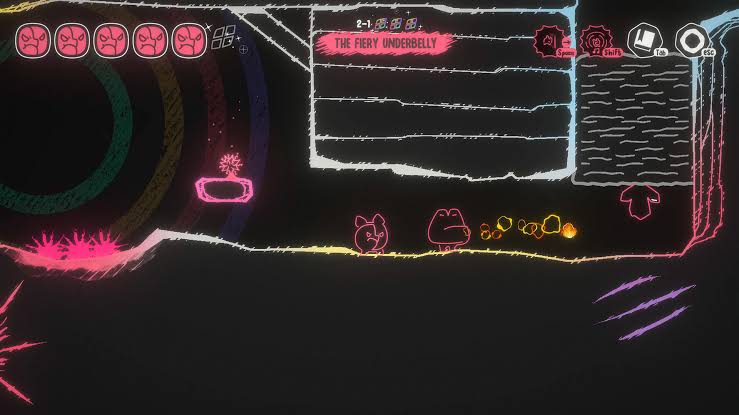
Visually MONOWAVE is not intended to wow with technical intricacy. Instead, its biggest strength is how it exploits color as an integral aspect of the experience. The visual design is not just good-looking but also functional, as different colors are associated with various gameplay mechanics. Therefore, it is crucial that the player can see what these colors are, and comprehend what they mean in relation to the powers given to them.
This blends well with MONOWAVE’s minimalistic style. It is also potentially attractive to younger audiences because of the different colors it uses, which can express ideas more instantaneously than detailed instructions.
But a good graphic concept will only take a game so far. Art direction is at its best when coupled with equally interesting mechanics, resulting in an experience where presentation and gameplay complete each other. Color lends MONOWAVE much of its personality, but the shallow mechanics of the game don’t let that visual identity achieve its full potential.
Technical Performance – A Better Fit for Nintendo Switch
One thing MONOWAVE does deserve praise for is its accessibility on lower-end technology. The game is easy to run and doesn’t require an expensive system, so it can be played by many people.
This technical efficiency is also consistent with the simple design of the game. There are minimal performance-related impediments along the way, so gamers can focus on the experience itself, instead of worrying about hardware restrictions or technological distractions.
The game is far more comfortable on Nintendo’s portable platform, where its simple mechanics and accessible presentation are more appropriate to shorter, more informal play periods.
Indeed, the Switch edition speaks volumes for a demographic the game’s design never quite seems to properly accommodate. MONOWAVE does not have a clear destination, but it could be a natural fit for younger gamers, particularly kids who would like its colorful look and simple gameplay.
Final Verdict
MONOWAVE is an interesting concept, with colors being more than a decorative element, being tied directly to gaming abilities. The game runs smoothly, requires little hardware and has very approachable principles, which could make for a nice experience for a younger audience, with some possibility for instructional usage as well.
That initial charm is gradually dulled however by the repetitive nature and sometimes over-reliance on the same powers, poor pacing and minimal mechanical depth. Once you get your head around the fundamental systems, there’s not much else to explore.
This review is based on the PC version
Score: 45/100

Other Articles

Cozy on the Surface, Clever Underneath | Spiritstead Review