


Have you ever eaten a dish made from several completely different foods, only to realize that somehow, against all odds, it actually tastes incredible? It sounds strange in theory, yet that’s exactly the feeling Craftlings gave me.
On the surface, the game looks like a fairly straightforward 2D strategy title—but that description barely scratches the surface. In practice, Craftlings blends together automation systems, production lines, city-building, resource management, combat, and even light puzzle-solving mechanics into a surprisingly cohesive experience.
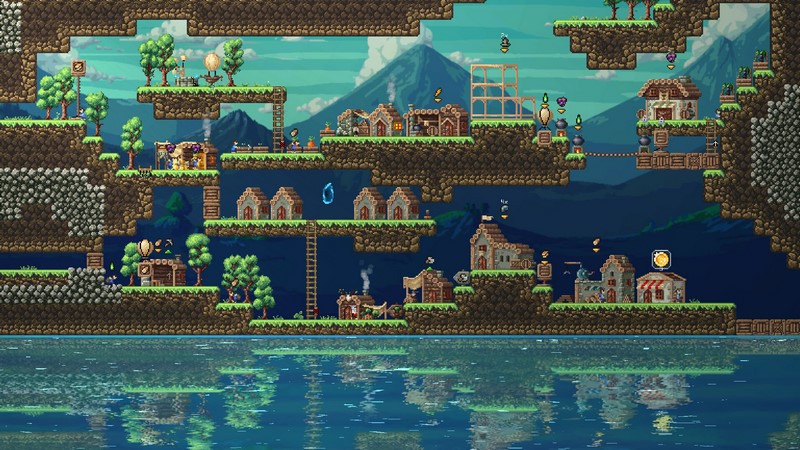
At first glance, it’s natural to wonder how a game can juggle so many different systems without collapsing under its own weight. But Craftlings solves this elegantly: each stage presents you with a clear objective, then hands you a collection of tools and limitations before asking you to figure out the solution on your own.
Throughout the game, you’ll gather resources, construct buildings, fight enemies, and clear obstacles in order to eventually complete each mission’s goal. This structure gives the experience a subtle survival-game flavor as well—where the end condition is always clear from the beginning, but the path toward reaching it is entirely shaped by the player.
And that’s ultimately where Craftlings succeeds most. The game rarely feels restrictive. Instead of forcing a single solution onto you, it constantly encourages experimentation, allowing your own decisions and priorities to shape the journey forward.
Gameplay
The moment you step into Craftlings, it becomes immediately clear that you’re dealing with a management and automation game. But from the very beginning, the game introduces subtle differences that separate it from others in the genre. At first, these differences can feel a little disorienting, especially during the opening hours. Yet once you’re given room to experiment and fail, the logic behind the design slowly starts to reveal itself—and that’s exactly where the game’s real charm begins to emerge.
Unlike many titles in this genre, where the primary focus revolves around optimizing production lines and maximizing resource efficiency, Craftlings is far more interested in problem-solving. Your objective isn’t necessarily to create the most efficient system imaginable, but rather to discover the fastest—or simply the most effective—way to complete a stage, even if the solution itself is wildly inefficient. As long as your method gets the job done, the game is usually willing to accept it.
Craftlings gives players a variety of tools to enable this freedom. You will control workers with predictable behavior, but these routines can be altered and customized to different objectives based on your strategy. The building system also lets you create structures that improve production, make gathering resources more efficient, or give you easier access to important items and objectives.
They all ultimately feed into the same core idea: you can get to the end of a level any way you want to do it.
Level Design and Puzzle-Like Structure
One of the most familiar problems with games like this is the staggering scale of their goals. “Goals are often set too far apart so that progress feels slow, draining and like too much of a burden. Craftlings, however, surprisingly does a good job of avoiding this pitfall, by breaking its experience up into smaller, more contained scenarios, each with their own unique identity and rhythm.
This design choice makes the game far more accessible, even to players who normally find it difficult to get into strategy games because of their intimidating scale. Craftlings always offers a satisfying sense of momentum and accomplishment, so progress never feels intangible.
More than that, despite all the genre names thrown at it, the experience feels much more like solving a puzzle than playing a typical strategy game. At each stage there is a central question: How do I solve the problem with the tools that I currently have at my disposal? Do you need to hire more people? Make an alternate route?
Or throw out your current approach entirely and go for something completely different?
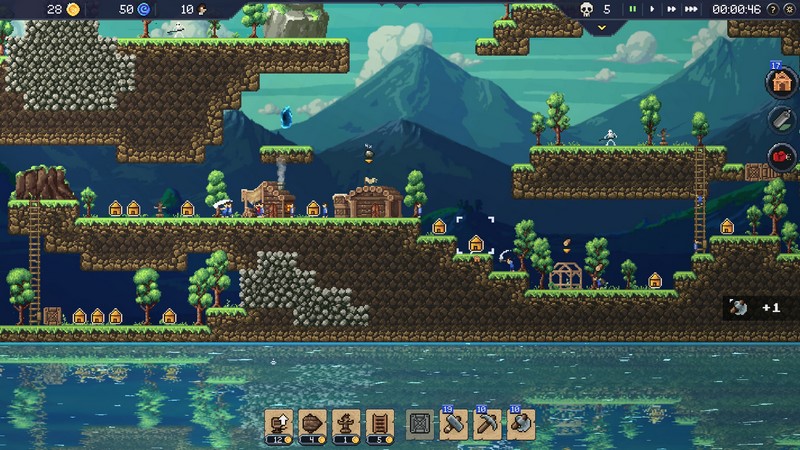
It is this ceaseless flow of decision making which forms the true identity of the Craftlings. At its core the game is less of a pure management sim and more a complicated sandbox of problem solving. And because the systems are meant to be flexible rather than tightly optimized, players can always reshape their strategies and get a different experience every time they play.
What doesn’t feel right
Despite its many strengths, however, Craftlings suffers from certain weaknesses. First, onboarding and tutorials have their weak points. As the amount of mechanics introduced within the early levels is quite sizable, there are instances when some of the information provided by the developers overwhelms the newcomers’ ability to process it. Consequently, the experience might be considerably smoother with a bit of patience.
Secondly, player control of units might not be perfect. Namely, while moving around the map, players may click on something other than what they wanted due to various reasons. Luckily, the developers give users certain tools to make such situations manageable; yet, this particular gameplay aspect remains in need of optimization.
Overall, the above-mentioned drawbacks do not make playing Craftlings difficult or tedious in any way. Nevertheless, getting rid of them will contribute to an even more engaging experience.
Another problem occurs in the game’s balancing of its difficulty. There comes a time in which the gameplay becomes more frantic and harder than usual, placing the player in unexpected situations that make the gameplay even more difficult. This can seem sudden to the player when he is used to the slower pace of previous levels in the game. The fact that the game doesn’t penalize failure too harshly makes this less of an issue than it could be.
Visuals
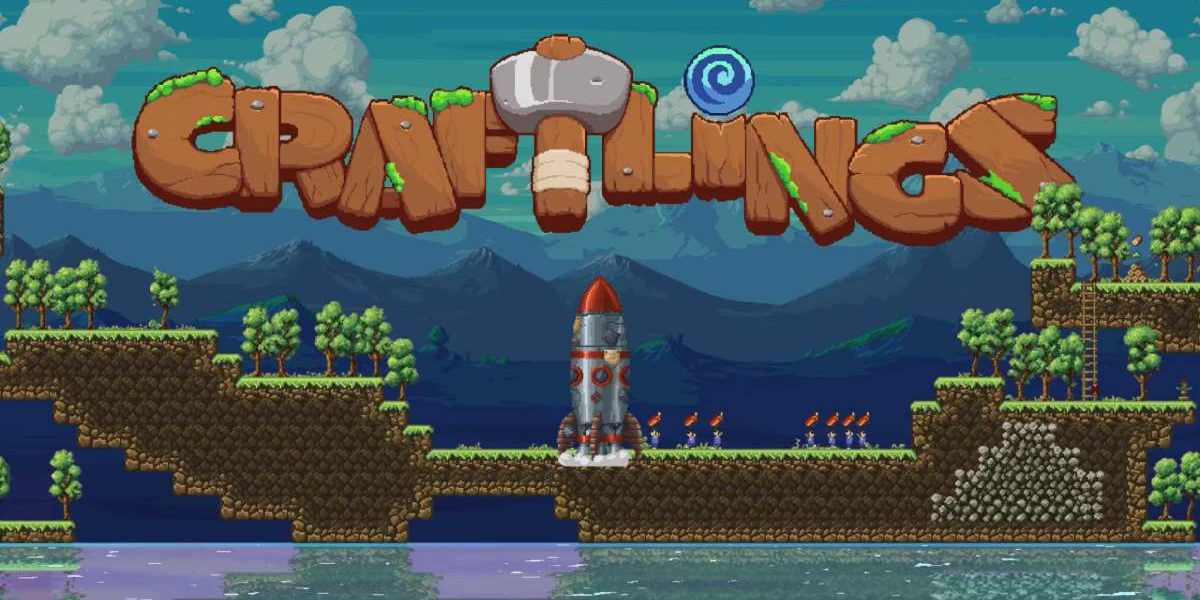
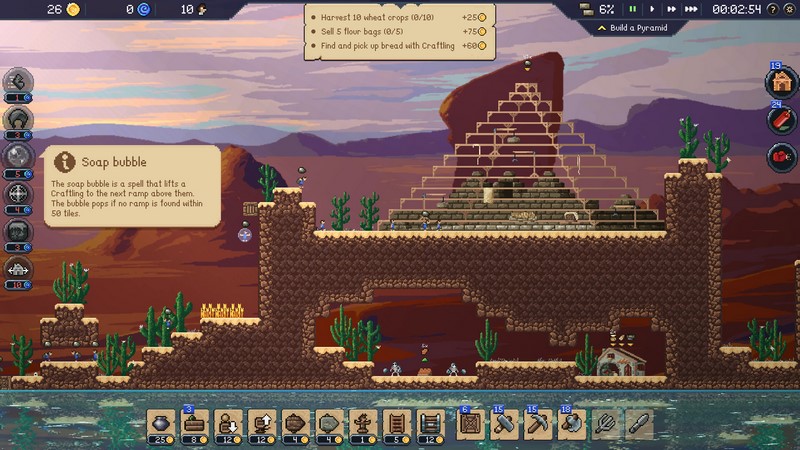
Despite the game’s full 2D setting, Craftlings manages to incorporate a classic pixel art design that conveys all gameplay information in an efficient and clear manner. The game has a fairly strong visual style that establishes its tone quite effectively.
There is also a good amount of variety in terms of environmental settings, enemies, and buildings that prevents visual repetition. However, there are a few instances when it seems like Craftlings had the potential to make its environment settings look just a bit more detailed.
The second visual problem is related to the situation when many moving characters and enemies are present on screen simultaneously – especially at times when the camera moves away. In some cases, it may be hard to separate one character from the other or from the environment background.
On the whole, it should be admitted that the game looks good and its graphics perform its functions adequately well.
Story and Narrative
One of the aspects that can be seen as a weakness in Craftlings is its lack of a solid, conventional storyline. However, it should be remembered that such expectations do not conform to what the game developers intended.
While Craftlings lacks traditional narration or storytelling mechanisms, players create their own story using gameplay. The fact that the game features multiple stages, unexpected situations, and choices that players have to make makes this process even more exciting and natural.
In other words, those who were looking forward to an engaging character-based story would probably get disappointed. However, from a different perspective, the lack of conventional storytelling can be seen as one of the game’s strengths, since it allows for crafting a story through the mechanics of play.
Conclusion
Craftlings is a game that attempts to blend several game genres into one and, most of the time, does it exceptionally well. Its strongest points are player freedom, small goal-oriented level design, and transformation of the game itself into a great puzzle.
At the same time, there are problems associated with the difficult onboarding, sometimes inaccurate control, and poor balancing of the difficulty.
However, they are not strong enough to detract much from the general impression.
Ultimately, Craftlings doesn’t feel much like the typical management game and more like a tool for problem solving. Here, the player himself creates the story and chooses how to solve his problem.
This review is based on the PC version
Score: 75/100


Mixtape Review