

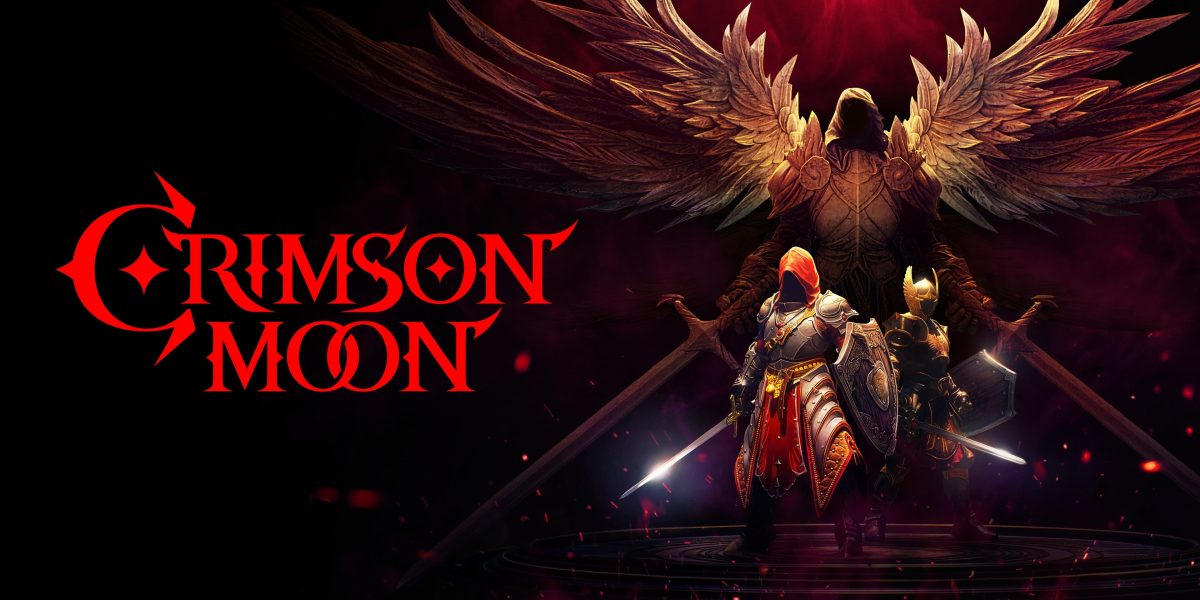

If I were to describe Crimson Moon in a single line, I would say this: image the mechanics of Dark Souls combined with the art style of Darksiders and placed within the gameplay framework of Hades. And that’s not even a cop out comparison: it really encapsulates what makes Crimson Moon what it is.
Fundamentally, the game is an action RPG that combines Soulslike combat with roguelite aspects to put you in the boots of a Nephilim, a half-human half-angel warrior entrusted with ridding the city of Gildenarch of its demonic infestation. But unlike a classic Soulslike, you’re not exploring one big interconnected environment, working your way through it piece by piece.
Crimson Moon instead is framed in Hunts and Runs. You enter a region, fight your way through the foes, loot and Boons, build your build as you go, and either escape alive or die enough times to be subject to True Death. It’s this loop at the end of the day — and the way Soulslike mechanics are integrated into it — that allows Crimson Moon to develop a personality of its own.
Combat fundamentally is what you’d expect from a Soulslike. Light and heavy attacks, evading, blocking, parrying, stamina management, and foes that will rapidly punish you if you begin swinging without paying attention to their attack patterns. Where Crimson Moon starts to set itself apart though is in the way it blends that classic combat base with its loot and build systems.
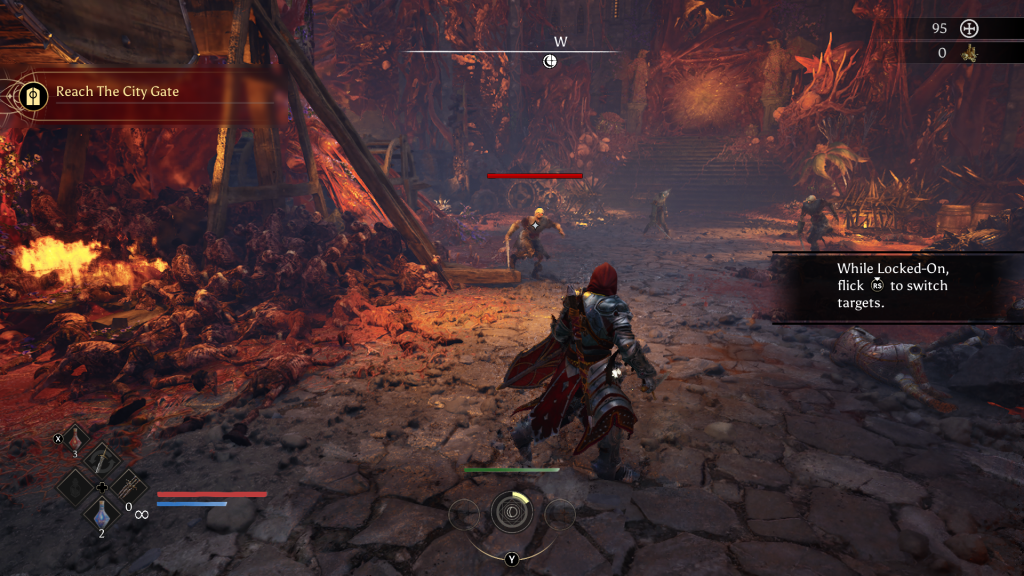
Each Hunt has you continuously finding new weapons, armor, Boons and abilities, so your build will slowly form over the course of each Run. One way to go might be to maximize raw damage, another might be around defense and survivability. You can even find yourself with a more specialized build where different upgrades combine to produce tremendous synergies around a specific Weapon Art or unique ability.
For me, the best aspect of Crimson Moon is the battle, and especially when the game has you do more than just duck away from danger. Parries and Staggers let you make openings instead than waiting for them, thus timing becomes key. So, battle is not merely “How do I survive?” It raises a more interesting question all the time: “How much am I willing to risk to kill this enemy faster?”
That idea of risk and reward has a real impact on the flow of warfare. Parries, Executions and Weapon Arts start to operate together, and slowly your perspective transforms. Instead of being a passive player who waits for an enemy to attack so you can respond, you start seeking for opportunities to take control of the fight. Effective aggressiveness is equally as crucial as meticulous defense and it gives confrontations a much more interesting rhythm.
That said, the feedback from some strikes and effects isn’t always as crisp or understandable as it needs to be. This is especially obvious during packed battles, where the camera and the visual readability of certain attacks can often be annoying. And that’s no small matter for a game that depends so heavily on precise timing for its combat identity. If the player is going to be significantly penalized for messing up, then the game has to be completely confident that the mistake genuinely feels like their own.
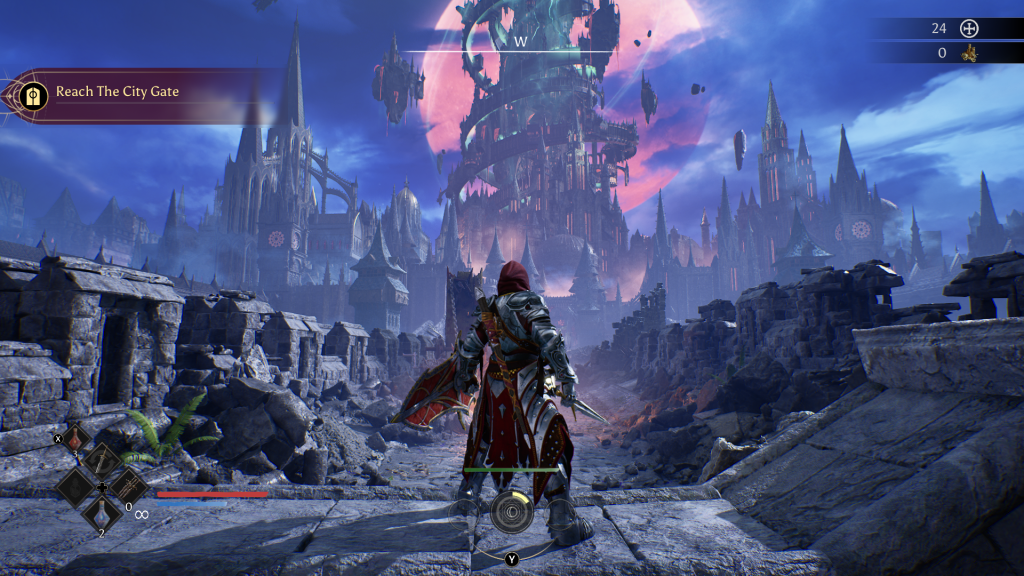
Every Hunt starts with a limited number of Lives. Dying doesn’t finish the run right away, you resurrect on the spot and resume from where you fell. The problem is that every death uses up one of those Lives. Thus, dying in Crimson Moon is not the end, but it’s also not free.
Let’s say you are halfway through an area, you have a nice haul of goods, and you encounter a very hazardous Elite. If you die, the game doesn’t just instantaneously take you back to the last checkpoint and have you redo everything you’ve just done. But it offers you a second chance to regroup and continue to push on. But that second chance is a pressure-filled one, too: make the same error too many times, drain your Life Pool, and you finally trigger what the game calls True Death.
The true end of a Hunt is True Death. When your Life Pool runs out, it’s game over, and you will have to forfeit some of the wealth you’ve gathered along the road. But some types of permanent progression like XP, Levels, and Purified equipment will carry over.
The idea of the system is rather straightforward: **death isn’t irreversible, but every death should teach you something. Learn from those mistakes, and eventually you will lose some of what you worked for.
More crucially, this turns death into part of *Crimson Moon’s* economy instead than just punishment. Your remaining Lives become another resource that you may account for, gamble with, and use to push further into a Hunt, take bigger risks, and give yourself more opportunity to comprehend and eventually master the conflict.
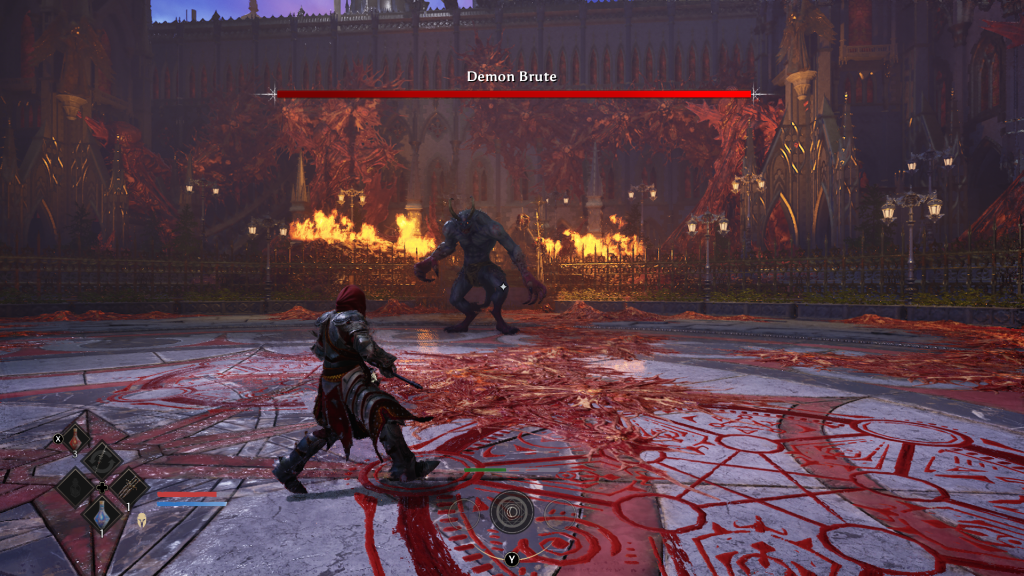
Crimson Moon can be played entirely solo, but it has also been designed around two-player co-op from the beginning, and this is where its death system becomes considerably more interesting. In co-op, both players share the same Life Pool. If I die, the consequences aren’t mine alone—the entire team loses a Life. At the same time, my partner can revive me in the middle of combat and keep the Hunt alive.
That means co-op isn’t simply about having another player beside you dealing extra damage. Death and revival become cooperative mechanics in their own right. Every mistake affects both players, and keeping your partner alive becomes part of managing the Hunt itself. The game also scales its difficulty and enemy compositions based on the number of players, so bringing a friend along doesn’t suddenly trivialize the experience. Better still, combining the abilities and Weapon Arts of two characters can create synergies that simply aren’t possible when playing alone.
For me, Crimson Moon has created one of the most enjoyable co-op modes I’ve played in quite some time. It is engaging, genuinely fun, and feels integrated into the game’s core systems rather than added as an afterthought. The inclusion of cross-play, alongside how easy it is to connect and start playing together, further reinforces just how much emphasis the developers have placed on the cooperative experience.
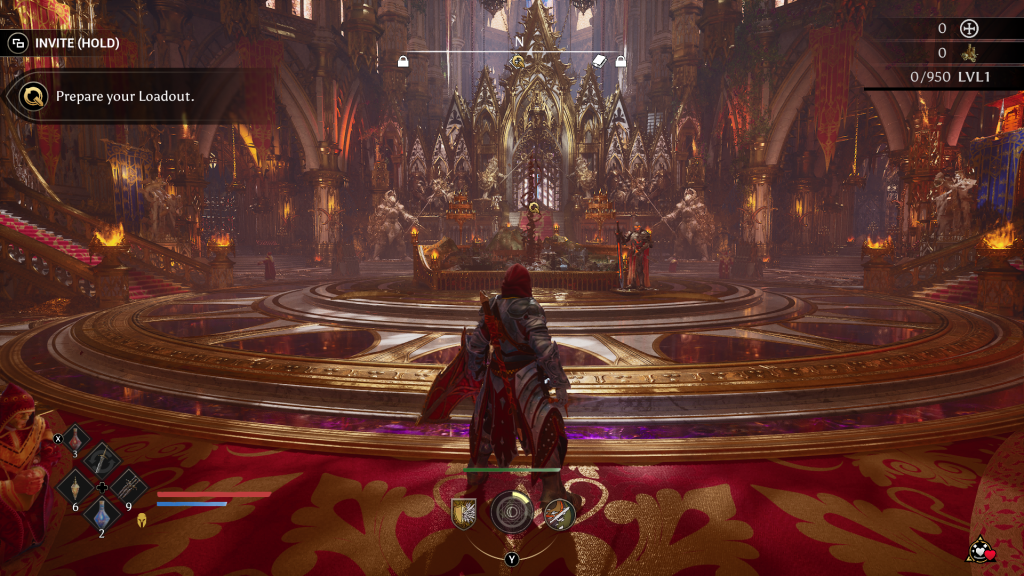
This is also where, unfortunately, Crimson Moon begins to lose some of its momentum.
The game essentially sacrifices traditional exploration in favor of its Run-based structure. Its environments are primarily built as spaces where you fight, collect loot, and move forward, rather than places that constantly encourage the kind of curiosity associated with Dark Souls. You’re rarely wondering what might be behind a particular door, where a mysterious shortcut will eventually lead, or whether an optional path is hiding something worth discovering.
That decision makes sense within the identity Crimson Moon has chosen for itself. The problem begins when the combat encounters aren’t varied enough to compensate for what has been lost. At its best, the game throws situations at you that force you to reconsider your build or adjust your playstyle. In weaker stretches, however, it can feel like you’re simply clearing another path so you can reach the next fight.
And this gets to an important principle of game design: a system only truly matters when you can see how it changes the player’s behavior. If exploration isn’t supposed to be a major pillar of Crimson Moon, that is perfectly fine—but then its combat encounters need enough depth and variety to fill the space that exploration would otherwise occupy.
Final Verdict
Crimson Moon isn’t trying to reinvent the genre. Its Soulslike combat, roguelite structure, action-RPG loot, and Darksiders-inspired fantasy aesthetic are all familiar ideas. What matters is how well they work together—and for the most part, they do.
At its best, Crimson Moon is a fast, brutal, and entertaining action RPG built around satisfying combat, repeatable Hunts, flexible builds, and a clever death system. Co-op also feels fundamental thanks to Shared Lives, revives, and build synergies. While its level design, encounter variety, and build depth fall short of the genre’s best, its focused hybrid identity remains its greatest strength.
This review is based on the PC version
Score: 72/100

Other Articles

No Rats, No Problem| Resonance: A Plague Tale Legacy Review
Death Has a New Shell | Mortal Shell 2 Review