

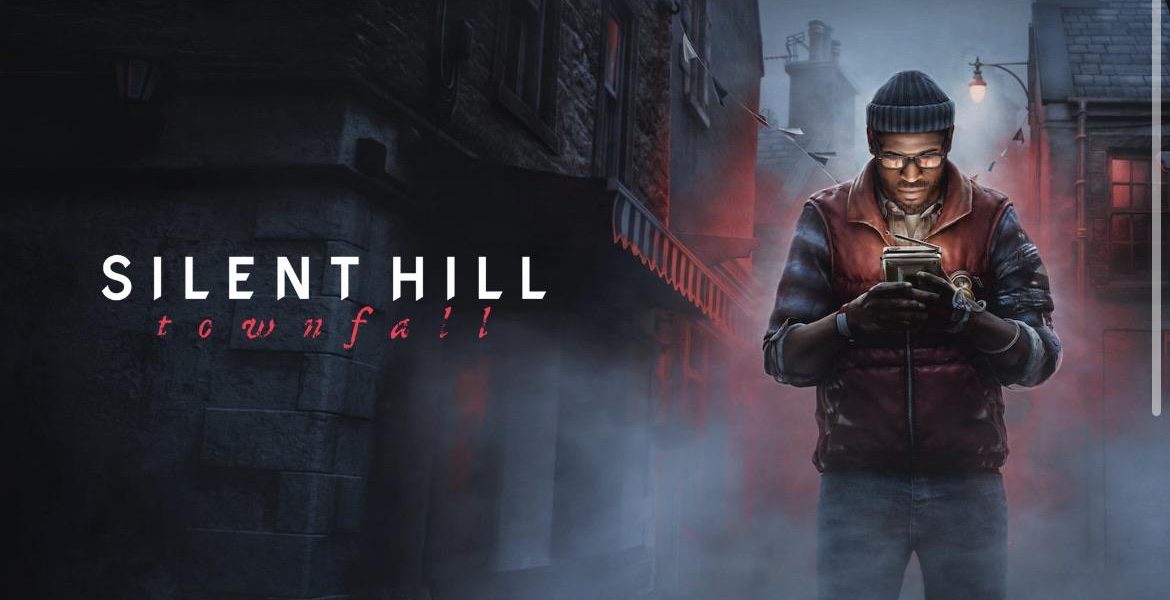

Silent Hill has always understood that fear is most effective when it refuses to explain itself. The series’ most memorable moments rarely come from a monster suddenly appearing in front of the player, but from the suspicion that something is wrong long before the game confirms it. Silent Hill: Townfall understands that principle remarkably well. Screen Burn Interactive’s first-person take on Konami’s horror series is smaller and more intimate than some of its predecessors, and although its mechanical ambitions occasionally expose its limitations, Townfall succeeds where a Silent Hill game arguably matters most: it creates a place that feels profoundly uncomfortable to inhabit.
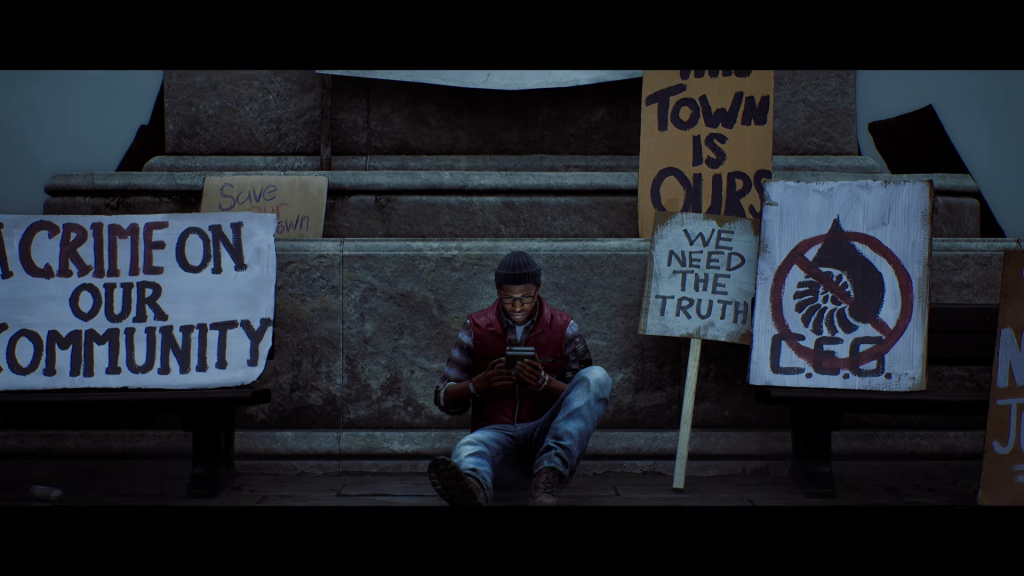
The game follows Simon Ordell, who finds himself in St. Amelia, a remote Scottish town swallowed by fog and apparently abandoned. Saying much more would undermine one of Townfall’s greatest strengths. Its narrative is deliberately fragmented, gradually connecting Simon with Zoe and Richard while exploring guilt, memory and the ways people attempt to bury things they would rather not confront.
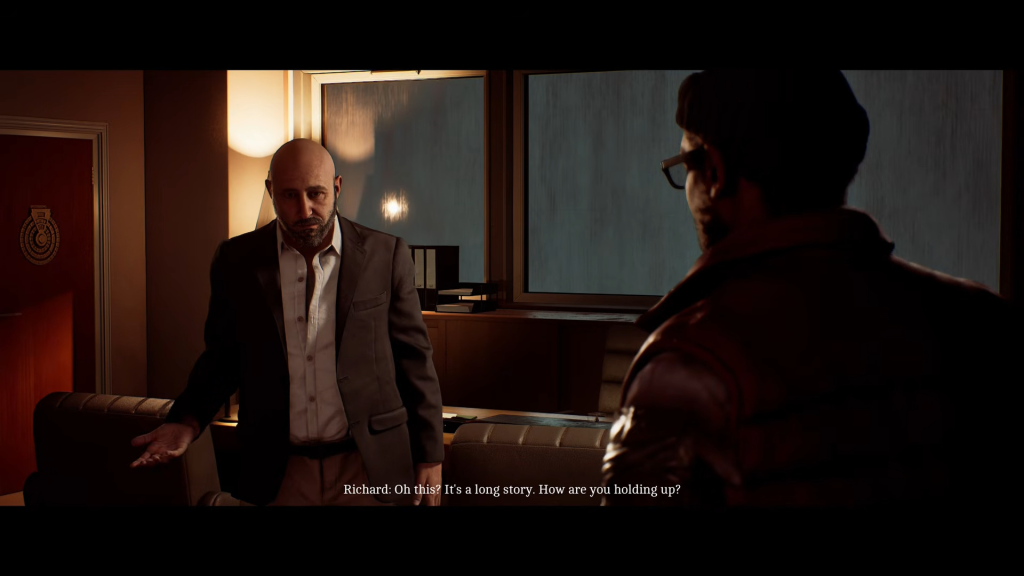
These are familiar subjects for Silent Hill, perhaps almost too familiar. Townfall does not reach the psychological complexity of Silent Hill 2, and some of its symbolism is considerably easier to interpret. Yet the story works because it understands that Silent Hill has never really been about a particular town. It is about people being forced into confrontation with themselves.
The most immediate departure is perspective. Townfall is the first full-length Silent Hill built entirely around first-person gameplay. Previous entries experimented with the viewpoint, but here it becomes fundamental to both exploration and horror.
Initially, that change risks making Townfall resemble the countless first-person horror games released over the past decade. In practice, however, Screen Burn justifies the decision.
St. Amelia feels considerably more oppressive when viewed through the protagonist’s eyes. Corridors become narrower, darkness becomes harder to read and opening a door becomes an action that demands consideration rather than an animation watched from a safe distance. Even consulting the map means physically raising it into view and temporarily sacrificing awareness of the environment. The ability to lean around cover reinforces that vulnerability particularly well.
The portable CRT television is Townfall’s most interesting mechanical idea. Effectively replacing the traditional radio as the player’s supernatural early-warning system, the device can detect nearby creatures, presenting distorted images of them through its tiny screen. It never provides perfect information. Static, poor visibility and the need to tune into different frequencies mean that using it can create almost as much anxiety as ignoring it.
That mechanic feeds directly into Townfall’s greater emphasis on stealth. Ammunition is scarce, melee weapons are temporary, and many encounters are designed around avoiding monsters rather than clearing rooms of them. Players crouch behind objects, peek around corners and use the CRTV to understand where something might be moving. When these systems cooperate, Townfall is genuinely frightening. Knowing that a creature is nearby without being able to see exactly where it is, creates precisely the kind of uncertainty the series thrives on.
Unfortunately, stealth is also responsible for some of the game’s weakest moments.
Enemy awareness can feel inconsistent. There are situations where carefully remaining behind cover works exactly as expected, followed by encounters where it becomes difficult to understand what actually alerted a creature. This is particularly damaging in a horror game because repeated deaths transform fear into mechanical experimentation. Once a terrifying encounter becomes a process of learning AI boundaries through trial and error, much of the tension disappears. Other reviewers have reported the same inconsistency, particularly around detection and encounters involving enemies that cannot simply be fought.
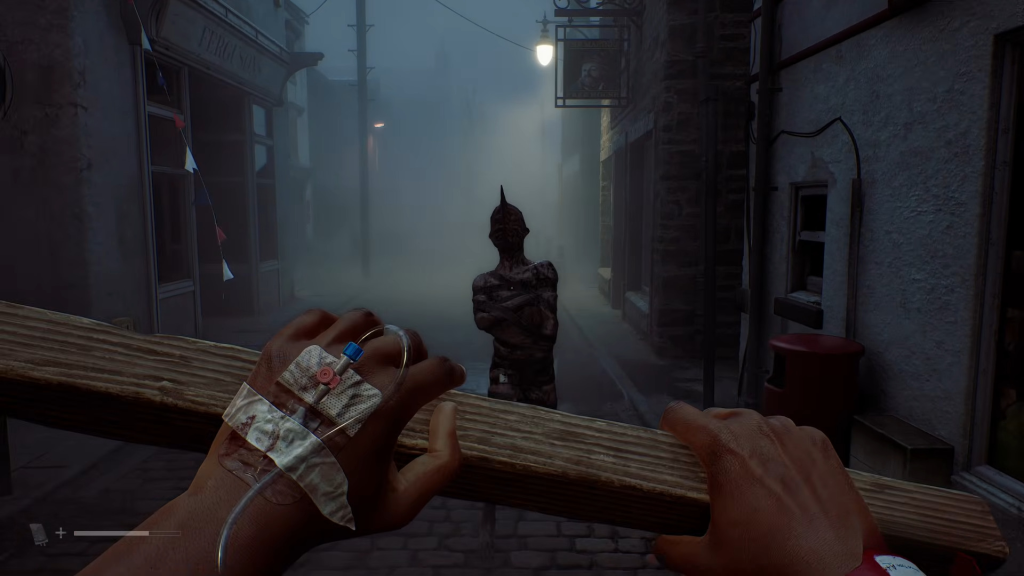
Combat fares slightly better, although it is deliberately crude. Blocking and striking with improvised melee weapons has weight, and seeing an enemy attack from first person gives even basic confrontations an uncomfortable physicality. Townfall wisely avoids turning Simon into an action hero, but encounters involving multiple enemies expose how limited the combat system actually is. Positioning becomes awkward, attacks can feel cumbersome, and fighting often feels less frightening than inconvenient.
Perhaps that is partly intentional. Silent Hill combat has rarely been elegant. But intentionally making combat unpleasant and making it mechanically frustrating are not necessarily the same thing.
Townfall is far more confident when it is asking the player to explore.
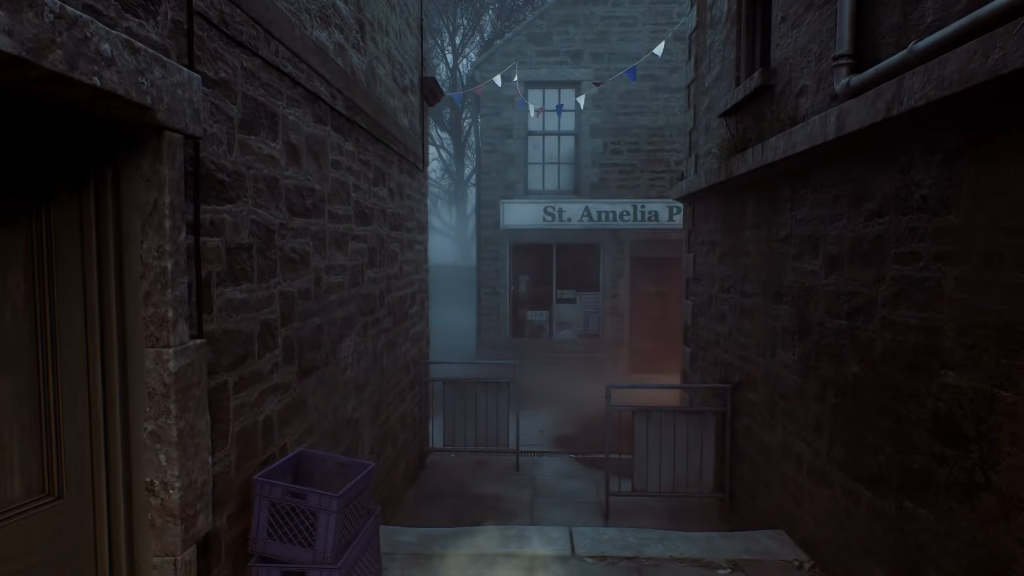
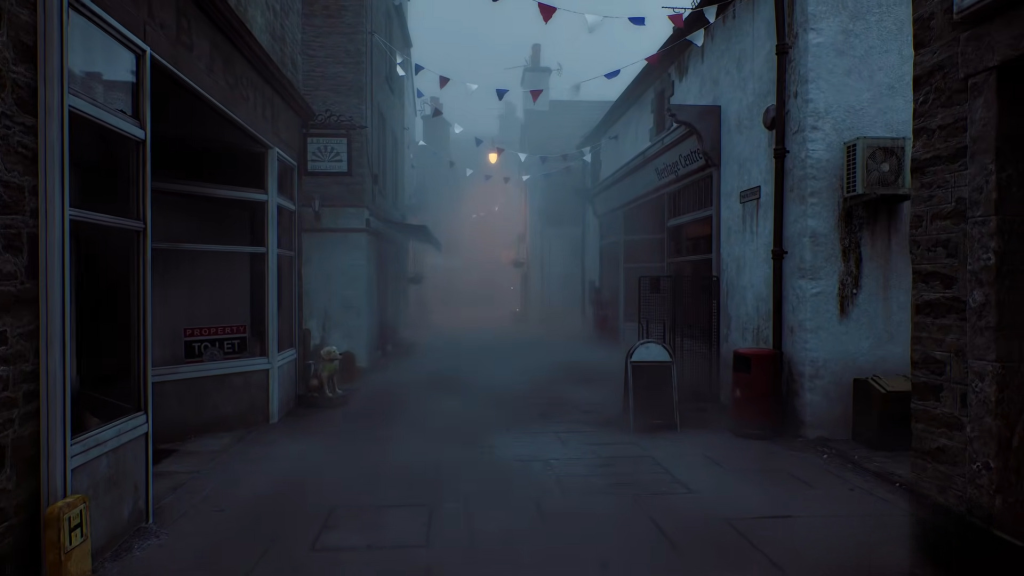
St. Amelia is easily one of the game’s greatest achievements. Instead of recreating the American streets traditionally associated with Silent Hill, Screen Burn constructs a distinctly mid-’90s coastal environment filled with aging storefronts, pebble-dashed houses, phone boxes and industrial infrastructure. Fog remains essential, but it is complemented by harsh artificial lighting, deep blacks and striking reds that occasionally transform familiar locations into something far more hostile.
The environmental storytelling is excellent. Notes, objects, abandoned rooms and pieces of technology gradually establish the history of St. Amelia without reducing the town to a collection of exposition dumps. Some locations look almost photorealistic, but the achievement is less about raw graphical fidelity than composition. Townfall knows when not to show the player everything.
Its sound design might be even more important. Mechanical noises, distant movement, distorted signals and sounds whose origins are deliberately difficult to identify constantly suggest that something exists beyond the player’s limited field of view. Headphones make a substantial difference. Townfall understands that a sound coming from somewhere behind the player can be more frightening than placing another creature directly in front of them.
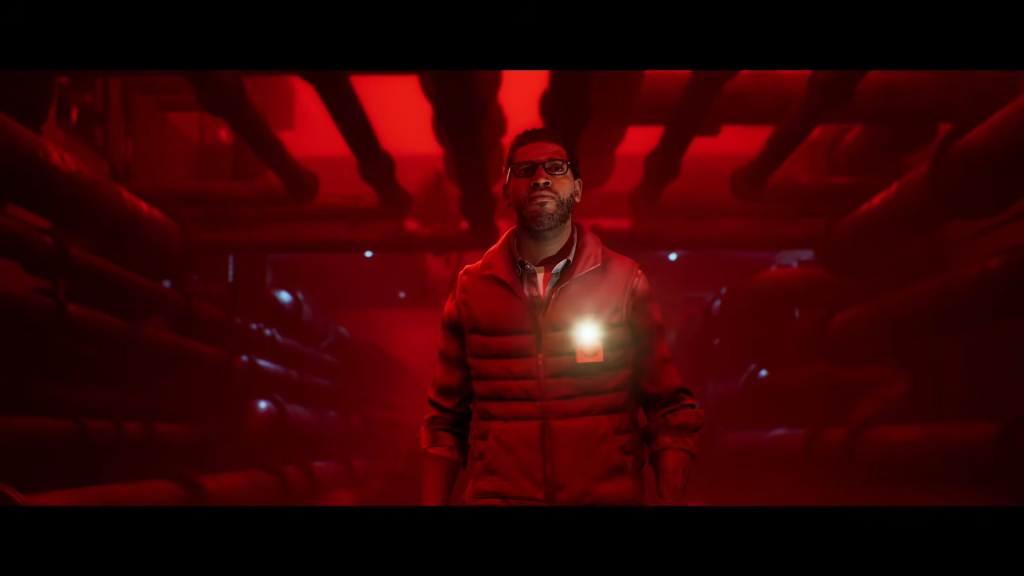
That restraint also means the game does not rely exclusively on jump scares. There are sudden shocks, and some work extremely well, but its strongest horror comes from anticipation. A corridor that remains empty for slightly too long or an unexplained noise behind a wall can generate more tension than an enemy bursting through a door. Townfall occasionally falls back on more conventional horror tricks, yet its best sequences trust atmosphere rather than volume.
On a technical level, the PlayStation 5 version is generally solid, though not entirely spotless. Townfall offers two display options: a Quality Mode targeting 30 frames per second and a Performance Mode aiming for 60. Quality Mode is the more consistent of the two, and the game’s deliberately slow pace means that the lower frame rate rarely works against the experience. The additional image clarity also complements St. Amelia particularly well, allowing the dense environments, lighting and thick volumetric fog to do much of the visual heavy lifting.
Performance Mode makes first-person movement and combat noticeably more responsive, but it does not maintain its 60fps target quite as convincingly. Small frame-rate drops and brief stutters can appear in heavier scenes, particularly when enemy AI becomes active or the game is streaming more demanding areas.
Compared with previous Silent Hill games, Townfall occupies an interesting position. It lacks the narrative sophistication of the series at its absolute best and does not attempt the scale of some modern survival-horror productions. Yet copying Silent Hill 2 again would have been the safest and least interesting option available.
Instead, Townfall takes recognizable pieces of Silent Hill — fog, psychological guilt, vulnerable protagonists, uncomfortable combat, environmental puzzles and grotesque creatures — and rearranges them around a first-person stealth-horror framework. Not every piece fits perfectly, but enough of them do.
The result is a game which flaws become increasingly obvious the longer it is played, but whose atmosphere is difficult to shake after putting the controller down. Townfall can frustrate with inconsistent stealth, cumbersome combat, uneven puzzles and technical roughness, yet St. Amelia remains a fascinating place to explore, and the shift to first person proves far more meaningful than a simple change of camera.
Final Verdict
Silent Hill: Townfall does not redefine psychological horror, nor does it surpass the greatest chapters of the franchise. What it does prove is that Silent Hill no longer needs to endlessly recreate its past in order to feel like Silent Hill.
Sometimes all it needs is another town, another damaged mind, and enough fog to make taking the next step feel like a terrible idea.
This review is based on the PS5 version
Score: 78/100

Other Articles
A Two-Player Dream Among the Stars | Orbitals Review