


Before anything else, I should make one thing clear: I never played the original Moonlighter and went straight into Moonlighter 2. So this review looks at the sequel entirely on its own terms rather than comparing it with its predecessor.
The story begins when the characters’ world is attacked by someone powerful enough to travel across the multiverse and conquer different dimensions. The protagonist and the other inhabitants escape to a safer world, where they must rebuild and find a way forward. This is where the Infinity Dungeon appears with a straightforward demand: make money and bring it back.
In exchange, you receive abilities and rewards, while interesting developments unfold within the story. Money therefore isn’t simply used to purchase equipment; your relationship with the Infinity Dungeon is also built around it. And that money comes directly from the gameplay loop at the heart of Moonlighter 2: The Endless Vault.
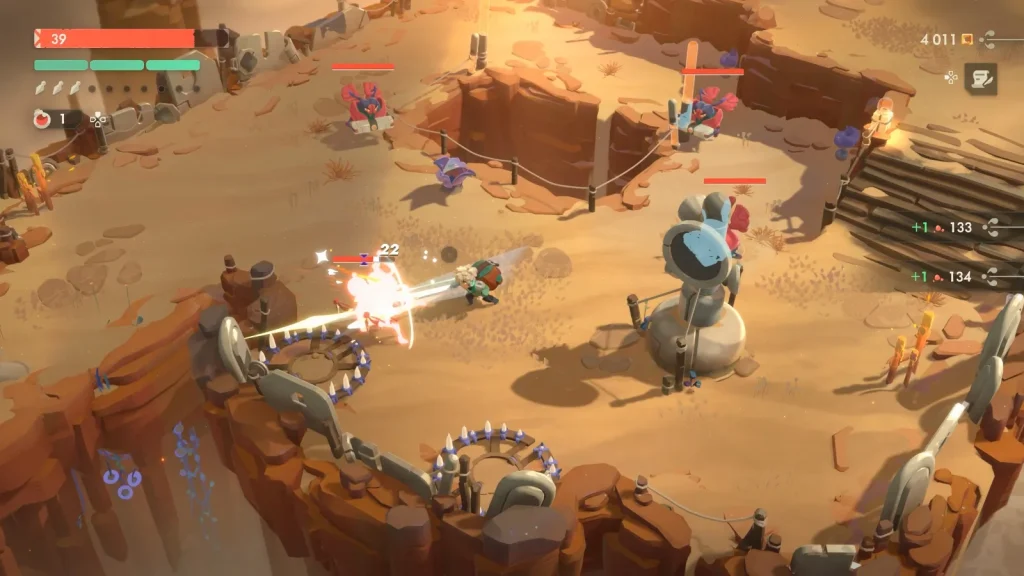
At its core, Moonlighter 2 is a roguelite. You choose a region, begin a run, fight, explore, and collect loot before eventually returning home. You then place those items on the shelves of your shop, sell them, and spend the profits on upgrades that make you stronger for future runs. Roguelites usually make repetition easier to accept by ensuring that every run contributes something toward future progression. Moonlighter 2 follows the same philosophy but adds another layer: the loot you bring home isn’t money yet. You still have to sell it, and selling effectively becomes a minigame of its own.
Early on, you have to estimate what each item is worth. You set a price and use customer reactions to determine whether you sold it too cheaply, asked for too much, or found the right value. Those reactions also become part of your decision-making. Sometimes keeping a customer happy matters; other times, making more money is the priority. It turns shop keeping into a surprisingly entertaining part of the experience.
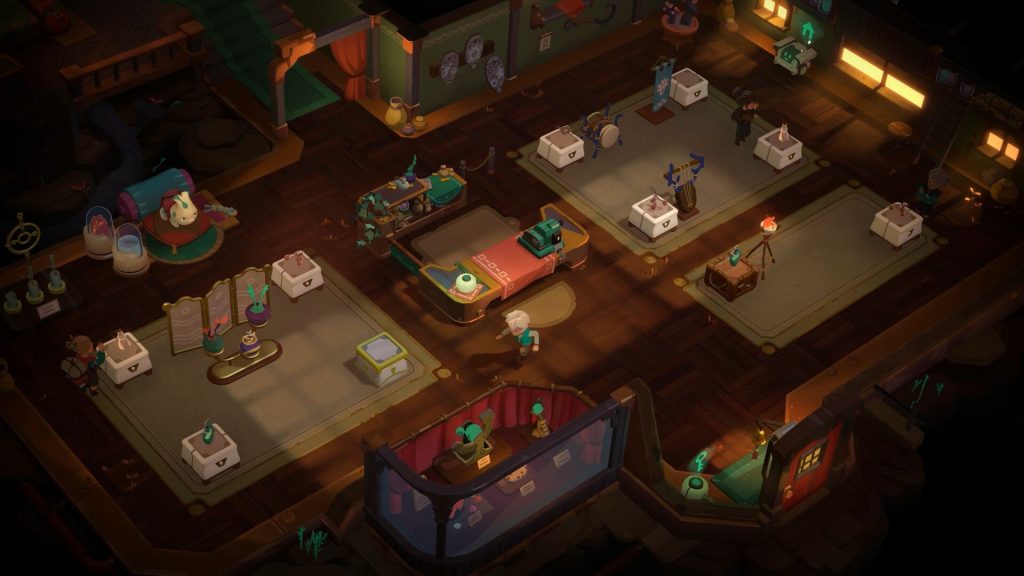
Even before reaching the shop, however, inventory management gives you plenty to consider. This was one of my favorite systems in the game. Items can interact with one another, increasing or decreasing their value or even destroying other items entirely. You aren’t simply trying to fit everything into a limited space; you have to think about where each item goes and how that placement affects everything else you have collected.
The map introduces additional decisions that influence your route and progression. Moonlighter 2: The Endless Vault therefore never reduces itself entirely to combat. Even outside encounters, you are making choices that affect the outcome of a run, your income, and how quickly you become stronger.
This interconnected structure is exactly where Moonlighter 2 shines. The combat is good, inventory management is engaging, and shop keeping works well. Individually, none of these systems are particularly extraordinary, but together they become considerably more compelling. The enjoyment comes from moving continuously between them.
That is why it is difficult to say whether Moonlighter 2 will be remembered specifically for its combat, shop keeping, exploration, or world. What sticks with you is the constant back-and-forth between all of them. Almost every part of the core loop requires active participation and meaningful decisions.
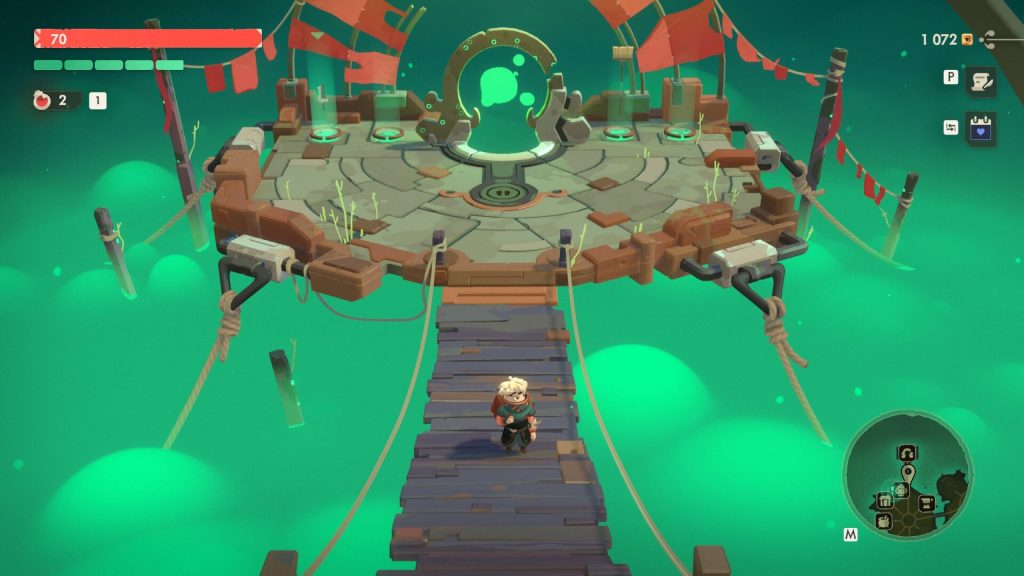
However, those choices weren’t always equally interesting to me, particularly early in the game. The reason is the Infinity Dungeon. Knowing that handing over money brings another reward creates an extremely obvious objective: make more money.
For me, that incentive became so powerful that finishing a dungeon, reaching its final boss, or progressing the story started to feel secondary. I would enter a run, clear several areas, and once my inventory was full, returning home usually seemed like the smarter decision. Why risk everything I had collected when I could sell it and move closer to the next reward?
This slightly undermines the sense of choice during the opening hours. Nothing prevents you from reaching the end of a dungeon and defeating its boss, but the game doesn’t incentivize that goal as strongly as earning more cash. The Infinity Dungeon’s rewards are simply more tempting.
Combat initially appears straightforward, but enemies can make their attack timings difficult to read until you become familiar with their rhythms. You need to approach situations differently rather than simply attacking repeatedly, and for the most part, this works well.
There is also a good variety of weapons, each with its own strengths and weaknesses. Combat is about attacking, dodging, or executing enemies at the right moment and from the right position. Timing and positioning genuinely matter.
Unfortunately, technical issues sometimes undermine that approach. During my first few hours, I encountered situations where the physical boundaries of paths and obstacles didn’t match what I could see. Objects sometimes seemed to overlap or extend beyond their models, leaving me caught on scenery, unable to pass through seemingly open routes, or vulnerable in positions that appeared safe.
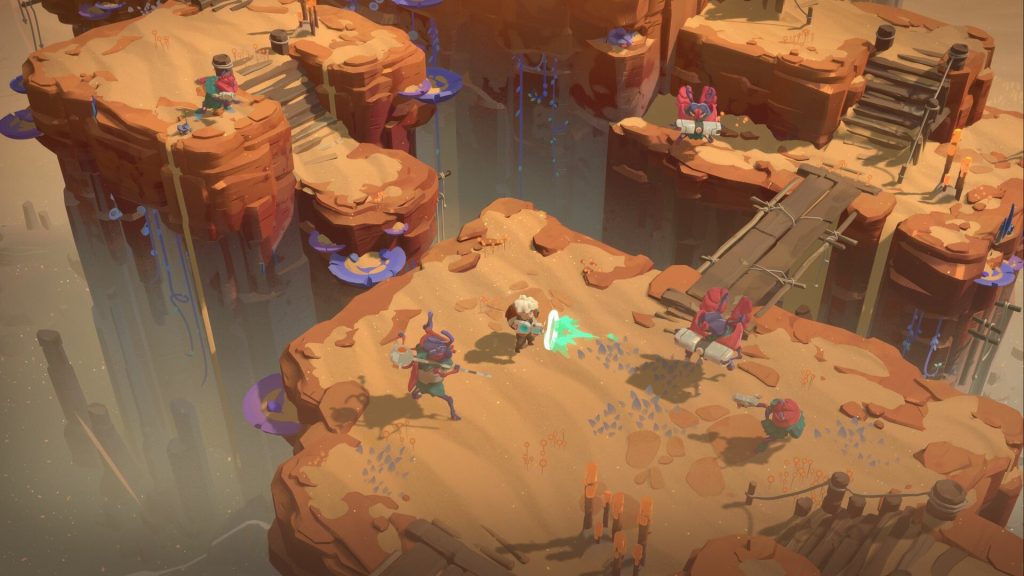
I could be standing on an upper level with an enemy below, for example, only for its attack to connect because it was positioned slightly on top of another object. When combat demands precise timing and positioning, inconsistencies like these can make failure feel like the game’s fault rather than your own.
Audio doesn’t always make encounters easier to read, either. Certain sounds used for enemy actions or player feedback can be overly prominent and occasionally confusing. After several runs, I became accustomed to them and could understand encounters more easily. Overall, both the sound design and soundtrack are good, but never exceptional.
Between runs, you return to the village where everyone has taken refuge. More characters gradually appear, offering different services. One crafts weapons, a robot helps manage the shop, another improves your healing capabilities, and others provide additional functions.
My problem is simply that there are too many of them. The developers clearly wanted the village to feel alive and give players more places to visit, but several services could have been consolidated under fewer characters. This is especially noticeable because many NPCs lack side quests or personal stories compelling enough to make me care about them beyond the services they provide.
Progression is similarly familiar. Resources collected during runs are required for upgrades, with different weapons demanding different materials. It works well enough, but I think there are too many resources. This is admittedly a personal preference: I would rather have fewer elements with more uses than create complexity simply by increasing the number of things to collect.
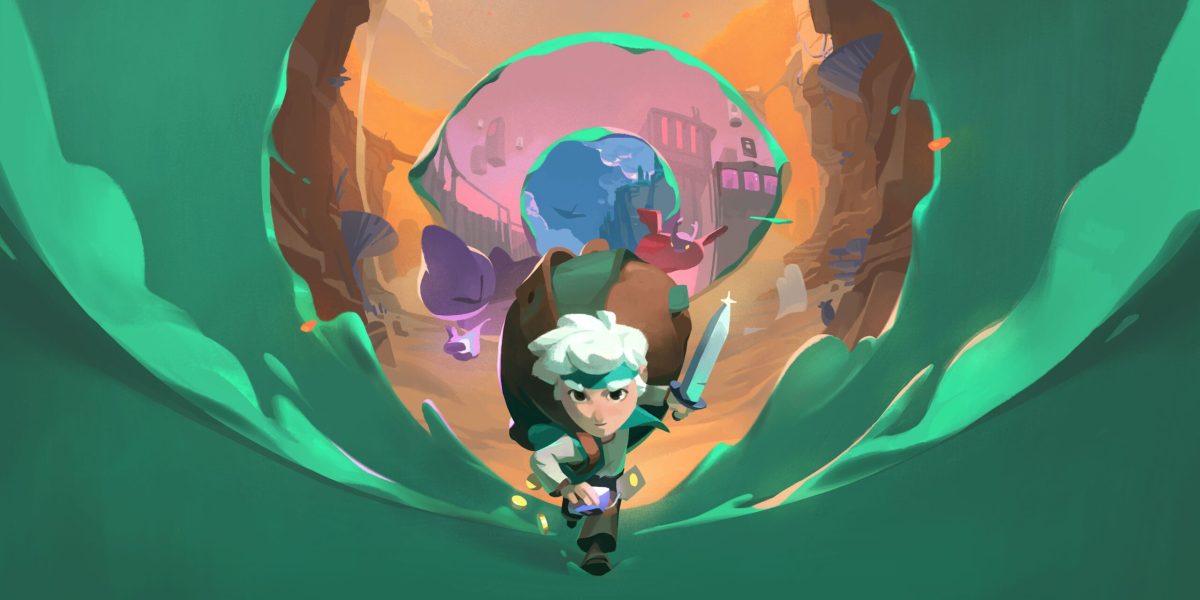
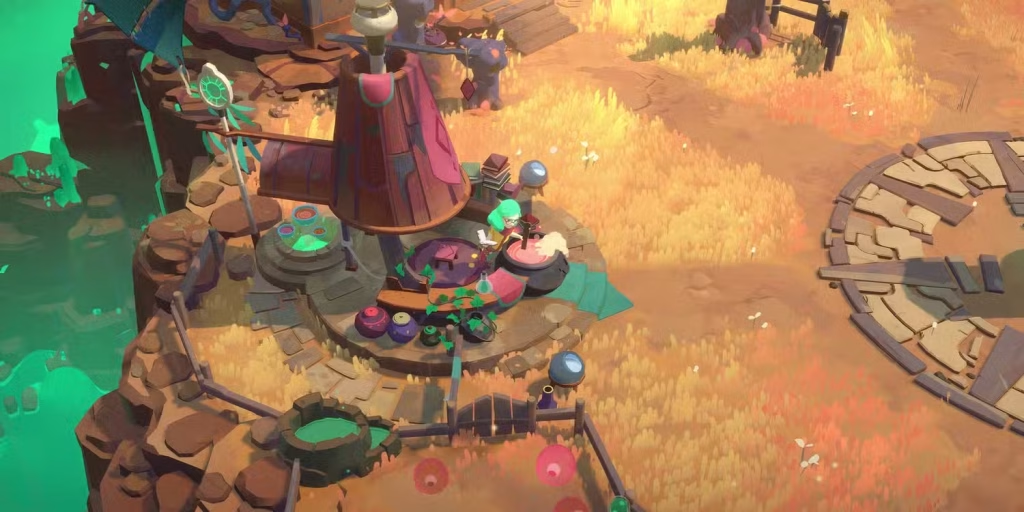
Visually, Moonlighter 2 is attractive. Its environments look good, the artwork is appealing, and the art direction is competent. At the same time, it can feel surprisingly generic. There isn’t a particularly distinctive visual characteristic that gives the game an immediately recognizable identity.
The animations and visual feedback are similarly conventional but effective. Some enemy models look too similar, although traveling to different worlds brings enough environmental and enemy variation to prevent the experience from becoming visually monotonous. Overall, the presentation complements the game nicely, but it isn’t what will make Moonlighter 2 memorable.
Final Verdict
Moonlighter 2 is a good roguelite made stronger by how well its individual systems work together. Its combat, exploration, inventory management, progression, and presentation may not be exceptional in isolation, but the loop connecting them gives the game its own appeal.
Technical inconsistencies occasionally undermine combat, the early progression can push players too heavily toward making money, and neither the story nor presentation is particularly memorable. Yet the constant decision between pushing deeper into a run or returning home to protect and sell your loot remains compelling.
This review is based on the PC version
Score: 74/100

Other Articles

Cozy on the Surface, Clever Underneath| Spiritstead Review
A Different Kind of Fog | Silent Hill: Townfall Review