




Akatori is the kind of game that can quickly disappoint if you go in expecting a massive, modern Metroidvania—because that simply isn’t what it’s trying to be. Instead, it offers a more minimalist and traditional take on the genre. You won’t find the sprawling, interconnected maps, elaborate upgrade trees, or progression-heavy systems of games like Hollow Knight and Blasphemous, and frankly, I don’t think Akatori should be judged by those standards in the first place.
Its priorities lie elsewhere: fast-paced, Kung Fu-inspired combat paired with environmental puzzles that encourage you to thoroughly explore and solve each area, or “Chunk,” before moving on to the next. It’s a considerably more focused interpretation of the Metroidvania formula, one that trades sheer scale and mechanical complexity for combat, exploration, and self-contained challenges. But is that minimalist approach enough to create an experience that remains both entertaining and cohesive?
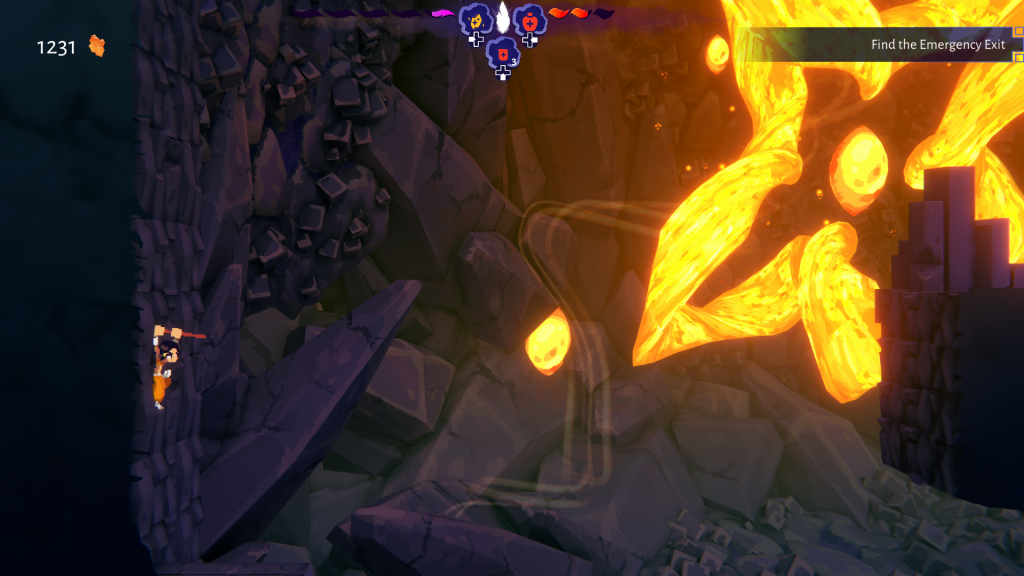
Let’s start with the most important part of Akatori: its gameplay. To me, the game’s greatest strength is exactly what the developers have emphasized from the beginning—the way movement, exploration, and combat are all built around the same core tool.
Mako’s staff isn’t simply her primary weapon. It also provides a range of traversal abilities, allowing you to slide, glide, overcome obstacles, and discover hidden paths throughout the world. As a result, character progression is directly tied to your growing ability to read and navigate the environment.
That’s exactly what a good Metroidvania should do. Unlocking a new ability shouldn’t simply make you stronger; it should fundamentally change the way you look at the world around you. Old parts of the map are suddenly uncovered and paths that you may have previously dismissed appear as opportunities to explore again.
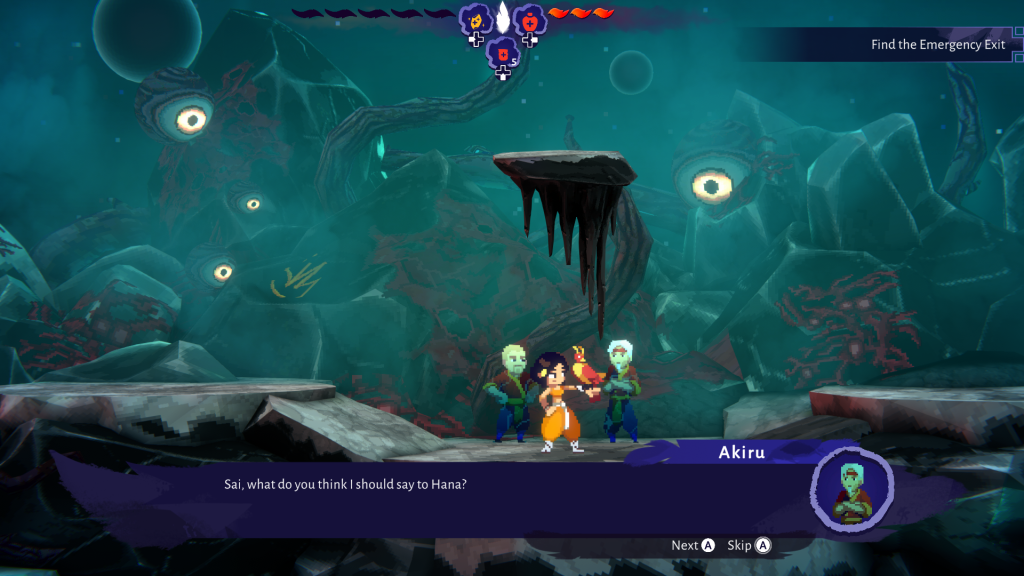
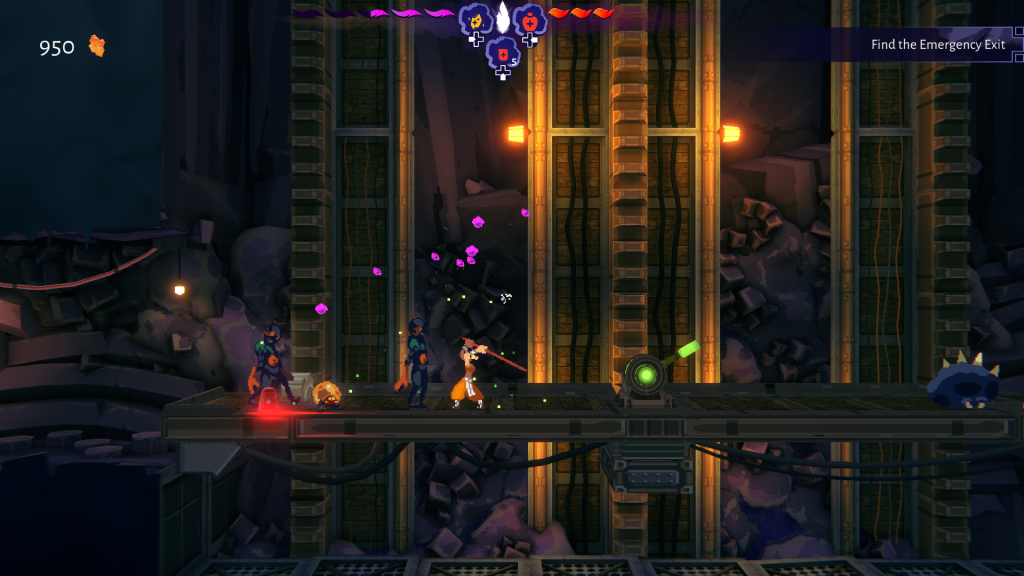
The developers have made it clear from the beginning that these abilities are intended to serve a dual purpose, playing an important role in both exploration and combat. That synergy between traversal and fighting is one of the central ideas behind Akatori’s design.
Combat, however, is where Akatori begins to stumble. On paper, Akatori’s combat sounds exciting. There are combos, aerial combat, staff attacks, close-range strikes, and new abilities that gradually unlock as you progress. Some of these abilities can even be used for both traversal and combat, giving the system plenty of potential for player expression.
The problem is that the hit feel and combat feedback don’t always feel as precise or impactful as the game’s presentation would lead you to expect. Some attacks simply lack the necessary weight, and there are moments when it feels as though the game is more focused on playing out its animations than responding directly to your inputs. For an action-platformer whose identity is built so heavily around speed and the seamless combination of movement and combat, this is hardly a minor issue. When input and feedback aren’t perfectly in sync, even a well-designed mechanic can struggle to create the sense of flow it needs.
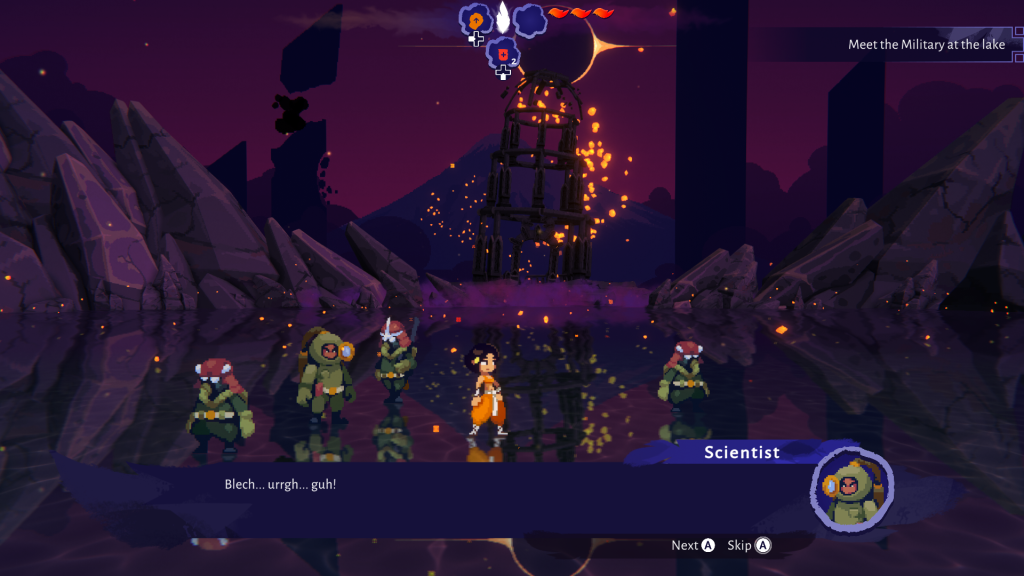
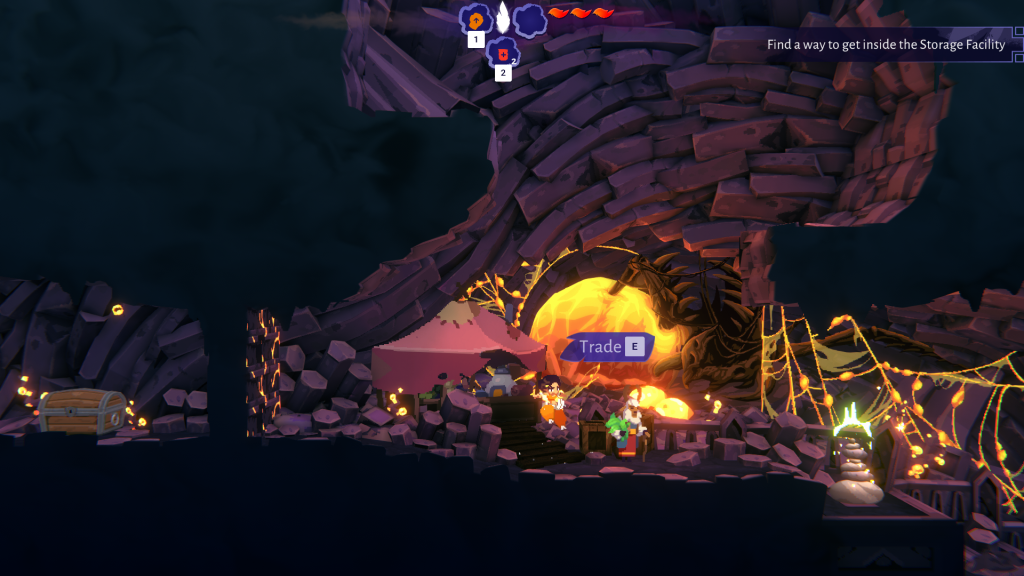
The enemies and bosses, however, offer a good amount of variety. The developers emphasized early on that enemies would feature different behavioral patterns and encourage players to make use of the game’s various abilities. That approach makes perfect sense for a game like Akatori, because if every enemy were little more than a damage sponge, all those different abilities would eventually become nothing more than extra buttons to press.
To its credit, Akatori’s design tries to make enemies part of the larger puzzle of movement and combat. In some encounters, however, that relationship still doesn’t feel as deep as it should, and combat can occasionally become more about clearing the path ahead than overcoming a genuinely meaningful challenge.
Level design, though, is where I think Akatori has the most to prove. A Metroidvania truly becomes compelling when its map forces you to think, encourages you to revisit familiar areas, and allows you to suddenly understand how different parts of the world connect after unlocking a new ability. Akatori adds World Switching to that formula, allowing you to shift between different versions of the world at certain points to reveal new spaces and pathways.
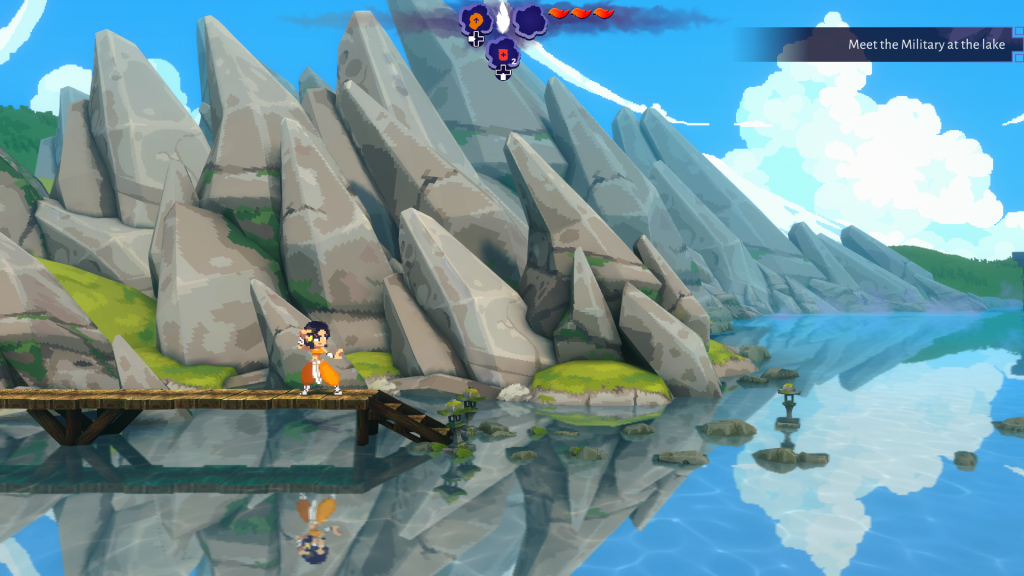
It’s an idea with enormous potential. World Switching could be far more than another key used to open a locked door; it could turn the level design itself into one giant puzzle. The true value of such a system, however, depends entirely on how effectively the game uses it to create layered routes, shortcuts, and secrets. And in my opinion, Akatori never takes full advantage of that potential.
This is precisely why exploration matters so much. When a game places this much emphasis on the staff and its traversal abilities, you naturally expect almost every corner of the environment to give you a reason to experiment with those mechanics. The developers have also stated that their goal was to encourage players to return to previous areas after defeating a boss or unlocking a new ability, discovering paths that were previously inaccessible.
That philosophy is absolutely the right one, because exploration is at its best when the reward isn’t simply another item. Finding the path itself—and having that moment of realization where you think, “Oh, so that’s what this was for!”—should be part of the reward.
If I had to point to one major issue with Akatori, though, it would be that this minimalist approach may simply feel too restrained for some Metroidvania fans. If you’re expecting to spend hours getting lost in a world like Hollow Knight, discovering dozens of optional paths, putting together your own build, and returning hours later only to realize that an old route has suddenly become accessible, Akatori probably isn’t going to give you that kind of experience.
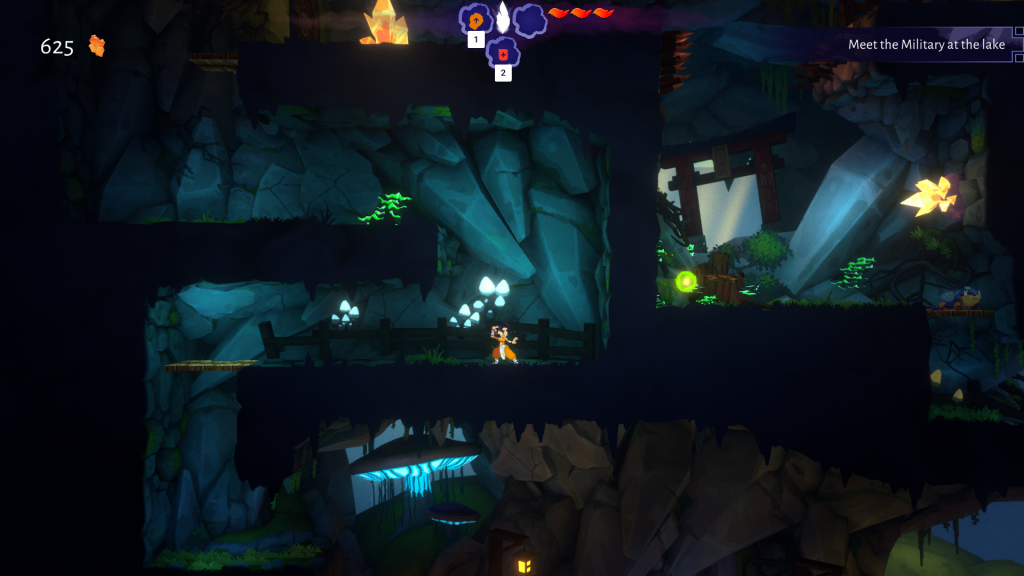
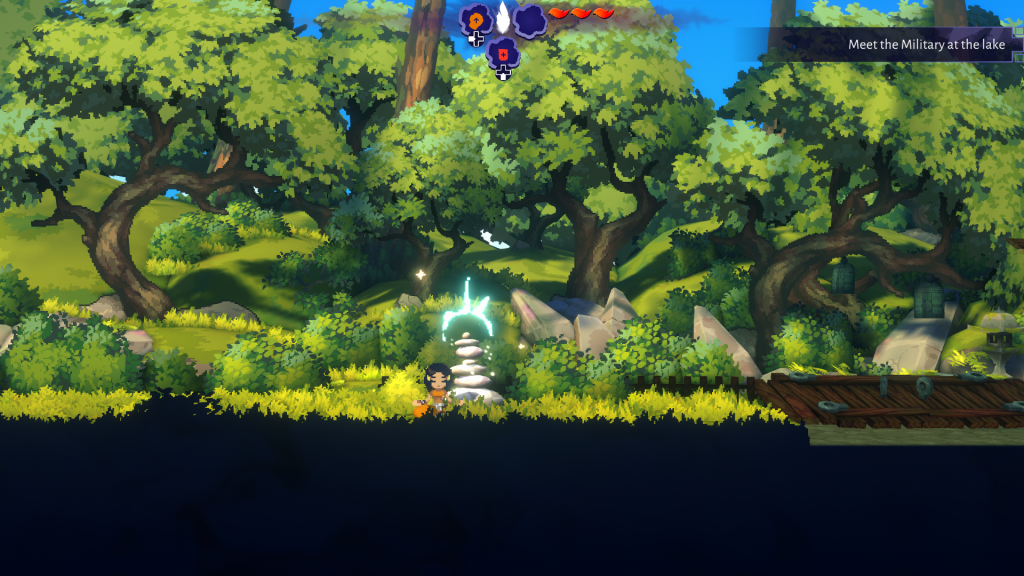
But is that necessarily a flaw? I don’t think so. Akatori was never trying to be that kind of Metroidvania in the first place, and once you judge it according to its own design philosophy, its more focused structure begins to make much more sense.
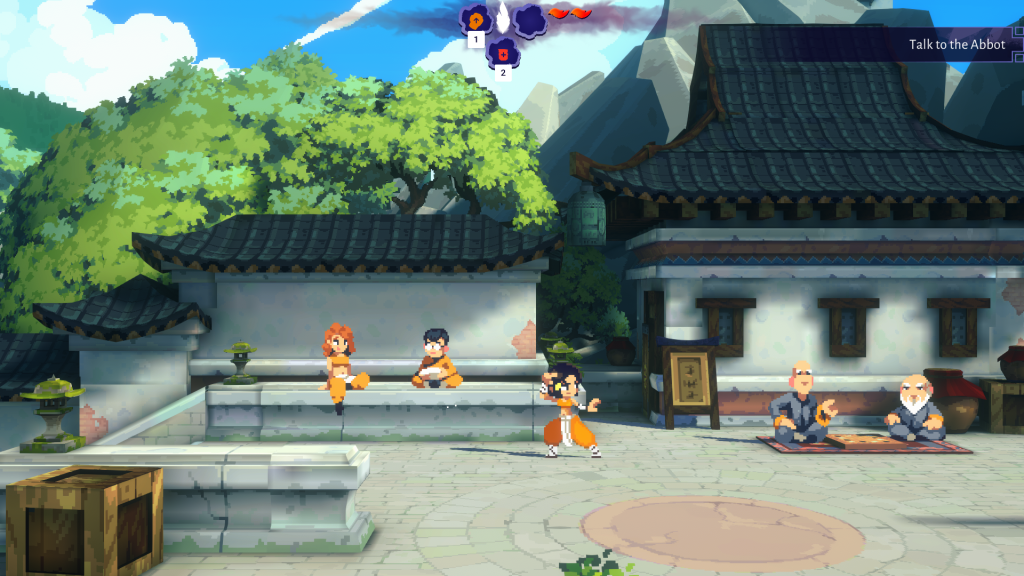
Visually, Akatori is the kind of game that makes its identity known right away. The pixel art is eye-catching, and the settings, adversaries, and character designs combine to create a unique fantasy universe. Animation is especially vital in battle, as a game focused so heavily around martial arts and fast-paced movement, animation readability is key. You need to be able to read an enemy’s moves fast and respond with the right answer.
The music and sound design are equally focused, with the goal being to support the fantastical environment and action in the game, rather than to create an overly complicated or multifaceted experience. Akatori’s presentation generally feels very much in line with the scope and goals of the game, and I think it helps to keep its minimalist experience visually interesting.
Final Verdict
Akatori has to be assessed for what it is, not what it could have become. This isn’t trying to be the next Hollow Knight nor does it want to be a sprawling, dozens-of-hours-long Metroidvania with very sophisticated level design and a massive advancement system. In reality I don’t think it ever strives to be any of those things.
Instead, Akatori is a more classic and minimalist Metroidvania, with Kung Fu-inspired fighting, smooth mobility and environmental puzzles across its various Chunks. If you go in with that mindset, you’ll have a nice, tight, well-made and fun game that doesn’t overload you with a million interconnected systems but rather concentrates on doing a few fundamental ideas well.
It might not be a classic of the genre, but for those searching for a different, lighter and more direct take on the Metroidvania idea, Akatori might be a very tempting alternative.
This review is based on the PC version
Score: 70/100

Other Articles

Light Finds a Way | Backpack Boy Review
Inspired by the Best, standing on Its Own | LIFTED Review