


Whenever I sit down with a new Soulslike, it doesn’t take long before I start looking for a specific set of standards I’ve built up over years of playing the genre. If a game gets those fundamentals right, I’m usually willing to stick with it even when the overall experience turns out to be fairly average. But when a Soulslike fails to demonstrate those qualities within its opening hours—the same qualities that the genre’s best games have taught me to expect—I rarely feel compelled to keep going. I simply move on rather than spend more time waiting for the game to prove itself. The original Mortal Shell was exactly that kind of experience for me. It couldn’t hold my attention for more than a few hours.
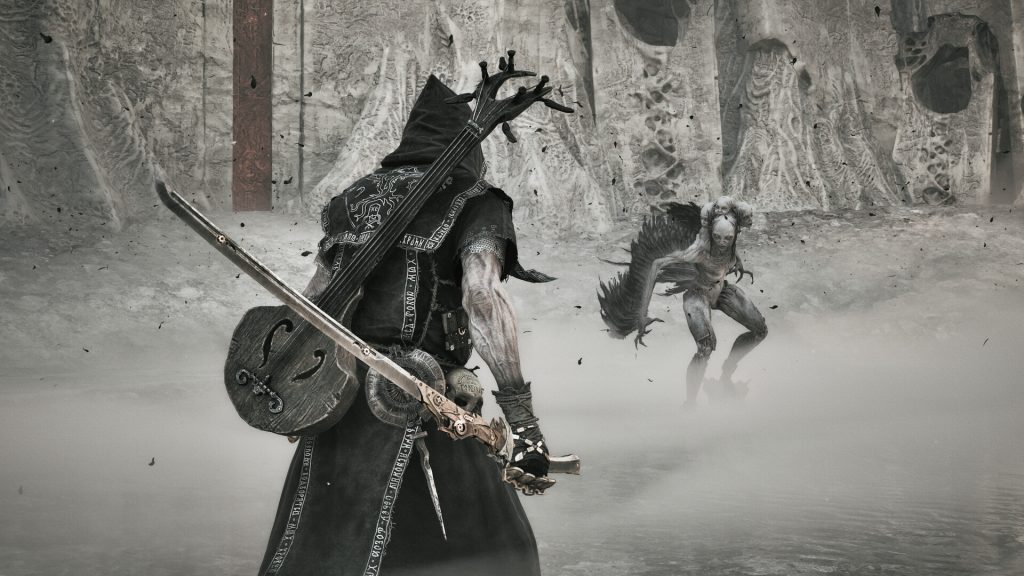
Now Mortal Shell 2 is here, and it makes some fundamental changes to the formula established by its predecessor. More importantly, those changes make an excellent first impression, initially suggesting that something truly special might be waiting ahead. The real question is whether that early excitement survives all the way to the end. Unfortunately, it doesn’t.
But before getting into where Mortal Shell 2 begins to fall apart, it’s worth talking about what makes those opening hours so promising. From there, I’ll explain exactly what I expect from a great Soulslike—and why, by most of those standards, Mortal Shell 2 ultimately lands somewhere between average and genuinely disappointing.
At first, Mortal Shell 2 feels like a mainly linear experience, more structurally akin to something like Dark Souls III. I think that is just the correct strategy for a project that doesn’t have the large budget or development staff to create a huge, densely-populated open world. A tighter structure lets the studio invest its money where it counts: deeper mechanics, better boss fights, more impressive visuals, maybe even better stories.
And right away in the opening stretch you see the advantages of that call. The stages are well designed, and the fighting is given enough of freedom to make a good first impression. This is also where Mortal Shell 2 takes some of its sharpest concepts from Sekiro: Shadows Die Twice. The old stamina bar has been replaced with a Posture system that affects the rhythm of combat drastically. Rather than always avoiding danger and waiting for an opening, you are urged to hold your ground, parry oncoming blows, break an enemy’s Posture and take advantage of that opportunity with a powerful blow to their health.
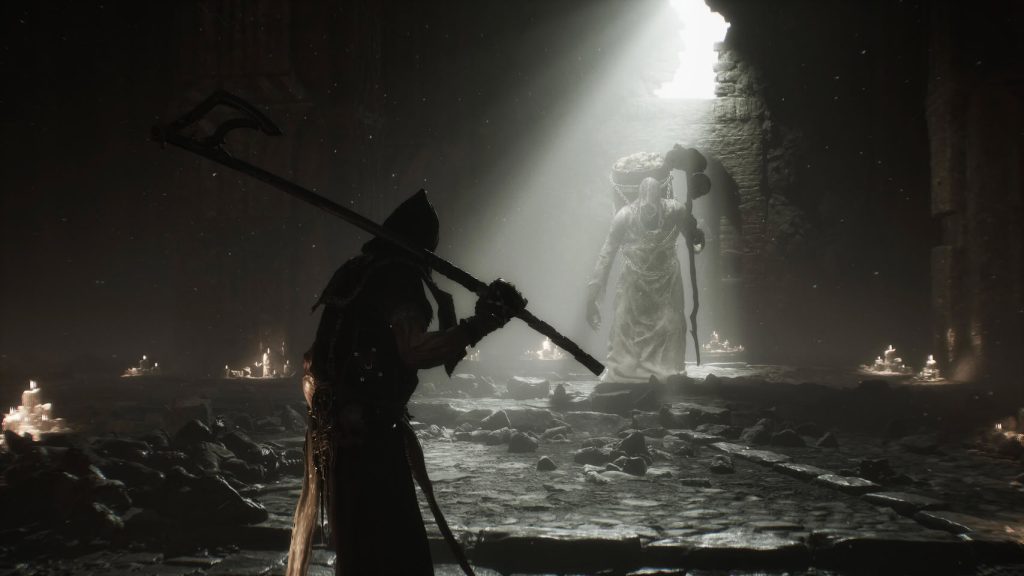
Luckily the parry system is more than up to the task of supporting that concept. The timing window seems rather wide without making good parrying totally trivial, and engagements continuously nudge you to be aggressive rather than backpedaling anytime an enemy starts hitting. It creates a considerably more aggressive fighting pace for Mortal Shell 2, where the payoff of learning to meet an assault is often more satisfying than dodging it.
Another welcome addition to Mortal Shell 2’s fighting is the many Shells. They’re not just fancy outfits for your avatar, each one has unique powers that can radically alter your strategy in combat. More crucially, the Shells are created with a modular system. As you level up you unlock new components that can be equipped on them, slowly opening up more fascinating skills and combinations. What you’re left with is a build-crafting system that’s simple to get your head around but not meaningless, and one that may actually change how you tackle the game’s tougher monsters.
On paper, Mortal Shell 2 then appears to have all the ingredients of a superb Soulslike. Unfortunately, this is also where its strengths start to falter. If we want to understand how a sequence of questionable design decisions may weaken such a promising foundation, we need to return to those standards I spoke of before, the standards of years of playing great Soulslikes have taught me to expect.
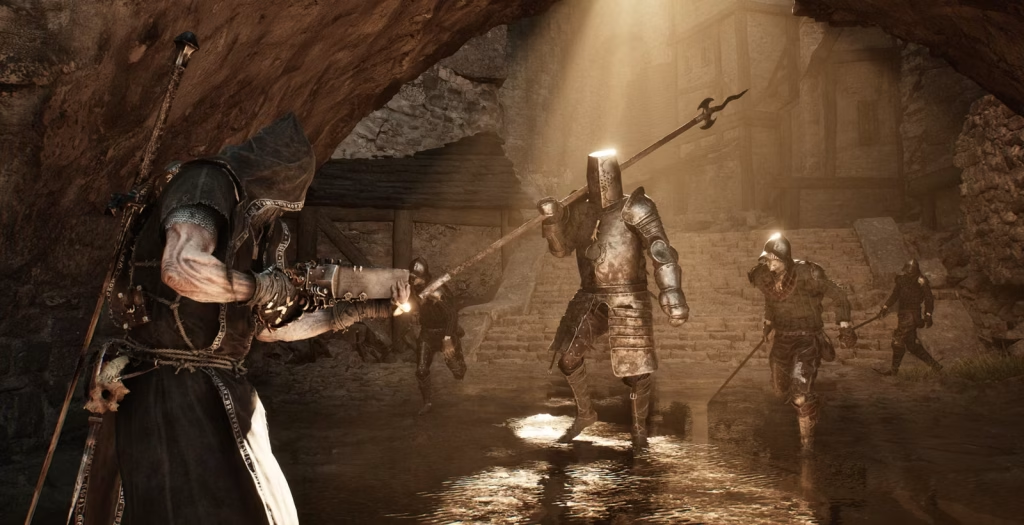
Standard #1: A Full Linear World Is Better Than an Empty Open World: The prologue of Mortal Shell 2 is completely linear, and if you were to ask me for the best example of level design in the entire game, this would be it. Huge, expansive open worlds take a significant amount of money, manpower, and creative resources, and Cold Symmetry just doesn’t have that at the same scale as the top companies in the business.
Which makes everything that follows the prologue all the more baffling. Mortal Shell 2 suddenly opens itself up into an open world game. And that reality just isn’t intriguing enough to warrant the shift. It’s rather empty, it’s not well designed, it doesn’t provide you enough significant stuff, and it often has you walking around locations that feel weirdly dead. Even the activities built to fill this free world can be so superficial and monotonous that I just started caring about pursuing them after a time.
What’s particularly infuriating here is that Mortal Shell 2 would have been better off if it had the same tight structure it shows off during its opening. It might have taken the more Lies of P route: a largely linear journey structured around lush, meticulously constructed settings, with cunning shortcuts connecting the different places like links in a chain. The outcome may have been a richer, more detailed and more memorable visually environment.
That framework would have made the combat better, too. Moving through thoughtfully constructed levels would include encountering varied enemy kinds positioned with intent, beating bosses that truly stood in the way of reaching the subsequent region, and advancing your character along a far more structured advancement arc. And it brings me right into my second criterion.
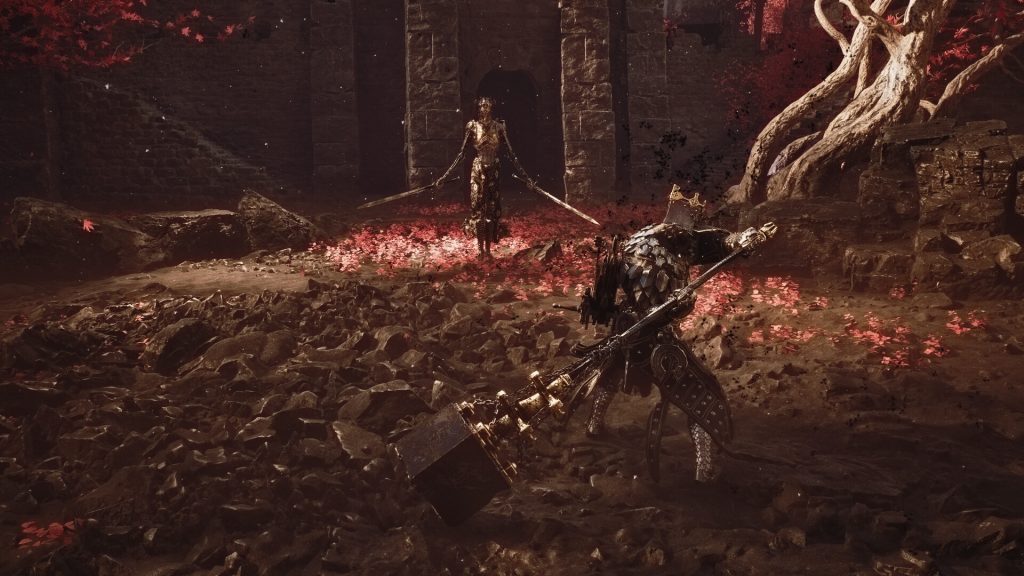
Standard #2: Difficulty Should Feel Fair, Not Frustrating: The level design of Mortal Shell 2 is faulty and results in one of the greatest problems: the difficulty curve is inconsistent and often unrealistic.
A crucial foundation of Soulslike design is character advancement. As I noted previously, Mortal Shell 2 contains a lot of exciting ideas for combat and character customization. The issue is that opening those mechanisms up to the wider world utterly breaks that progression’s equilibrium.
Similar to Elden Ring, Mortal Shell 2 lets you get in into its universe extremely soon and perhaps even pick up a powerful Shell and weapon much ahead of schedule. That kind of freedom may be tremendously rewarding in a properly balanced open world. The trouble is, Mortal Shell 2 never quite knows how much power it’s providing the player so early, or, more significantly, how the rest of the game should be built to confront someone who’s already had it.
The developers of Mortal Shell 2 were faced with this difficulty and had essentially two choices. The first was to adopt the mentality of Sekiro and create complicated, challenging boss battles that rely on mechanical skill, where you have to learn attack patterns, make good use of the game’s mechanics, and actually become a better player. The second was the shortcut taken by far too many substandard Soulslikes: misunderstanding what makes difficulty gratifying and manufacturing challenge through enemies that dish out ludicrous amounts of damage and inexplicably bend the rules whenever the game needs them to.
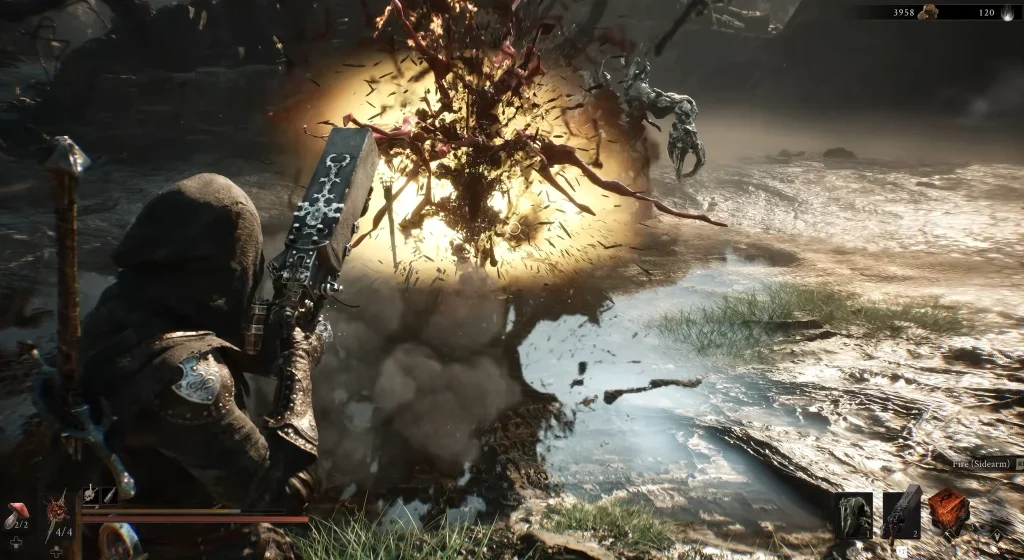
The first method is clearly the better one. Cold Symmetry, though, is a rather tiny crew and seems to have had a tough time keeping its goals in check. So much development time, expense and people went into constructing an open environment, that the game finally falls back on the second technique when it has to make its bosses menacing.
The result is a variety of boss bouts that are rarely very sophisticated in their move sets. Most of their attack patterns should be familiar and learnable for anyone who has beaten even a couple of Soulslikes. Mechanically, these bosses are surprisingly straightforward and, against an already powerful player character, they just don’t have enough depth to stay truly hard. Mortal Shell 2 does not make them smarter or more mechanically difficult, but seeks to even the odds in less rewarding ways.
Firstly, bosses just plain hit way to hard. Even their most basic assaults can drain half your health bar with ease. More annoying, the real range and reach of some assaults can be quite hard to read. You may observe a boss do a strong strike and recognize what is coming and purposefully put enough space between you and him to avoid it. If you read the attack correctly and stayed out of its range, it should be enough in a properly constructed encounter. Mortal Shell 2 is not usually the case.
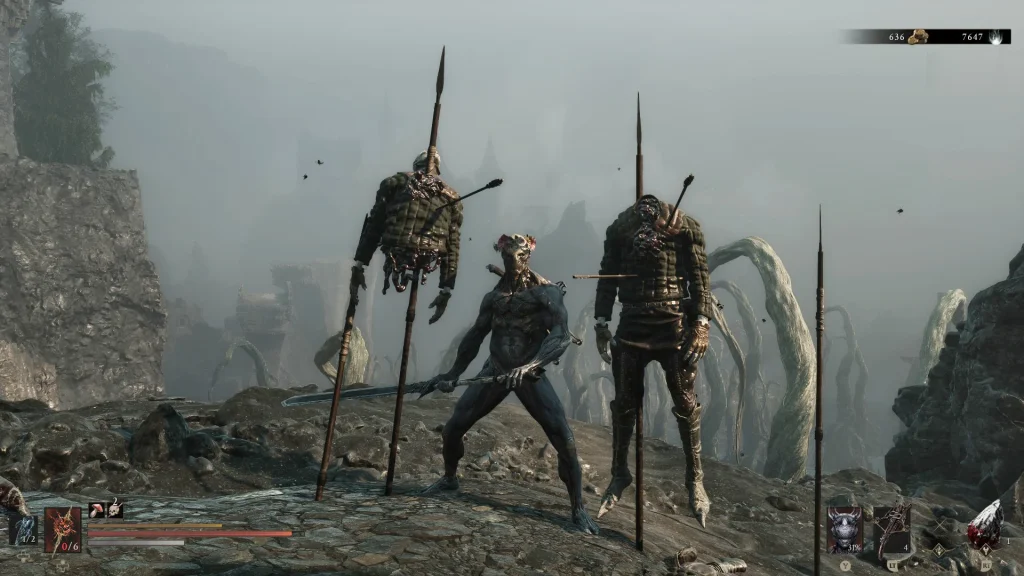
Bosses apparently can slide across the ground to close the distance instead, with strange animations taking them much beyond the range the assault visually seems to be able to reach. You played the move right. As you respond as appropriate. You situate yourself where you should be safe—and still get smacked hard. At that point, the complexity doesn’t feel like the game is testing your grasp of its mechanics. It seems like the boss is just cheating.
And then there’s the third standard: the visual design of the bosses and the world really matters. And it’s typically what distinguishes a memorable Soulslike from one that feels superficial and forgettable.
Let’s exclude Miyazaki and FromSoftware from this discussion in the interest of fairness. Their games are playing at a level that a smaller studio with a smaller budget just isn’t anticipated to be able to match. Lies of P would be a far more acceptable analogy for Mortal Shell 2.
Final Verdict
Ultimately, Mortal Shell 2 is a thoroughly ordinary Soulslike with a handful of strong ideas buried beneath overly ambitious design decisions. I would only recommend it if you have already exhausted most of the better options available in the genre. If there are still acclaimed Soulslikes sitting in your backlog, your time would be much better spent playing those before considering Mortal Shell 2.
This review is based on the PS5 version
Score: 60/100

A Bloody Good Hunt | Crimson Moon Review
Onimusha: Way of the Sword Review