
When Duet Night Abyss, or DNA, was first announced, it got hack-and-slash fans, MMO fans, and players who liked games like Warframe all excited. But the real experience, instead of making them feel excited, is full of disappointment and confusion. The first and most important problem is that there hasn’t been any real innovation. DNA seems more like a weak, watered-down version of past successes, with little to show that the developers put in a lot of work to come up with new ideas.
The story, which could have been a strong part of the experience, falls apart because of overused phrases and predictable beats. The story is built around two main characters, but this way of telling the story doesn’t have the desired effect. Both characters have dark pasts, social problems, and family problems, and the addition of a mascot character whose only job is to recycle old tropes makes the story even worse. Officer Readem is the only exception; he adds a rare touch of drama and emotional depth to the plot through personal conflict and real character growth. But a single well-written character can’t carry the whole story, and the other characters will be forgettable and pointless.
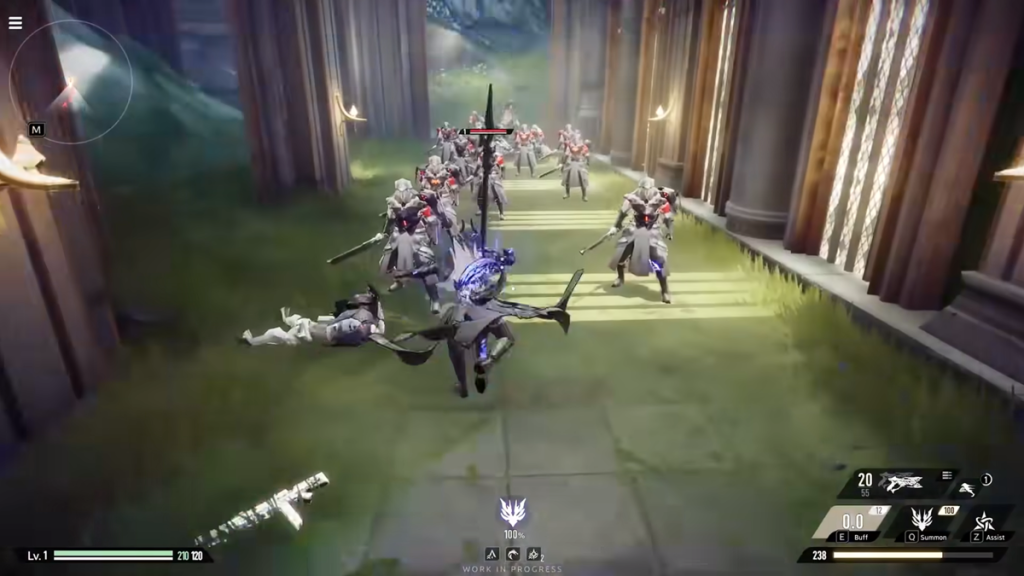
DNA makes a strong first impression, especially with its cyberpunk and cybernetic themes that are present in its early stages. But in terms of technology and detail, it is nowhere near modern ninth-generation standards. The environments and places are often the same, and the enemy and character designs aren’t very different or memorable. The animations look stiff and fake, and they don’t show any real movement or life in the characters.
Technical problems make the experience even worse. Sudden crashes, input lag that isn’t always predictable, long loading times for cutscenes, texture pop-ins, and physics bugs that never go away all make for a very frustrating play session. The movement system, which should be a strong point in any hack-and-slash game, is limited and doesn’t work well in DNA. The Helix Jump isn’t as smooth as a bullet jump, rolls are limited, and gliding doesn’t really change speed or how easy it is to move around. The aim-glide mechanic is also hurt by autofire while in the air, which makes it almost impossible to control accurately. Because of this, fights with some bosses, like Psyche, become pointless and useless, especially when the player is flying and doesn’t have any ammo.
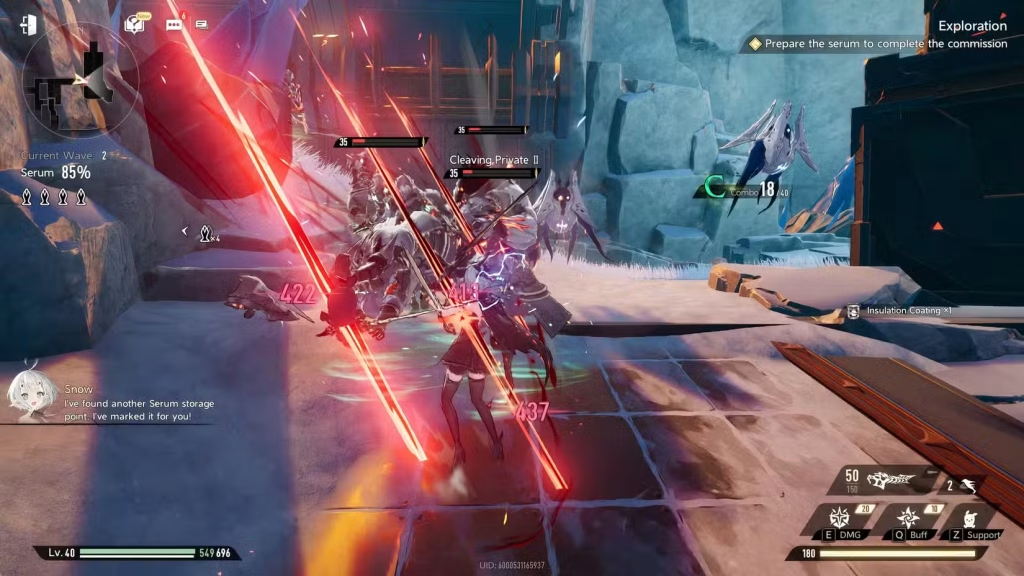
DNA’s gameplay doesn’t have a lot of depth. Each character can only use two active abilities and one passive ability in battle, and there aren’t enough weapons and combos to make it feel like there are enough. Level progression doesn’t give the player any sense of growth or power either. The game doesn’t often give you challenges that make you use new skills or try out different combos, so there’s not much of a push to try new things or get better at them. Because of this, players often do the same things over and over again, even at higher levels.
Some characters, like Rebecca, can only summon simple creatures that do very little damage. This makes them a small part of the overall gameplay and almost passive. Like the upgrade and crafting systems, the ones in this game are limited and don’t work well, so there isn’t much room for players to come up with new or different ways to play.
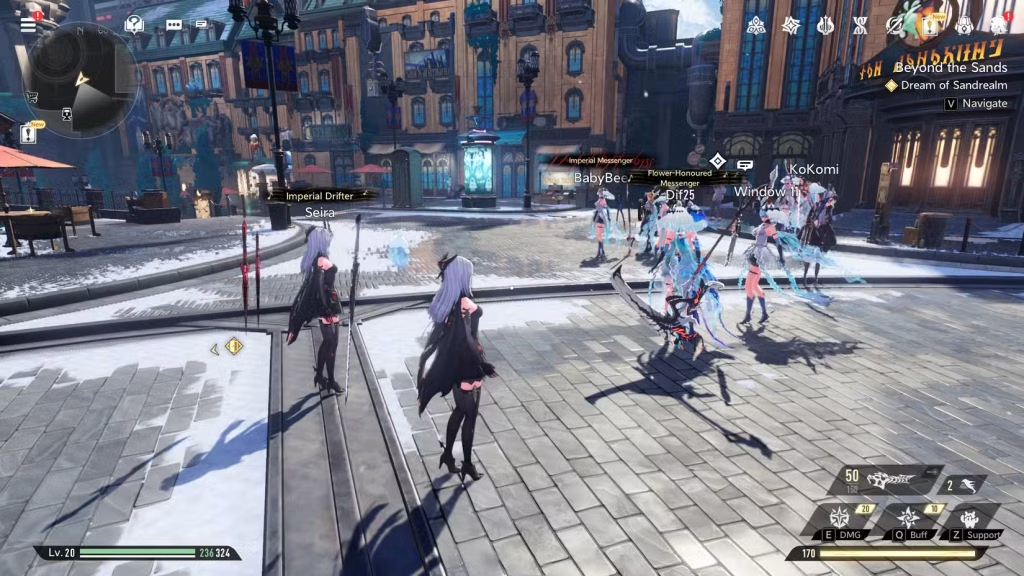
The game’s economy, including how it works and how it makes money, is another area that needs a lot of criticism. The game’s internal economy makes players grind too much and rely too much on microtransactions. The relic/letter system is hard to understand and takes a long time, and the chances of getting valuable rewards are very low. If the player is willing to spend a lot of money, it can take eight to nine months to fully upgrade a character. On the other hand, direct purchases are very expensive, which makes it hard to move forward for free and makes the whole experience a boring, frustrating slog.
Duet Night Abyss could have been a great game, but now it’s just a bad example of how to make one. The game’s predictable plot, poorly developed characters, average graphics, constant technical problems, shallow gameplay, and boring economic systems make it less fun and more of a test of patience and endurance. DNA doesn’t make things fun; instead, it takes a lot of time and work from the player to make a product that isn’t finished and doesn’t make them happy.
This review is based on the PC version.
Score: 42/100

Other Articles

MARVEL Cosmic Invasion Review
RV There Yet? Review