

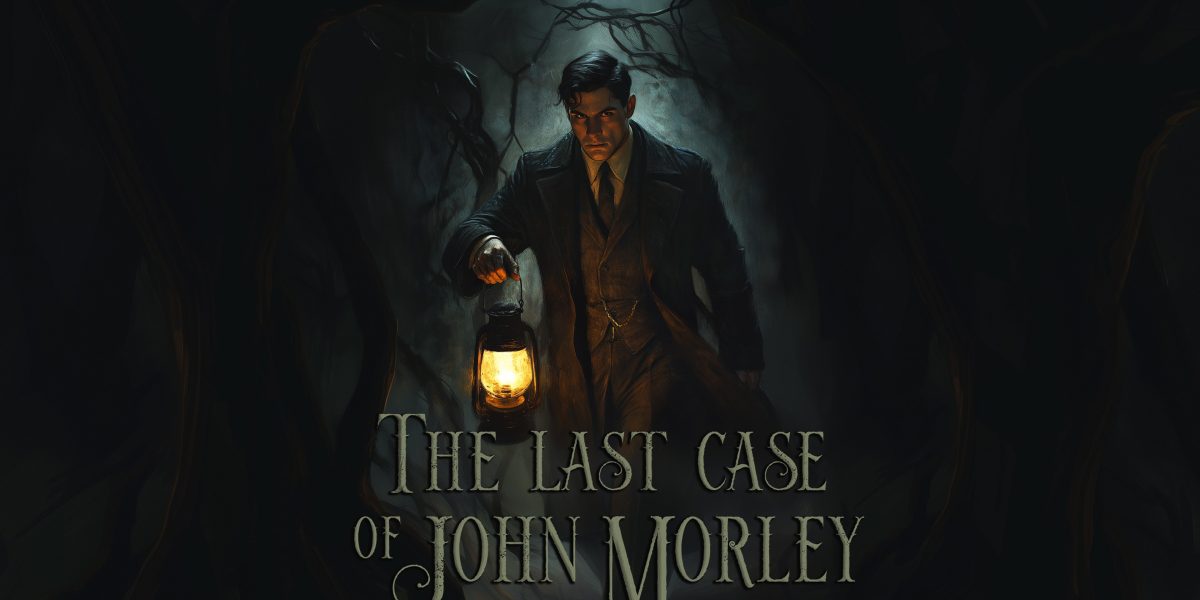

Think about walking into a mansion where the walls seem to breathe, where silence is louder than sound, and shadows wait for you to blink to move. The Last Case of John Morley starts with a big promise: the last case of a veteran detective in a house that smells like death. But is this short trip—maybe too short—a great psychological thriller, or is it just a pointless walk in the dark? Let’s look into Mr. Morley’s case.
A Story That Must Be Unearthed from the Dust
This game’s story is broken up into pieces, like a thousand-piece puzzle that needs to be put together. This is different from many modern titles that present their stories in a way that is easy to understand. As John Morley, you don’t have cinematic cutscenes to guide you. Instead, you have to deal with the house’s oppressive silence. The story is hidden in dozens of letters, diary entries, and crumpled notes that are kept in drawers. It invites the player to actively put together the truth instead of just reading it.
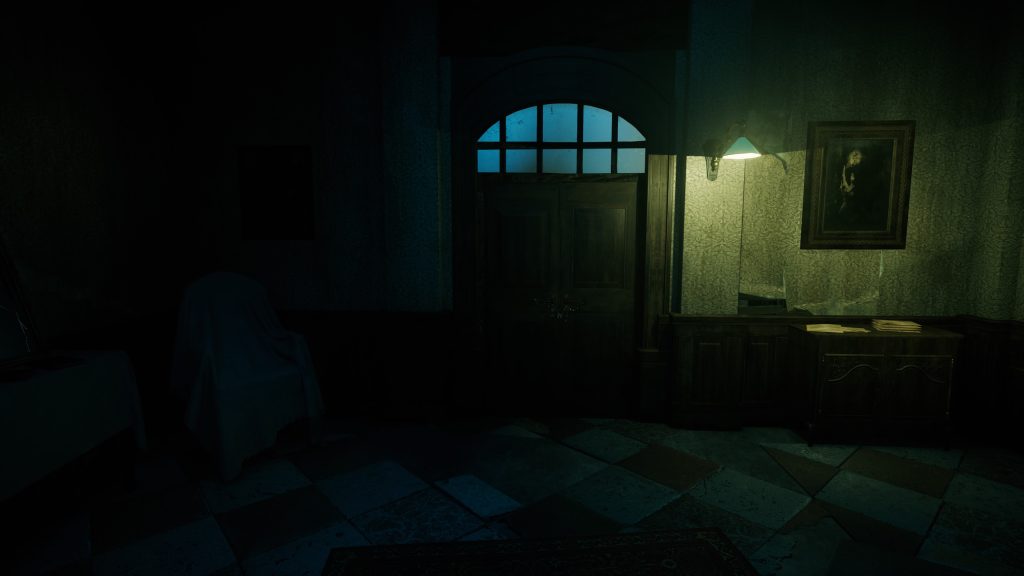
This method has both good and bad sides. If you don’t have the patience to stop and read long texts, which are sometimes written in fonts that are hard to read, you will miss almost 90% of the story’s depth and the characters’ motivations. This will make the experience feel like a regular “haunted house” scenario. A more in-depth look also shows that the story has a lot of holes in it. For example, the placement of important evidence often doesn’t make sense and is only there to lead the player in a certain direction.
The ending of the game is like the story itself: it leaves you with a sense of uncertainty. It is an open, interpretive ending that keeps the audience in a state of uncertainty about what is real and what is not, and it doesn’t give any clear answers to the supernatural events. I won’t say anything else. I’d rather you spend a few hours thinking about Mr. Morley’s case on your own.
Trapped in the “Key and Door” Syndrome
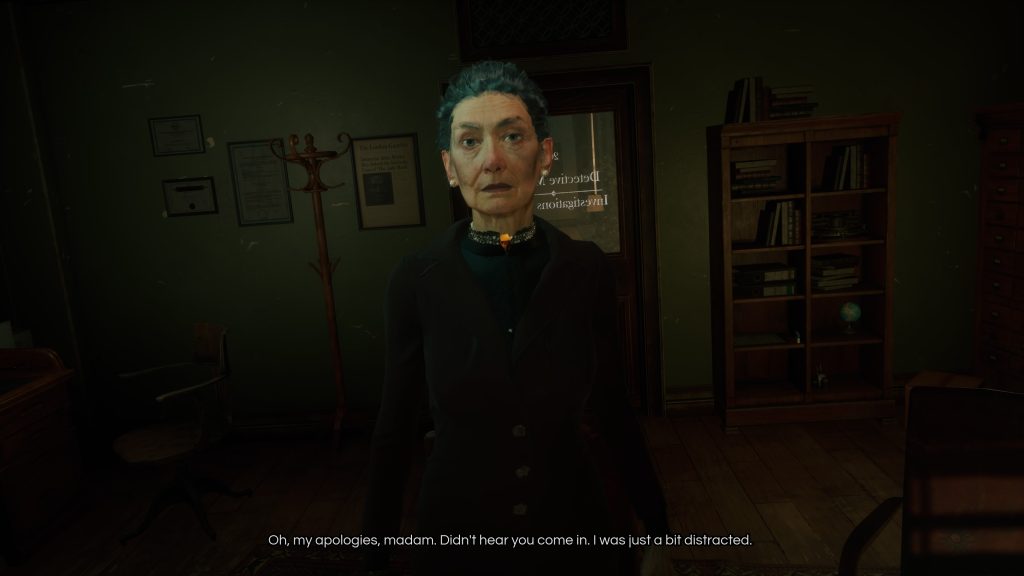
You are very wrong if you think that because of the game’s title, you will be able to pick up a magnifying glass, collect fingerprints, and figure out who did it like Sherlock Holmes. The word “Detective” here is just a trick to make you think it’s something else. In reality, you are not an investigator; you are a key hunter.
The way the game is set up is stuck in a boring, linear loop: you have to find a key or lever in nearby rooms, open a locked door, and then do it all over again. The puzzles don’t really test the player’s brain; they only test their eyesight in the dark.
The illogical design of some locks is another problem that has a big impact on the experience. Sometimes, our “detective” has to search the whole house for a rusty key just to open a door that could be kicked in. The game’s stiff physics when interacting with objects and the main character’s slow movement speed (made worse by the lack of a proper sprint mechanic) make this problem worse. This makes frequent backtracking a pacing killer and makes the experience needlessly tiring.
A Symphony of Fear
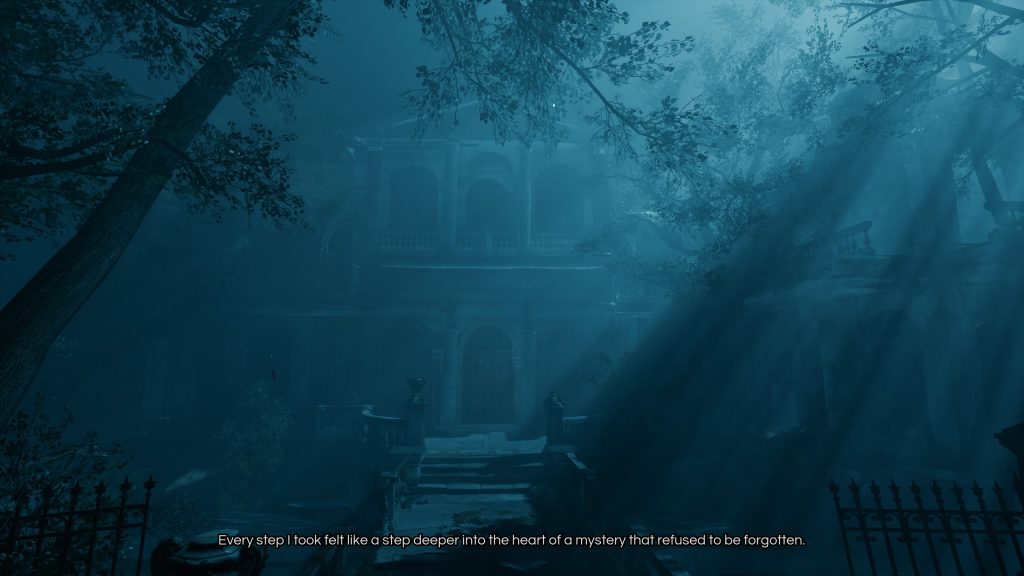
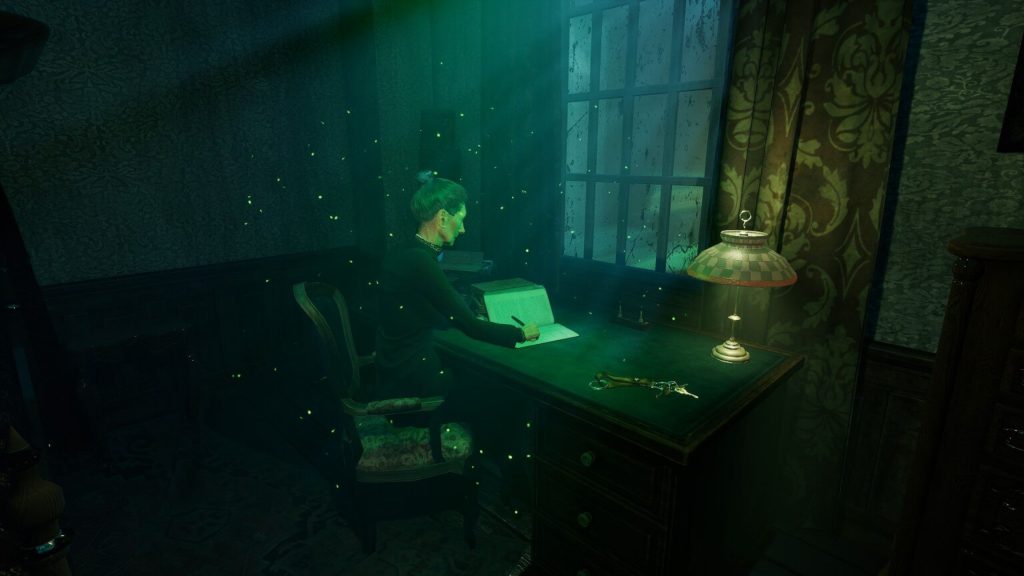
The game’s atmosphere is its best feature, and that’s where its independent creators really shine. The game doesn’t just throw monsters at you all the time to scare you; instead, it plays with your nerves. The horror here is quiet and sneaky. You walk into a room and everything seems normal. When you come back a few minutes later, a chair has moved or a mannequin is hiding in a dark corner. These tiny changes are very good at making people feel paranoid and distrustful of reality itself. It is fair to say that at least half of the game’s scares come from the sound design. The house is very quiet, except for small, creepy sounds like the creak of wooden floorboards, the wind howling, and John Morley’s heavy breathing. A ringing phone that suddenly stops is much more effective than a thousand monsters that are very well designed.
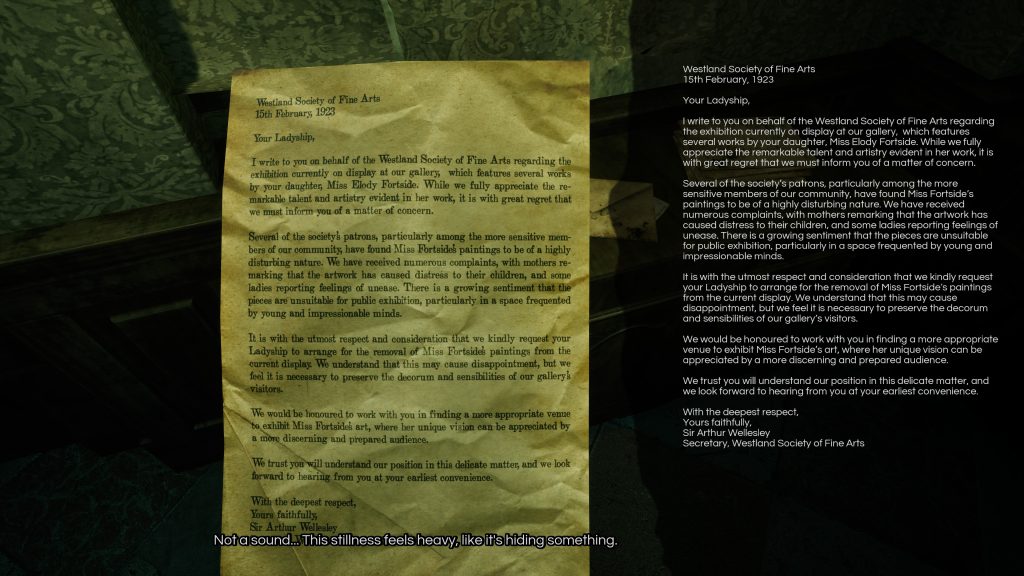
Even though the indie production didn’t have a lot of money, the game’s technical and artistic graphics are very good. The changing light, the way the flashlight beam bounces off of different surfaces, and the dancing shadows all make it feel like a home that was once lived in but is now empty. The game also uses visual effects like blurred vision and changing points of view to show how the main character’s mental state is unstable.
The dolls and mannequins that are spread out around the area aren’t just there to look good; they are symbols of past sins and victims that have now become creepy. That being said, it’s important to note that the modeling of some objects, especially human character models and corpses, sometimes doesn’t meet the visual standard set by the environments. This can break immersion for a short time.
The Last Case of John Morley ends up being a bad book because of its misleading title. If it had been called Shadows of the Mind, people might have had much more reasonable hopes. This isn’t a fully realized “video game” with detective mechanics; it’s more of a short, atmospheric interactive experience based on psychological horror.
The game does a good job of making players scared and anxious, but it doesn’t do a good job of keeping them interested. This cheap, one- to two-hour experience is worth trying if you like being in dark places and the “walking simulator” style. This file will not be very satisfying for people who want to be challenged intellectually, have fun, or solve a complicated case.
This review is based on the PS5 version.
Score: 65/100

Other Articles

Pioneers of Pagonia Review
MARVEL Cosmic Invasion Review