

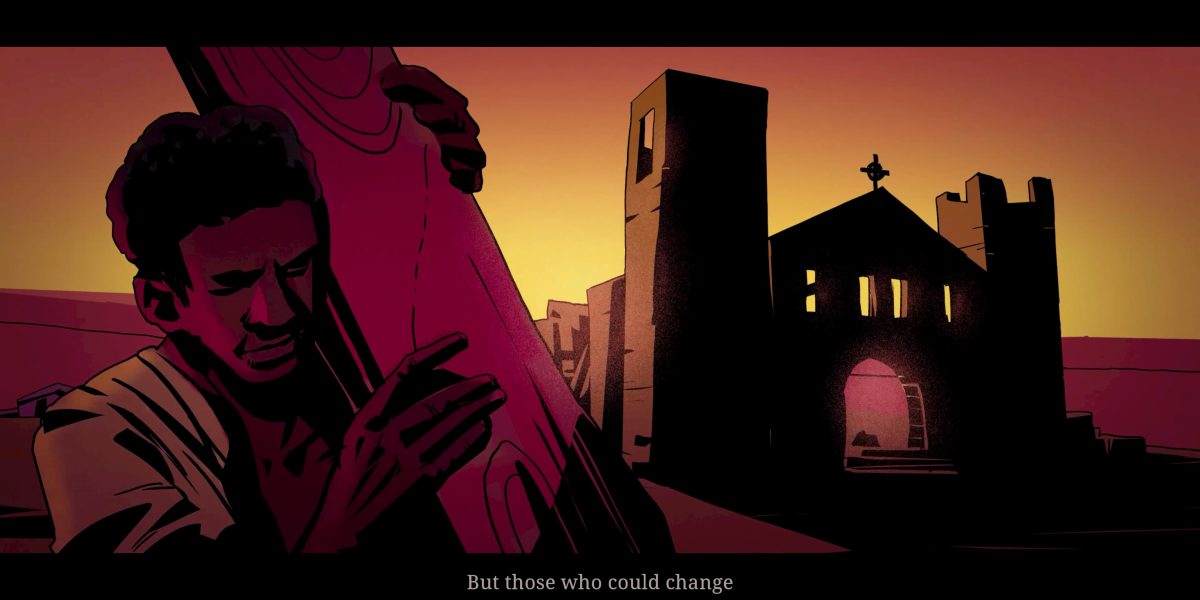

“History is a nightmare from which I am trying to awake.” The well-known remark by James Joyce seems to be the ideal entry point into the depressing, hallucinogenic, and unrelentingly unpleasant universe of Hell Clock. Hell Clock, a bold action role-playing game published by Mad Mushroom and created by the Brazilian studio Rogue Snail (best known for games like Relic Hunters Zero and Dungeonland, though I haven’t had a chance to play either), turns one of the most neglected and devastating historical tragedies in South America into a terrifying dark fantasy.
The game creates a terrifying universe where terror and history are inextricably linked, drawing inspiration from the bloody War of Canudos that devastated Brazil in the late nineteenth century. “This is a work of fiction based on the real events of the Canudos massacre.” is the startling declaration. Even before the first fight has started, just one line is sufficient to convey the experience’s overwhelming emotional weight.
However, Hell Clock is much more than a simple historical narrative. Fundamentally, it’s a daring mechanical fusion that combines the addictive run-based structure of contemporary roguelites like Hades with the loot-driven action RPG model of games like Diablo and Path of Exile. As a result, the experience is centered on one unwavering concept: time. Time itself becomes both your biggest enemy and your most important resource, shaping every mechanism, every choice, and every plunge into its terrifying universe.


A Story Written in Blood, Purgatory, and Gunpowder
The story is set in 1903, eight years after the Canudos tragedy. You place yourself in the position of Pajeú, a Black guy who used violence and gunfire to free himself from slavery. In the end, he came to symbolize opposition to the vicious military power of the young Republic of Brazil. One of the few people who survived the massacre, or more precisely, a man who has risen from the tomb, is Pajeú, a clockmaker and gunslinger. He must travel through the circles of Hell to save the soul of his spiritual master, Antônio Conselheiro, whose spirit has been drawn into the abyss by demonic forces born of injustice and violence. This endeavor is legendary in scope and deeply personal.
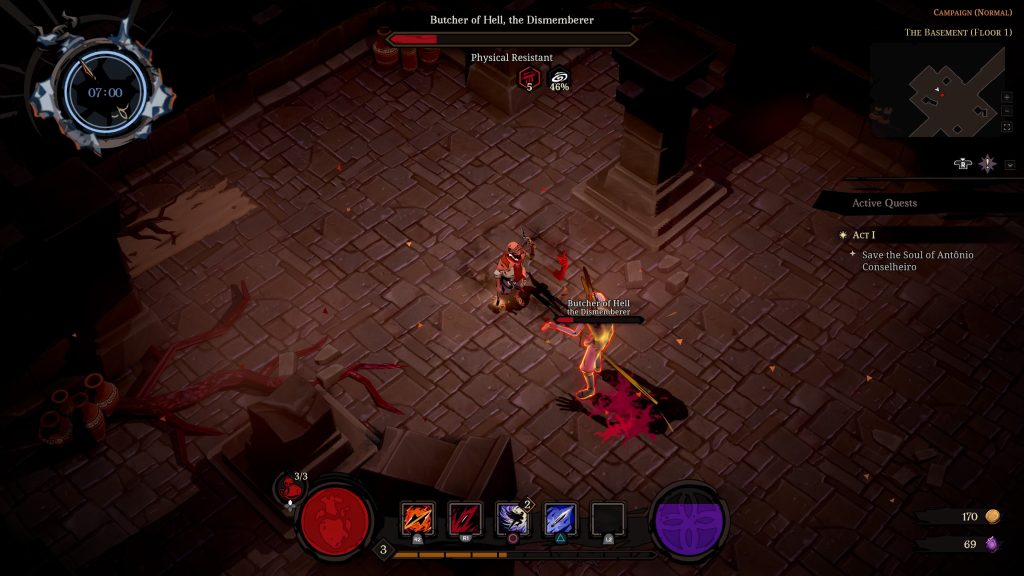
Hell Clock skillfully depicts the classic descent into the underworld archetype. Real historical characters, such as João Abade, a commander of the Canudos resistance, appear around the game’s center town of Quixeramobim to offer guidance and assistance in between expeditions. Even the supervisors, like Dr. Raimundo Nina Rodrigues, are horrible, horrifying reincarnations of the military leaders and racial ideologues who committed the murders. It’s a creative narrative style that turns the oppressors of history into real monsters while framing the journey as an attempt to confront—and potentially heal—a nation’s unresolved trauma. Even while many players outside of Brazil may not be familiar with the historical context, the allegory’s emotional impact is nevertheless very potent.
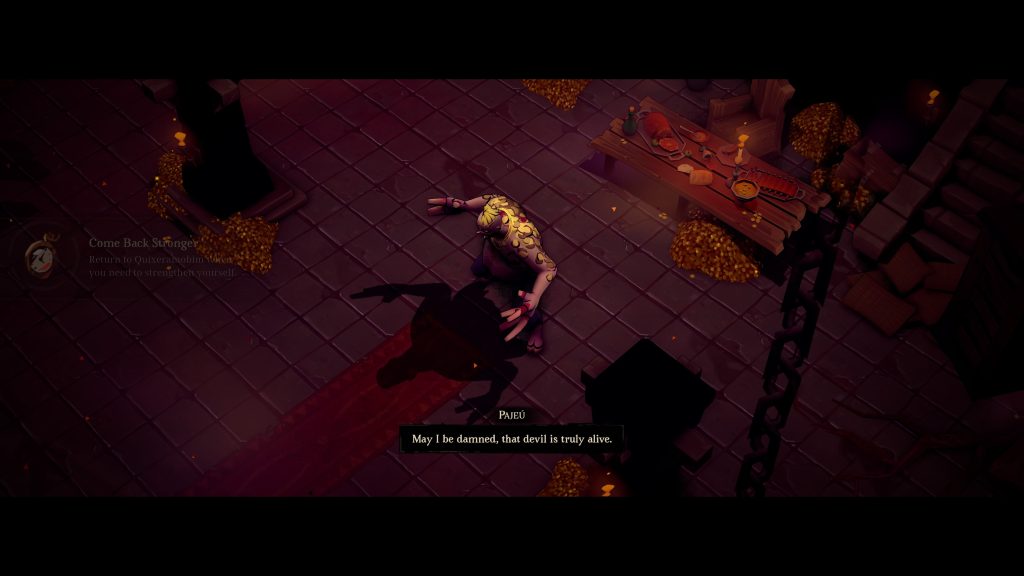
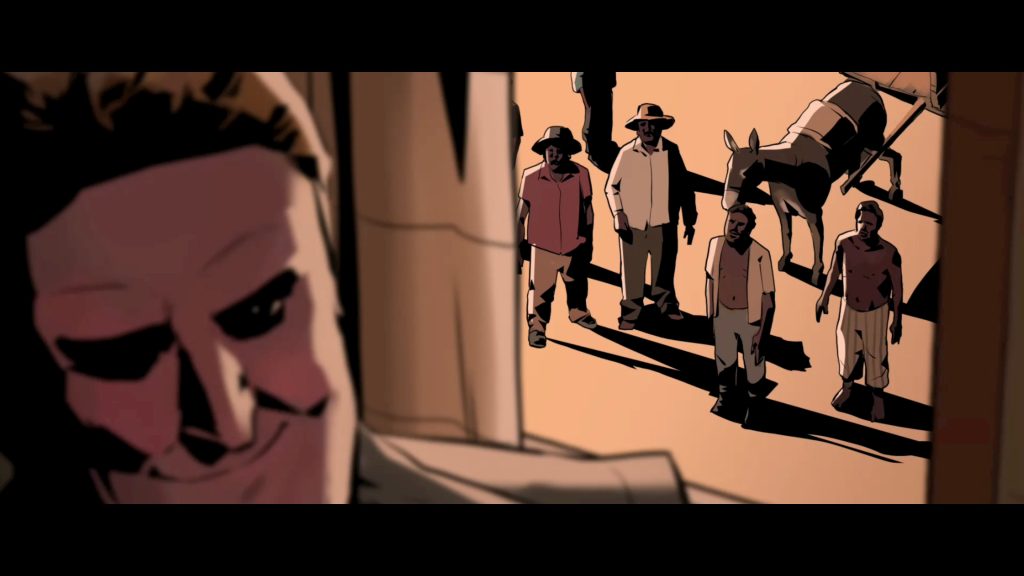
But until the very end, the story finds it difficult to keep up its energy. The first act skillfully blends historical sorrow with its dark fantasy backdrop, and it is fascinating and incredibly detailed. But as the game goes on, a lot of that narrative objective gradually wanes. In order to keep the action flowing at full pace, the developers eventually lost part of the story’s emotional and conceptual richness, as evidenced by later chapters that are almost solely focused on unrelenting warfare and a more traditional revenge-driven situation.
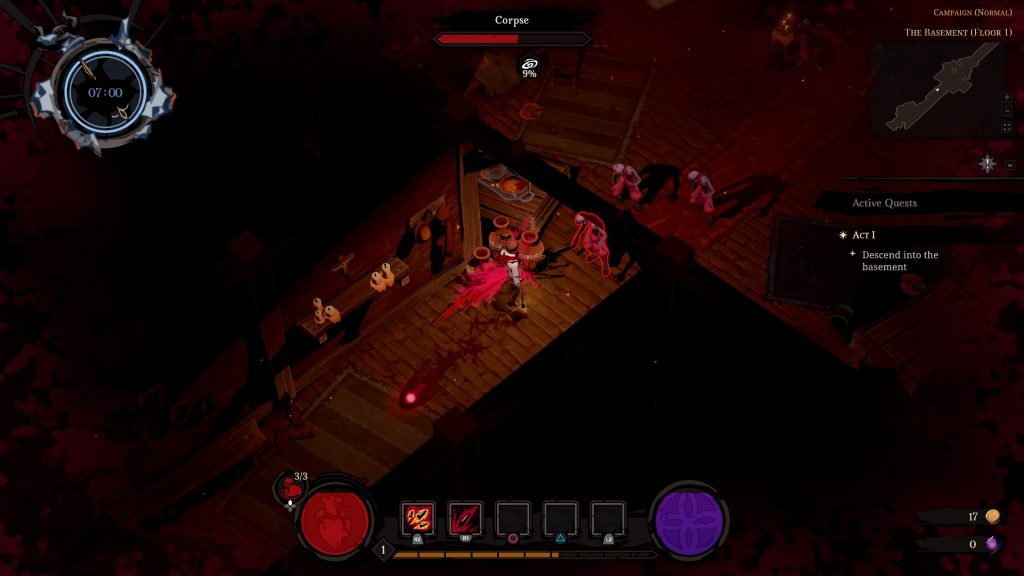
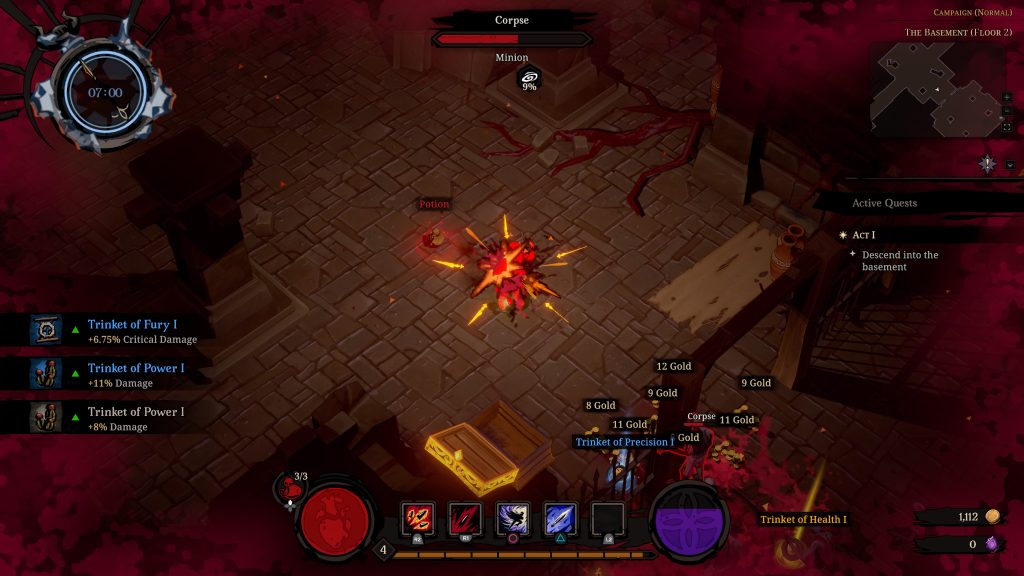
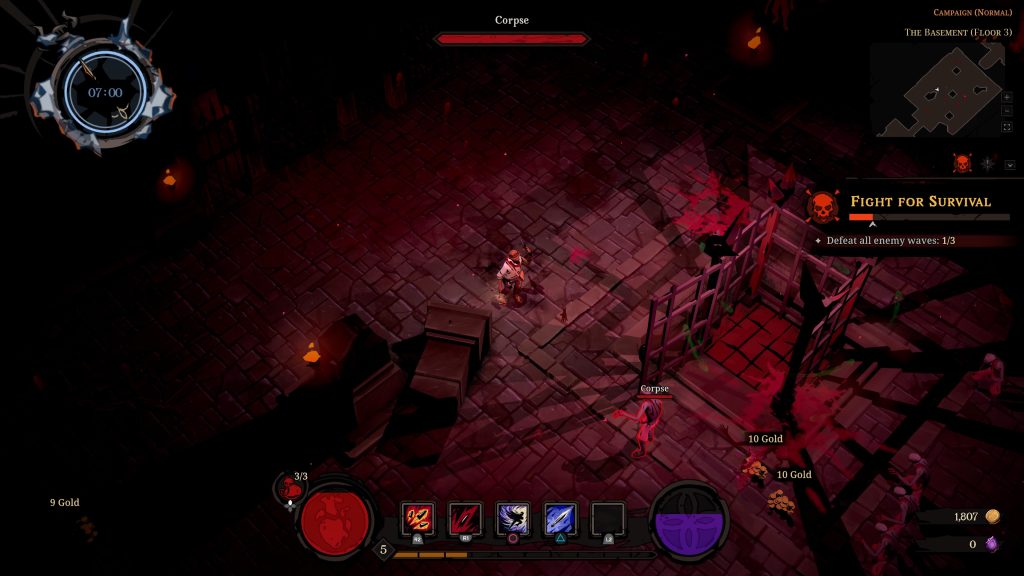
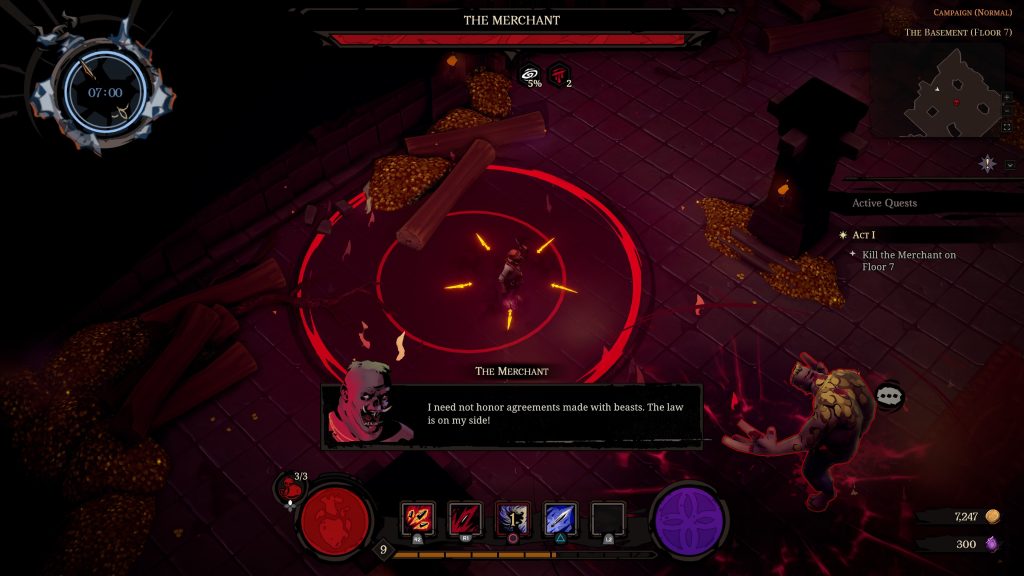
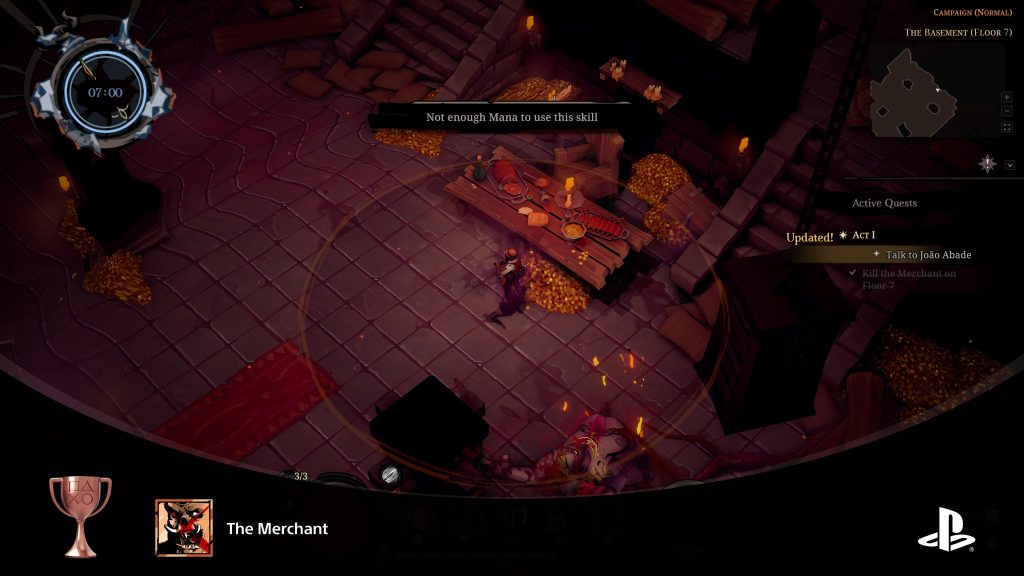
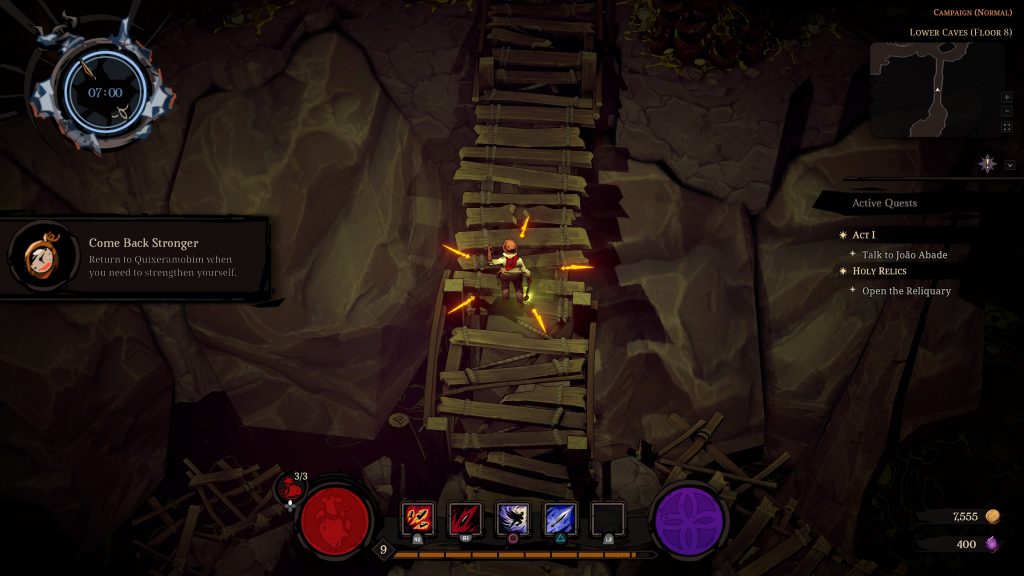
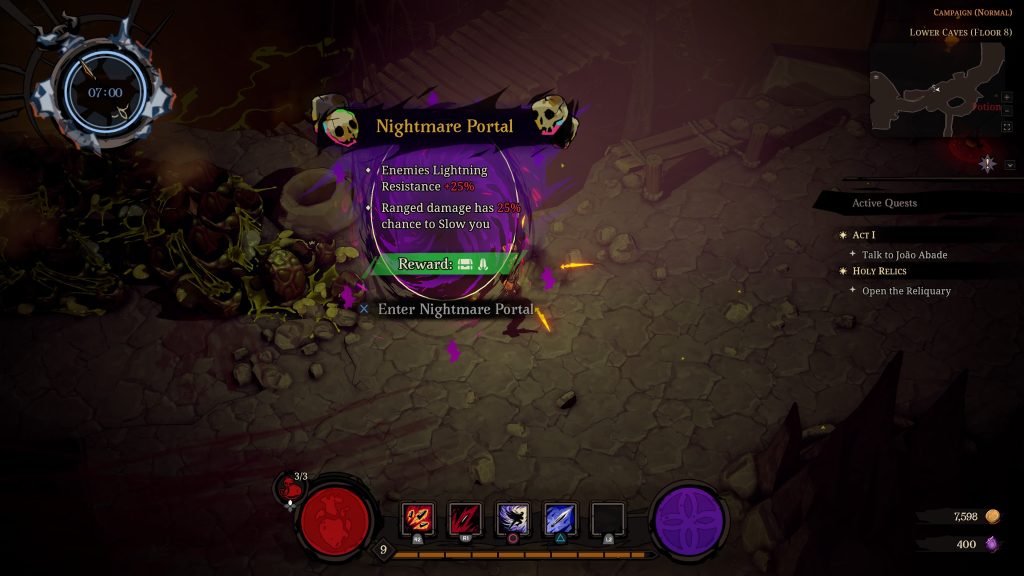
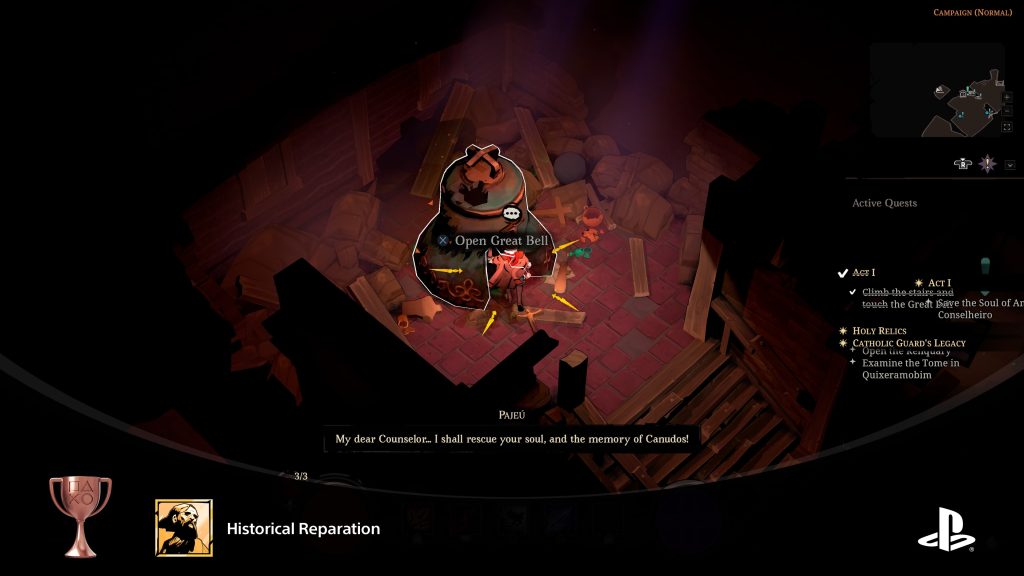
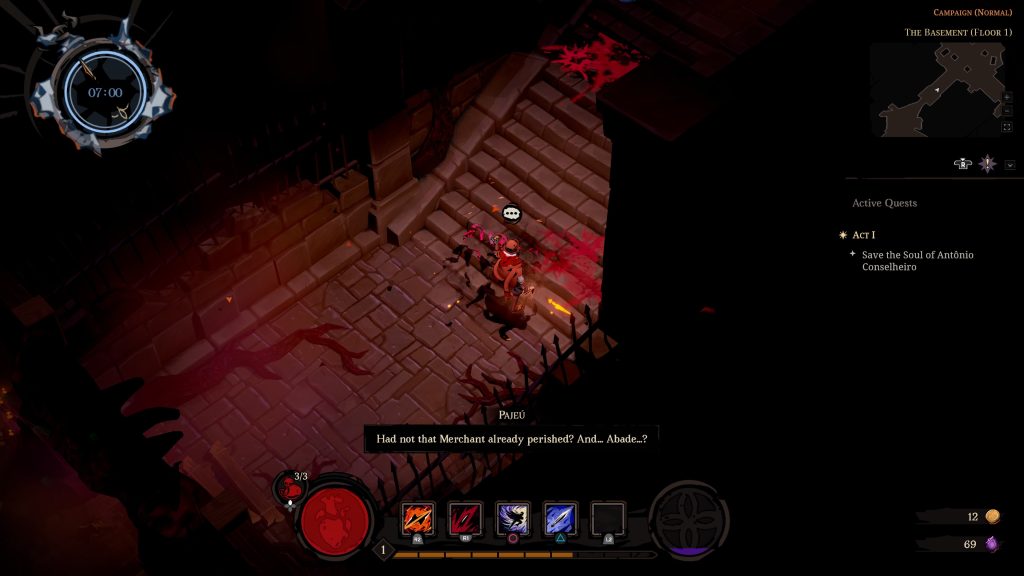
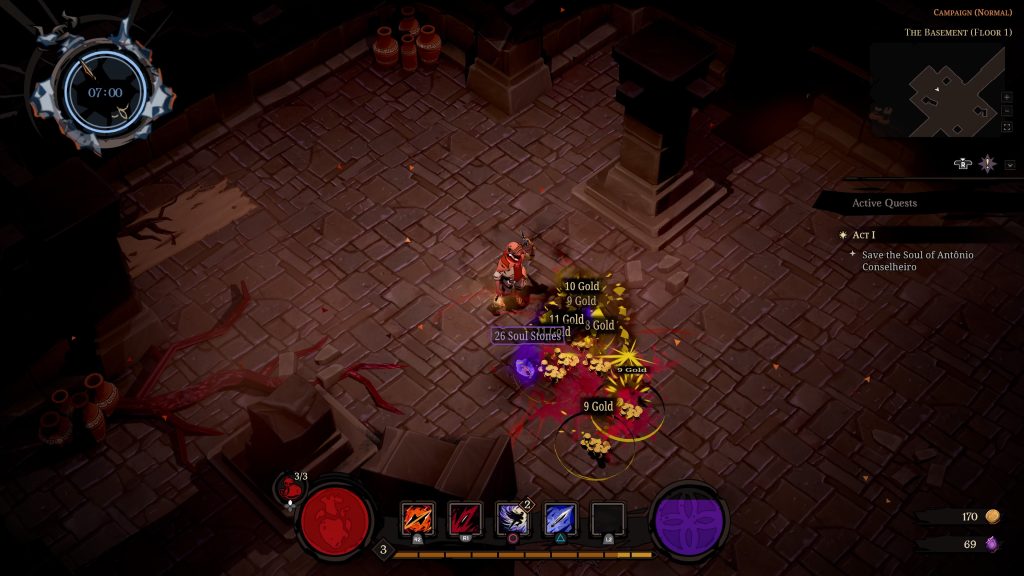
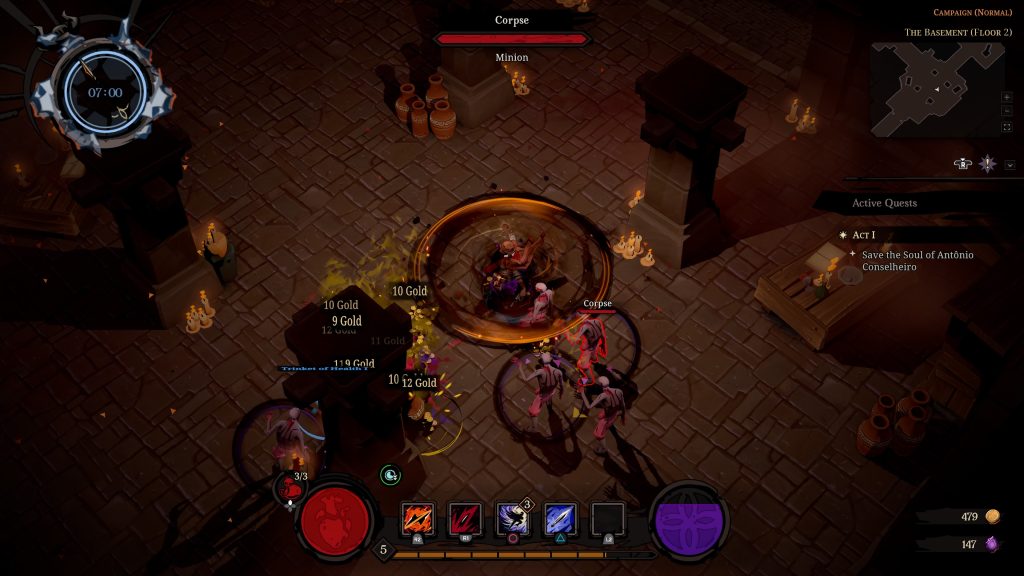
Hell Clock is fundamentally based on fast-paced, chaotic combat and an isometric perspective. It may look like Hades at first, but as soon as the action starts, it becomes evident that Diablo is also heavily involved. In order to unleash progressively lethal skills, you must constantly battle through overwhelming enemy hordes, gather an unrelenting downpour of gold and loot, and carefully manage your mana pool.
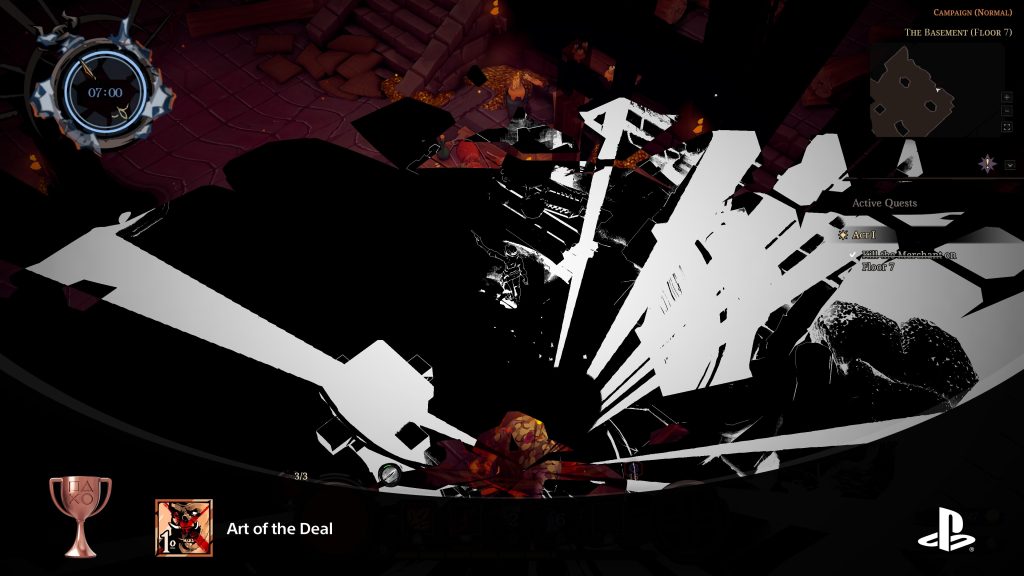
Dancing Against the Hell Clock with Death
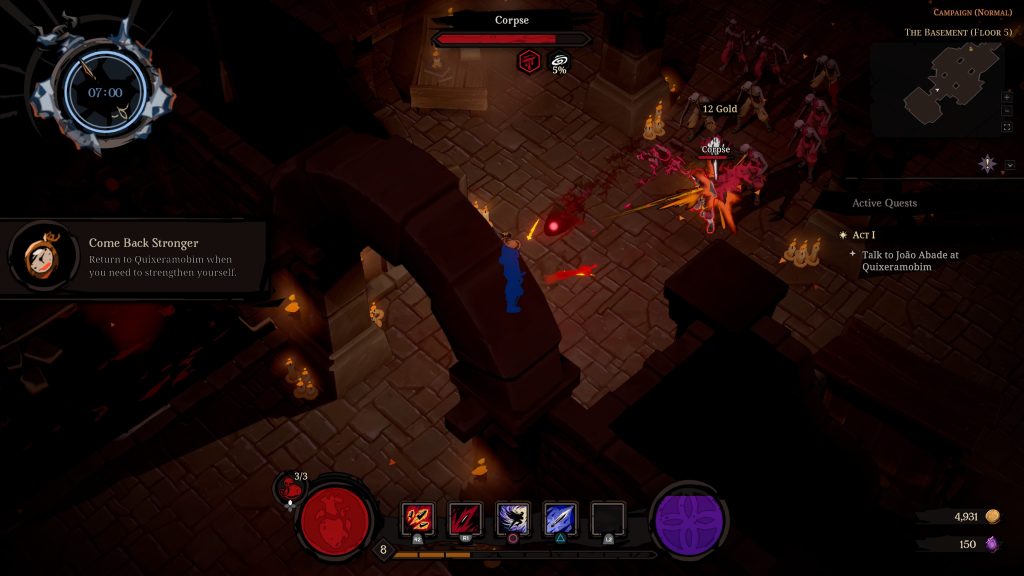
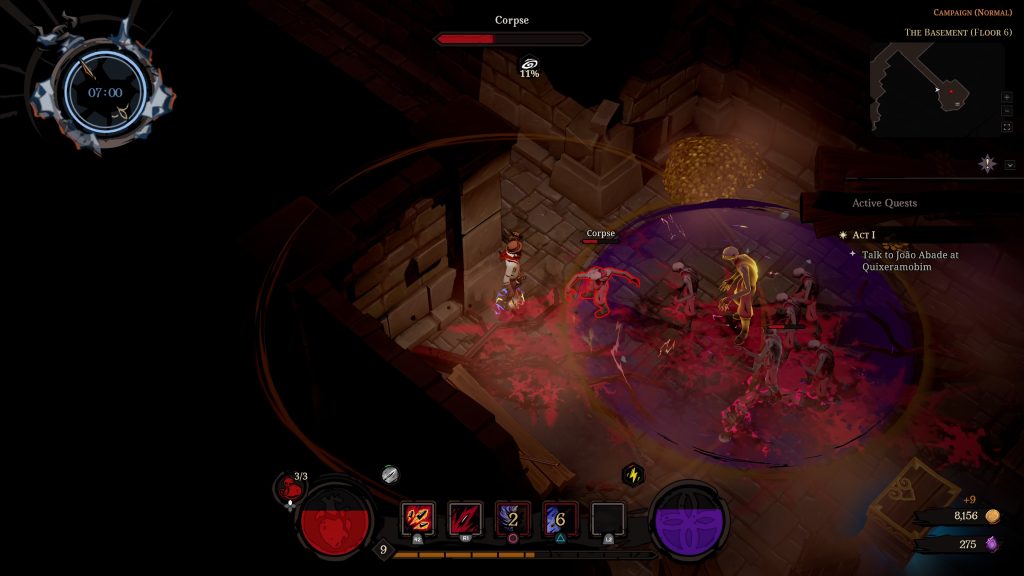
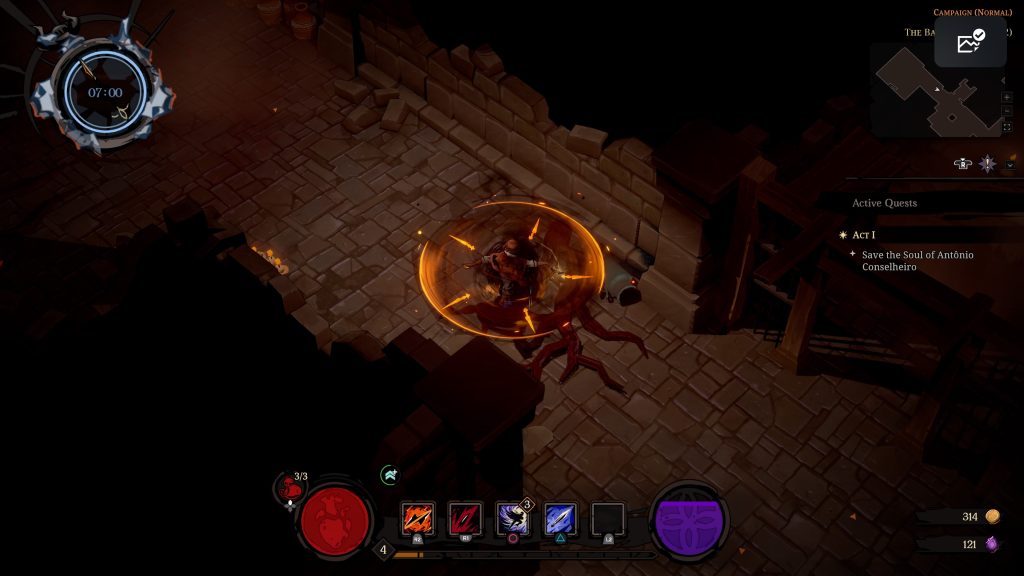
Pajeú’s firearm is the foundation of combat itself, and it provides a surprisingly gratifying degree of tactical variation. While one attack delivers a powerful, high-impact single round capable of shredding through harder opponents, another is made as a wide-spread shot, making it perfect for crowd control. Mana-based skills, such as swirling rings of ghostly blades that orbit your character and quick-fire chain attacks that may destroy entire packs of enemies, supplement these fundamental assaults.
Each run’s worth of gold is more than just money to hoard. You will come across angelic statues in every stratum of the underworld where you can use your hard-earned riches to make short-term upgrades that increase vital combat metrics like maximum health and resistances. By continuously questioning whether it’s worthwhile to take on more risk before reaping the advantages, this approach generates a gratifying risk-reward loop.
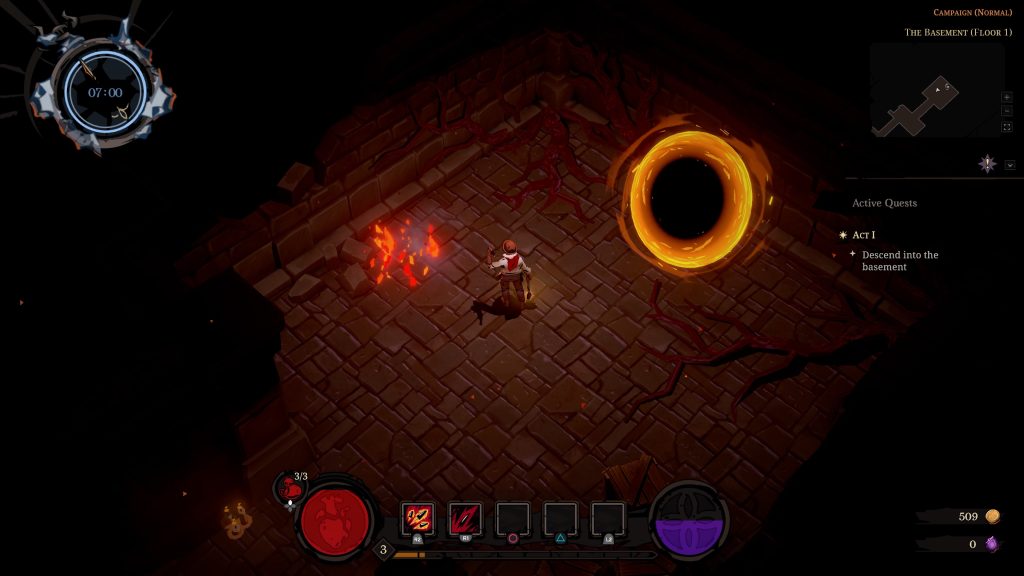
This mechanic gives Hell Clock a brutally fast pace. There is no time for slow, methodical discovery. Instead you find yourself constantly juggling between clearing out enemies for experience and loot and rushing toward the exit of each floor before the clock works against you.
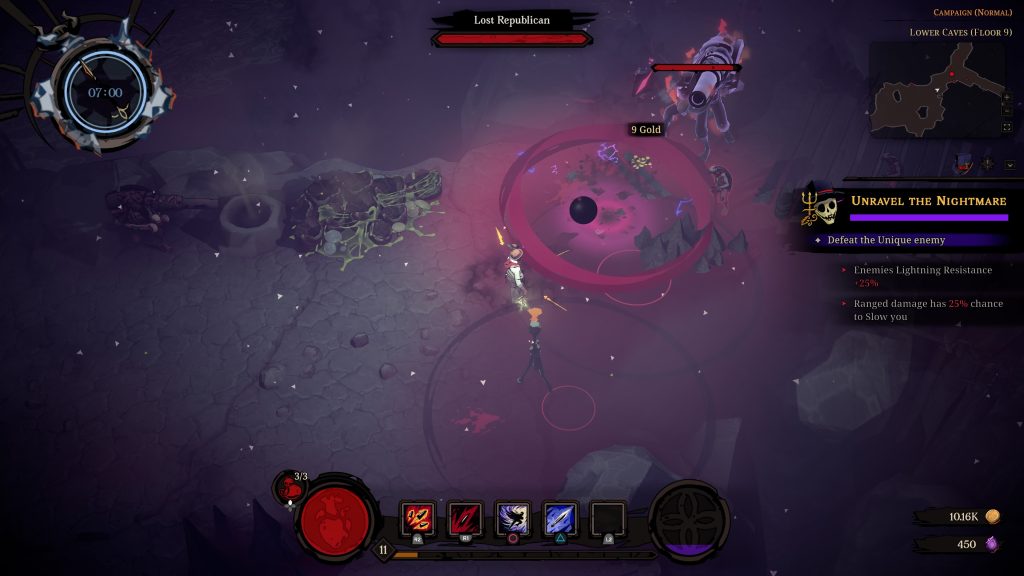

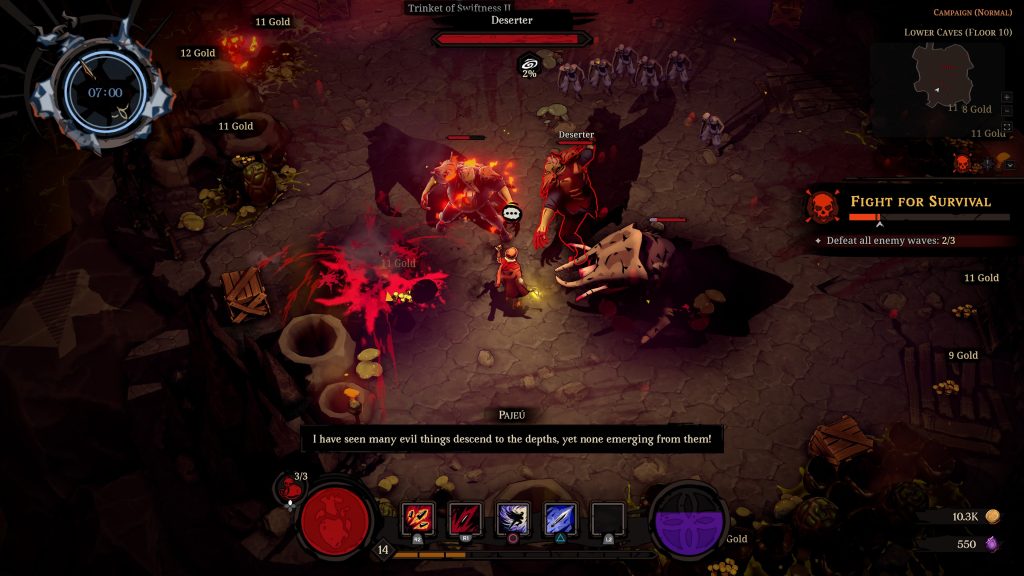
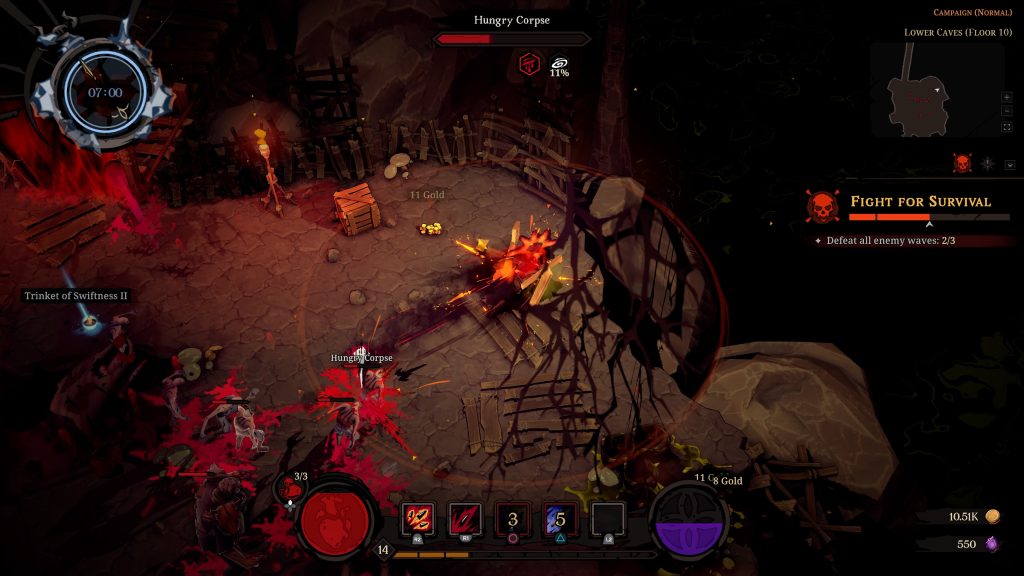
To the devs’ credit, Hell Clock has an impressive array of accessibility and difficulty options. Things like Time Stop (which stops the countdown for a little while) are a nice safety net for people new to the game, and Vengeance Mode gives you permanent power after each death, helping less experienced players keep up with the game’s escalating challenge. There’s also a Relaxed Mode where the time limit is removed entirely.
But ironically, it’s the disabling of the timer that arguably makes Hell Clock so compelling. Later enemies can make combat feel slow and repetitive, as without the constant pressure of the countdown their huge health pools often turn them into bona fide damage sponges. The Hell Clock itself is not just a gameplay modifier, it is the driving force behind the game momentum. It forces players to make the most of every second, making each fight tense and every decision count. Take away that pressure, and a lot of the game’s identity goes with it. That said, there’s one small design oversight in the interface: even when the timer is off, the on-screen indicator still takes up space.
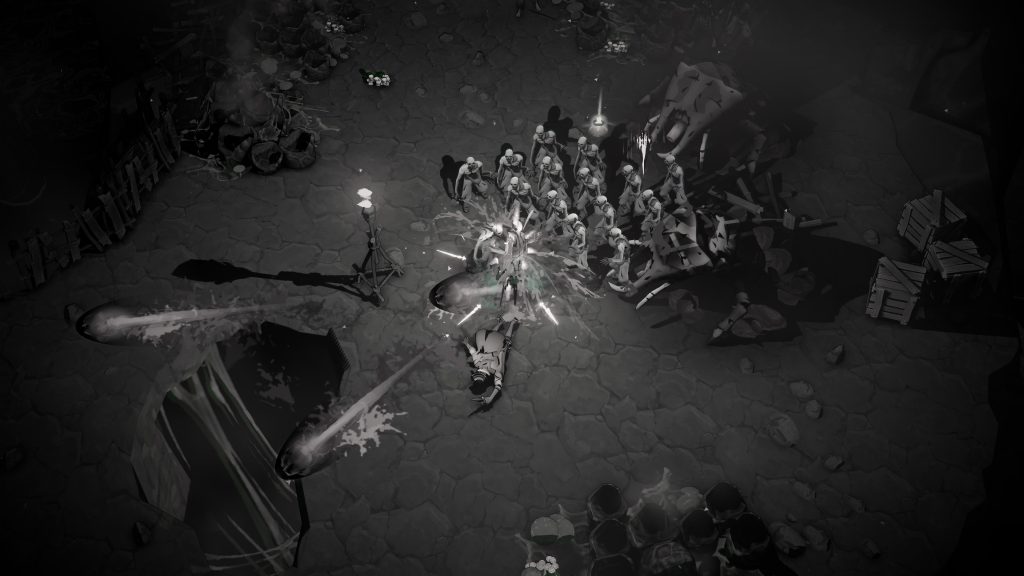

Amazing Depth in Builds and Progression
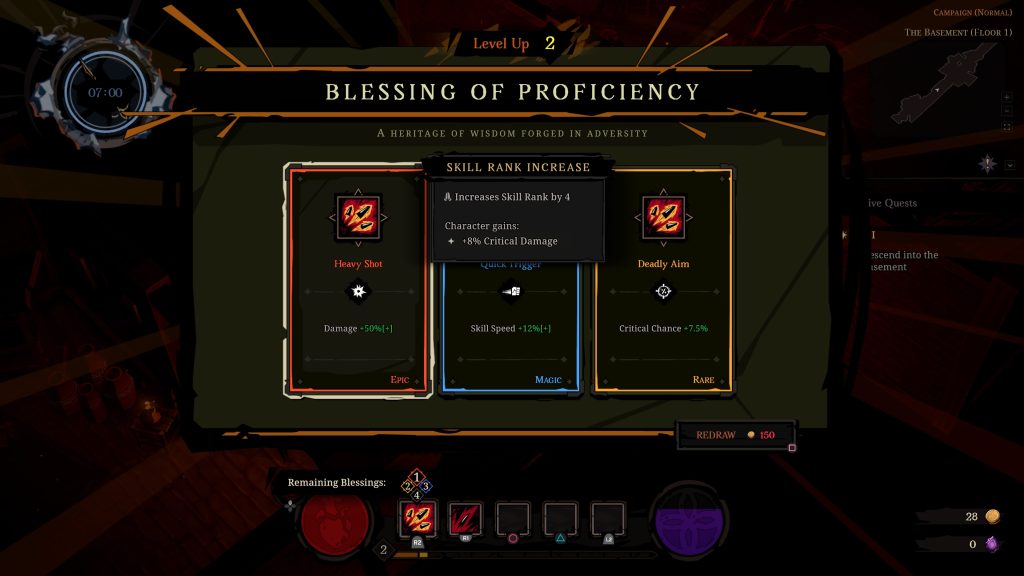
One of the biggest surprises in Hell Clock is the depth of the progression and build-crafting systems. Pajeú can equip up to five active abilities from a pool of over twenty unlockable skills to create a variety of playstyles. These include everything from rapid-fire gun techniques and homing missiles to spectacular powers that summon colossal bells from the heavens to crush entire groups of enemies.
In addition to its active skill system, Hell Clock gradually uncovers several interlocking layers of progression to make each run feel meaningful:
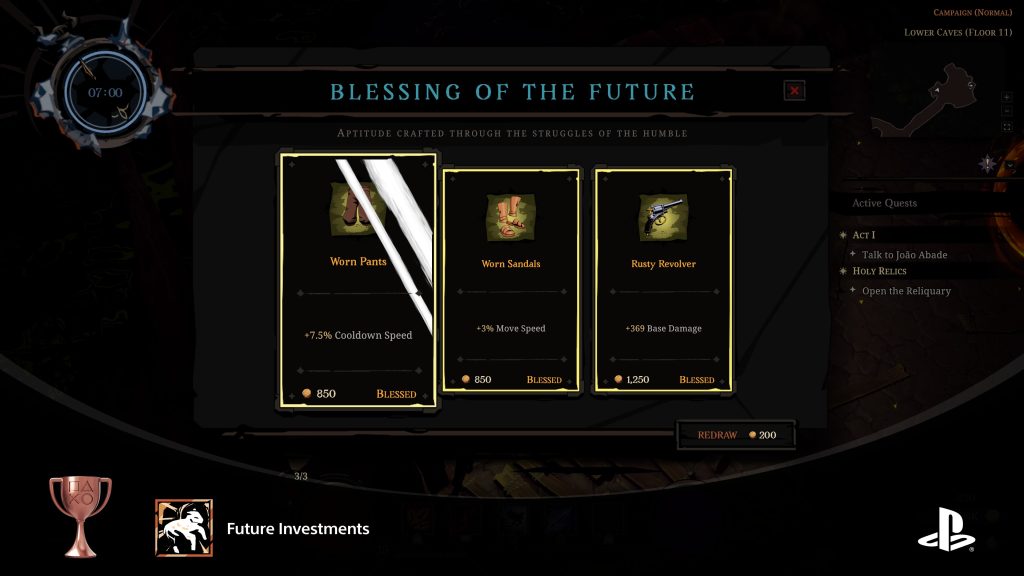
Trinkets & Blessings are temporary power-ups that can be acquired from defeating enemies or purchased from shrines during a run. They give instant bonuses, but they’re lost on death, further cementing the roguelite risk-reward cycle.

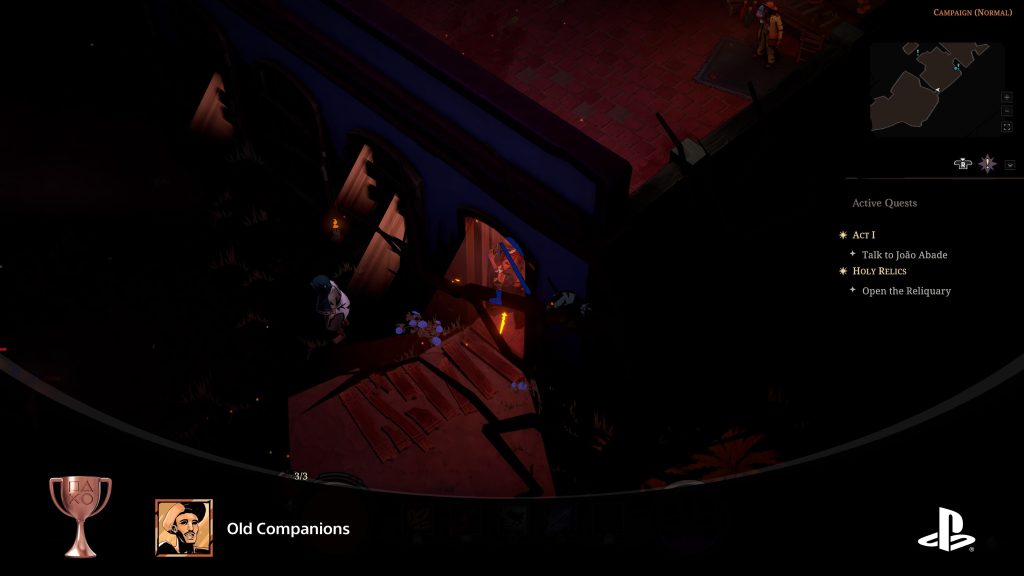
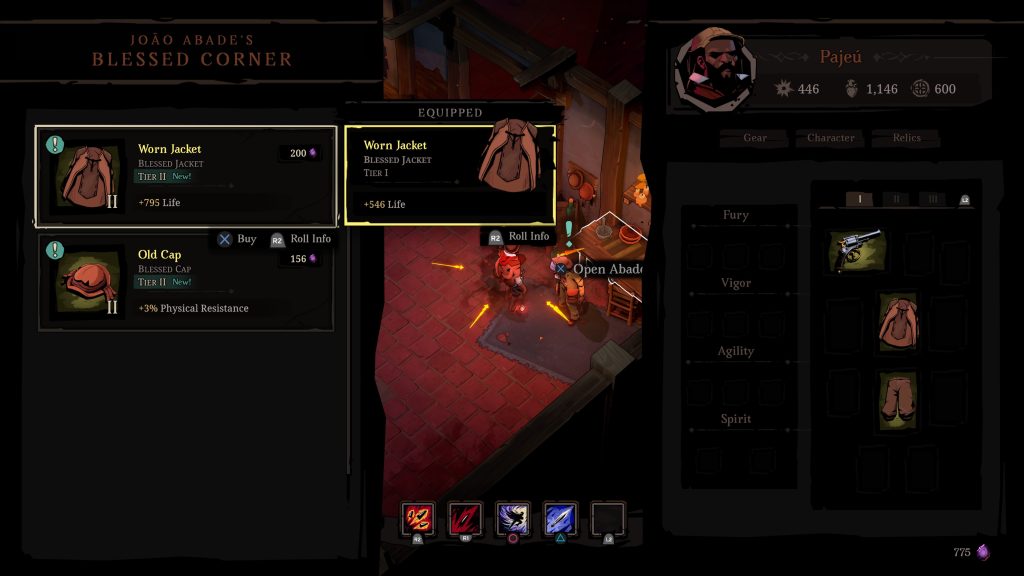
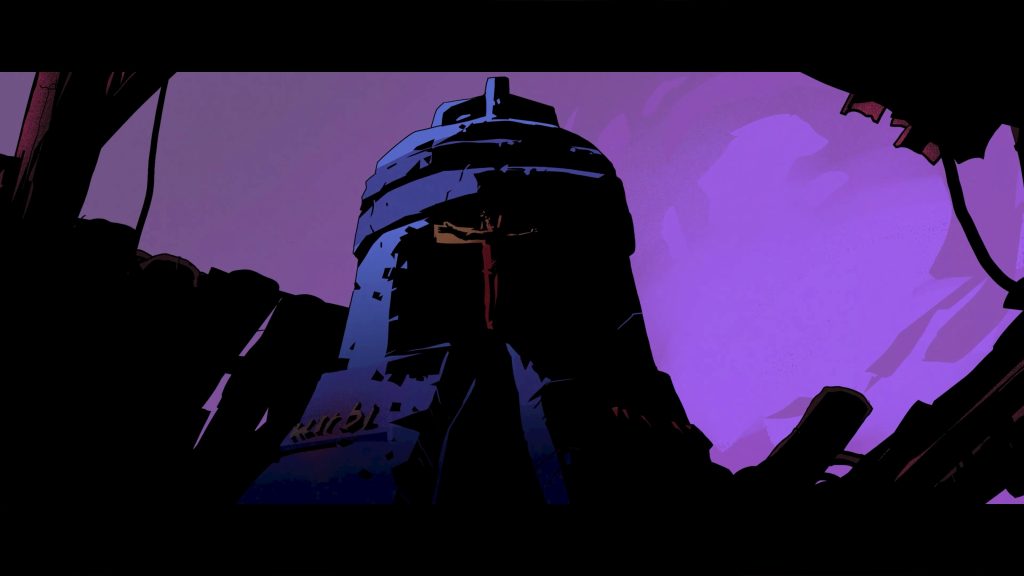
Relics, however, are the backbone of the game’s long-term customization. They have a great amount of variety and don’t feel repetitive even after many hours of play. Relics can fundamentally change the way your abilities work, instead of just increasing numerical stats, opening up the possibility for highly specialized and often creative builds.
There’s a further strategic element to handling these Relics. They’re stored in a grid-based backpack system that feels like a miniature puzzle in its own right, forcing players to constantly rearrange and optimize inventory space to fit their most valuable treasures. It’s a mechanic that will feel instantly familiar to fans of classic action RPGs. The only real downside is the random affix system, which is definitely a boon for replayability, but poor RNG can sometimes mean you’ll wait far too long for the combo of secondary modifiers your build actually needs.

A Dark, Living Canvas
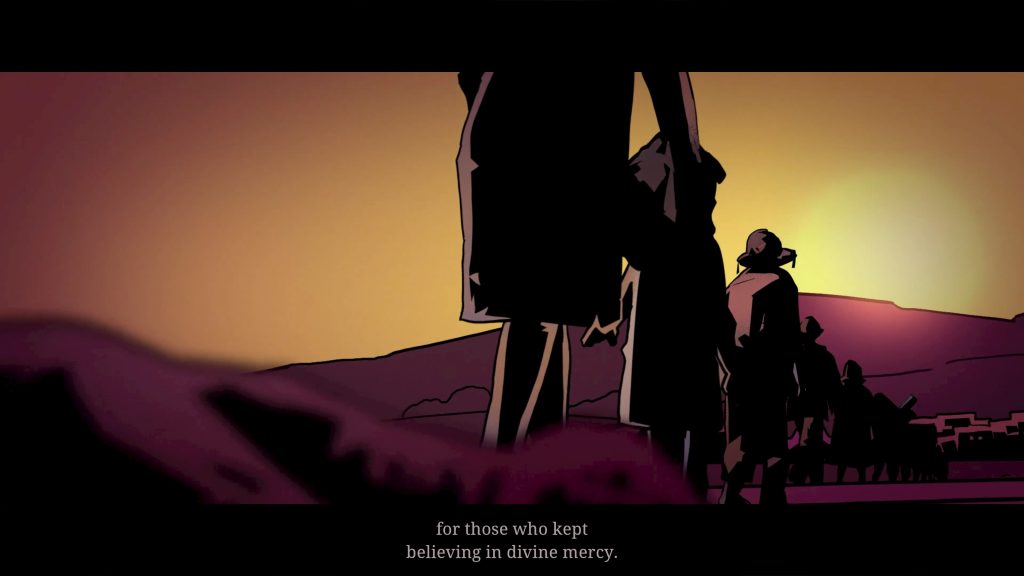
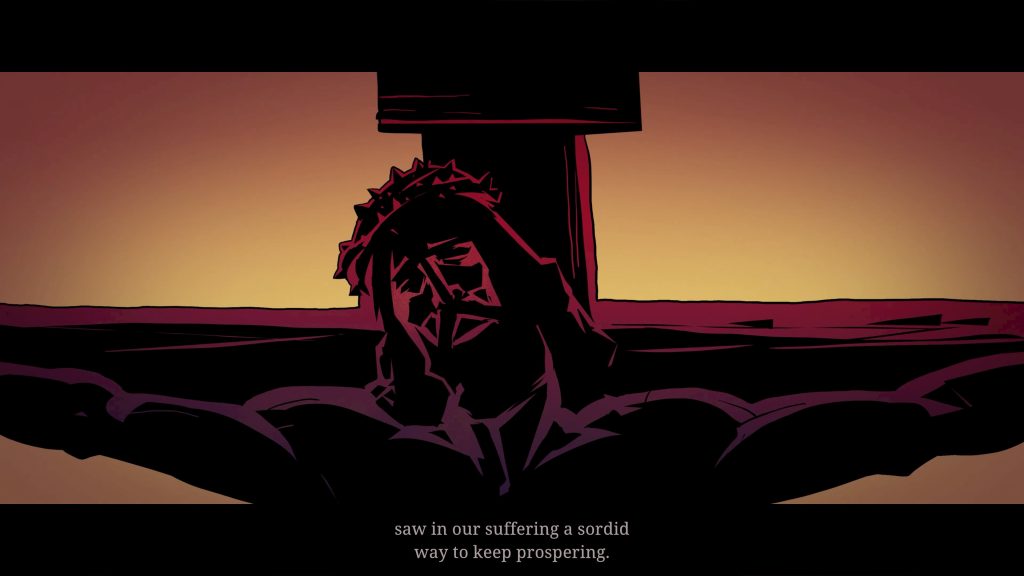
Artistically speaking, Hell Clock is a small masterpiece of stylized visual design. Its bold, cel-shaded look, with thick outlines and heavy shadows, is reminiscent of Darkest Dungeon and dark graphic novels. The juxtaposition of the muted, oppressive environments and flashes of vibrant magic, explosions and combat effects lends extraordinary visual energy to every encounter. Even Pajeú’s changing look, as you change hats, coats, gloves and the like adds a satisfying layer of visual progression that makes character customization feel rewarding beyond pure stats.
The soundtrack is perfect for this atmosphere. The score draws from traditional Brazilian instruments such as the Viola Sertaneja, and combines melancholy and heroism to reinforce the historical setting and the descent into supernatural horror. The music is always evocative, but the limited variety of tracks becomes more apparent as you play for longer periods, with some themes losing their impact.

Cracks in the Hour-Glass
Hell Clock is a very good game, but not quite as great as it could be, due to a few technical and design problems that are becoming harder and harder to overlook.
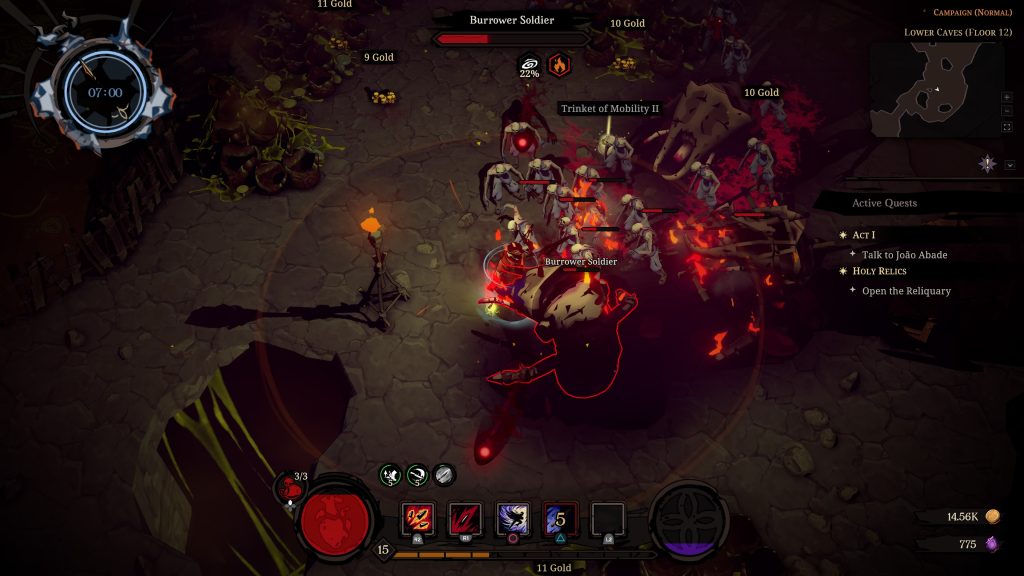
Fall in performance in later chapters: The opening act plays smoothly, even when pushed to higher graphical settings, but the performance takes a serious hit in later areas when the screen is crowded with enemies, particle effects and overlapping spell animations.
Not controller friendly: Combat feels great on controller, but that polish doesn’t translate to the game’s menus. It’s cumbersome to handle relics, upgrade abilities, and reorder gear when using the interface with analogue sticks or a D-pad.
Final Verdict
Ultimately, Hell Clock is an audacious, chaotic, and hugely entertaining experience. Rogue Snail has carved out a unique identity by blending the crushing weight of historical tragedy with the addictive gameplay loops of modern action RPGs and roguelites. The best news is that the game has a future. According to the developers’ posted roadmap, Hell Clock will get a steady stream of post-launch content, including free updates that will add a crafting system, new Constellations, smoother combat animations – such as shooting while moving – and other gameplay polish.
Hell Clock is certainly not perfect. Its late-game performance and controller-unfriendly user interface still need meaningful improvement in future patches. But those flaws are eclipsed by the thrill of experimenting with deadly character builds and trying to outrun the ever-ticking Hell Clock itself.
This review is based on the PS5 version
Score: 80/100


Seeing Double Review