

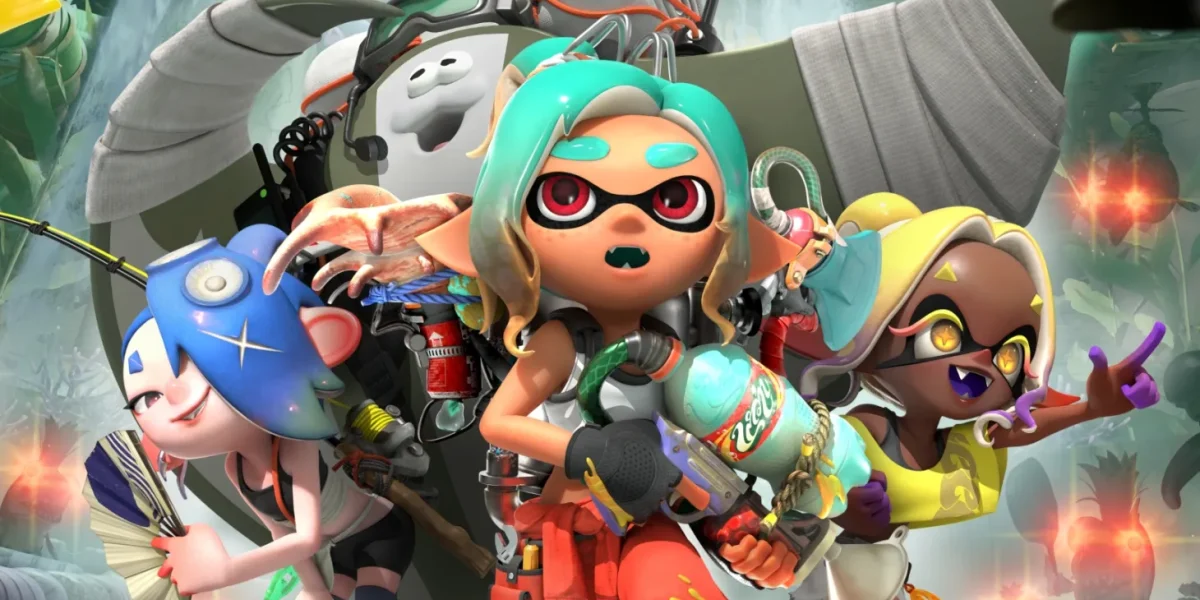

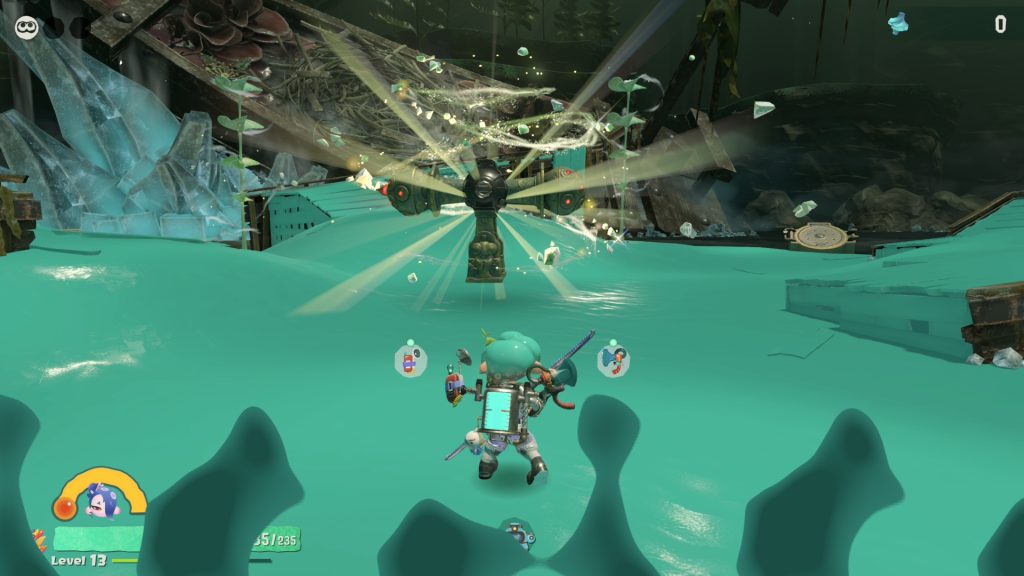
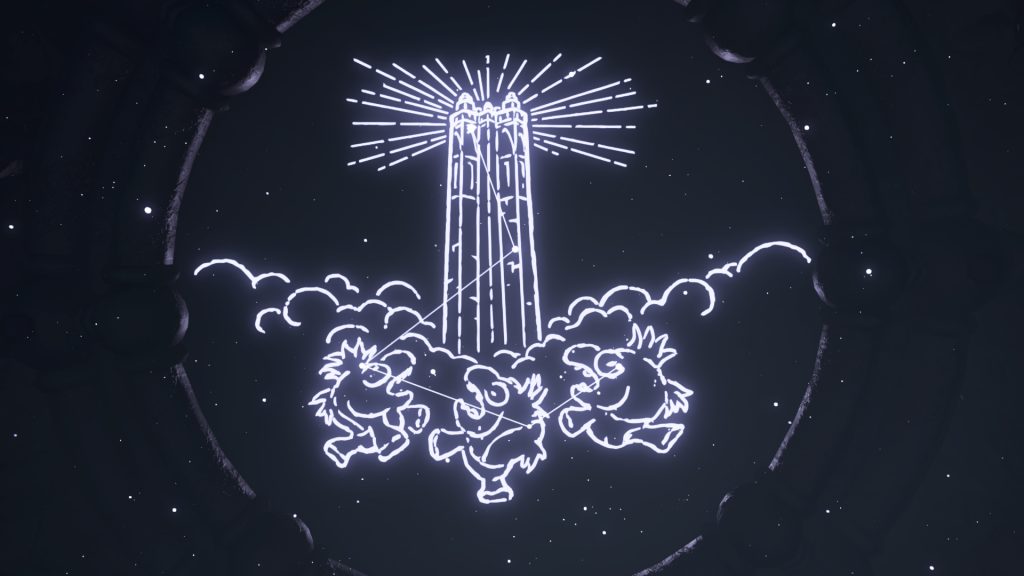
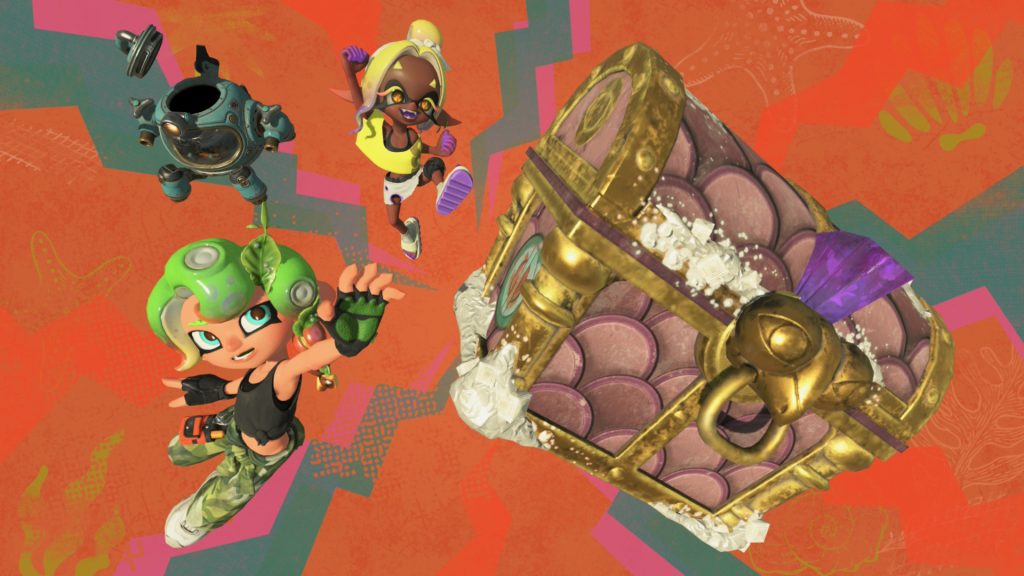
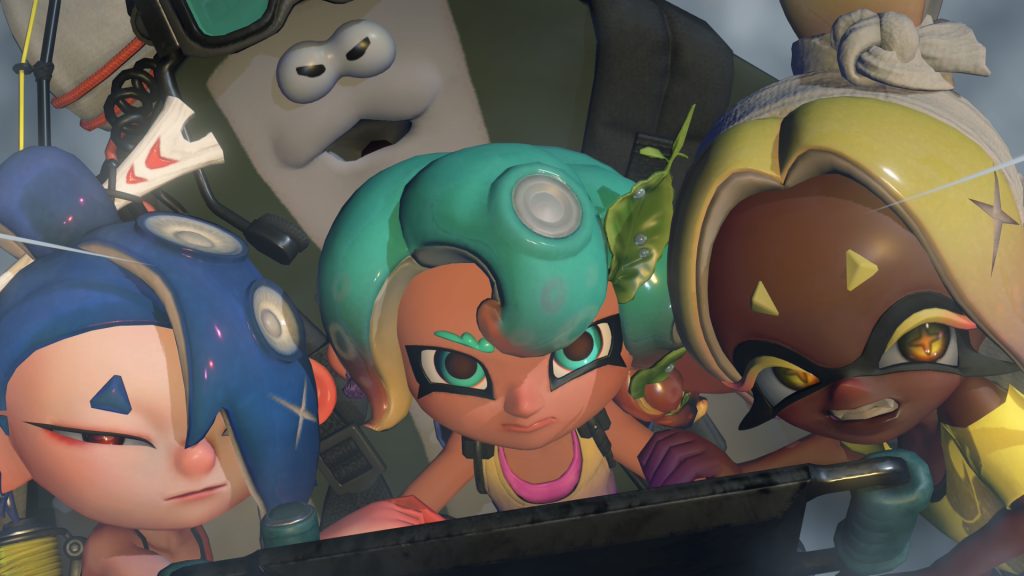
The plot of Splatoon Raiders begins with Shiver, Frye, Big Man, and their pilot going to a strange island, only to conclude with a helicopter accident. The story is set a month after the catastrophe and the players take on the position of the group’s mechanic, heading off on a quest to discover the secrets of the island while looking for its famous riches.
A Story to Serve Gameplay
It has a great setup, but at no time does the plot become one of the key reasons to keep playing. In fact, the story is more a vehicle to push the adventure along and present new elements. The gameplay has far more of an influence on the overall experience than the story does.
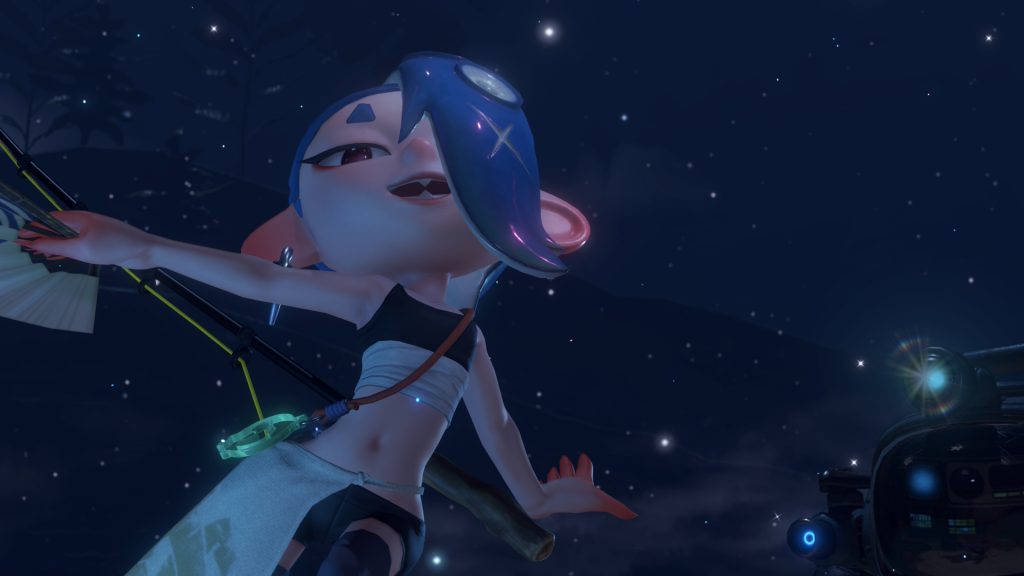
However, the character interactions work fairly well and maintain the unique humor that has always been part of the Splatoon series. The game also encourages players to understand more about its universe thru notes, newspapers and other pieces of writing strewn about the stages. Some of these are the story of someone who looked for the island’s wealth before you, while others provide more insight about the world of Splatoon, the clans that come with characters like Shiver, Frye, and Big Man, and the events of the main story. Players can also go back and read these entries again once they’ve collected them, so those that are into the lore can go back and read over them at their leisure.
The major problem though is the huge volume of talking in the initial hours. It really slows down the rhythm of the beginning and also delays when players can get into the game’s main gameplay adequately.
Slow to Start, Hard to Put Down
The flaws of Splatoon Raiders are mostly centered in the first hours of the game. It takes way too long to begin, and introducing people, teaching talents and explaining the many mechanisms is a bit much. There’s also a lot of dialogue, which often breaks up the pace, and doesn’t let the player feel like they’ve got a good amount of freedom from the outset. New skills are gained at a relatively gradual pace, so it takes a while to realize the full capabilities of the game’s gameplay mechanics.
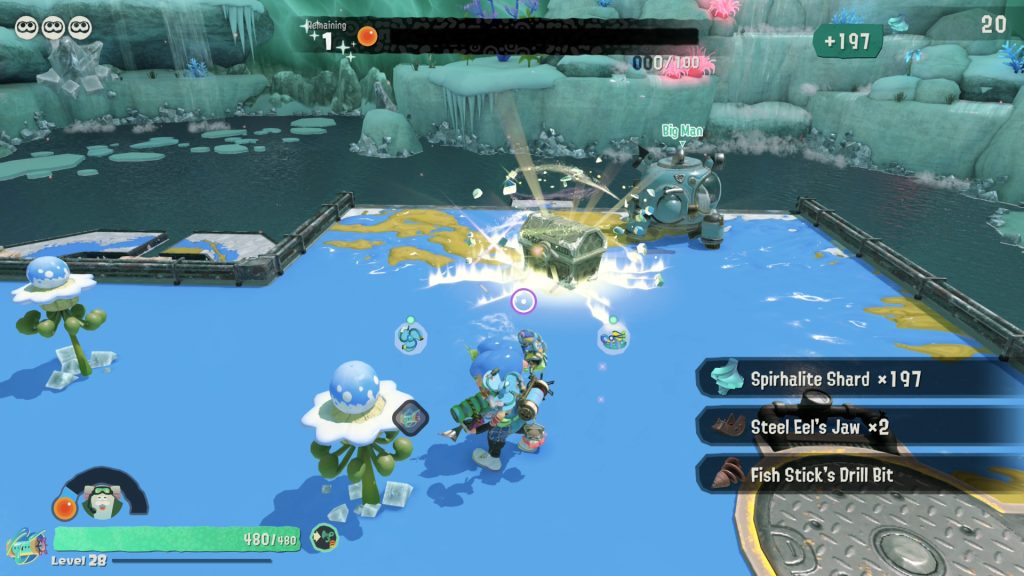
Luckily, this doesn’t go on for too long. But make it thru those first few hours and the quality of the experience definitely improves, the game’s biggest strength – its level design – finally coming into focus. Each section has its own personality and structure. The dungeons are much more than just basic passageways to your next objective. Many are based on one of the game’s gadgets, with challenges designed to tempt players to utilize that specific gadget in various situations. This technique allows each dungeon to have its own personality and rhythm, keeping the level design new throughout most of the trip.
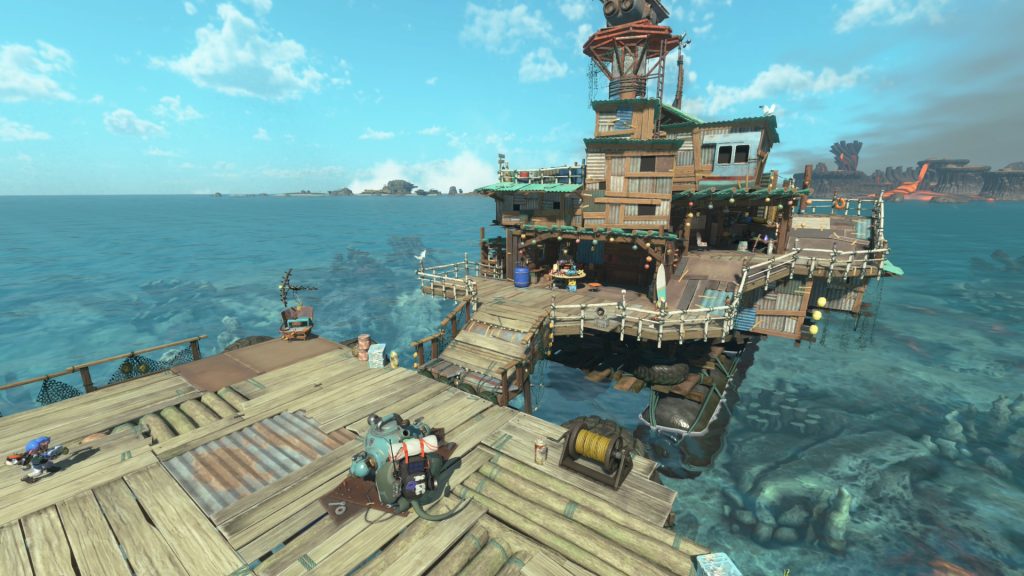
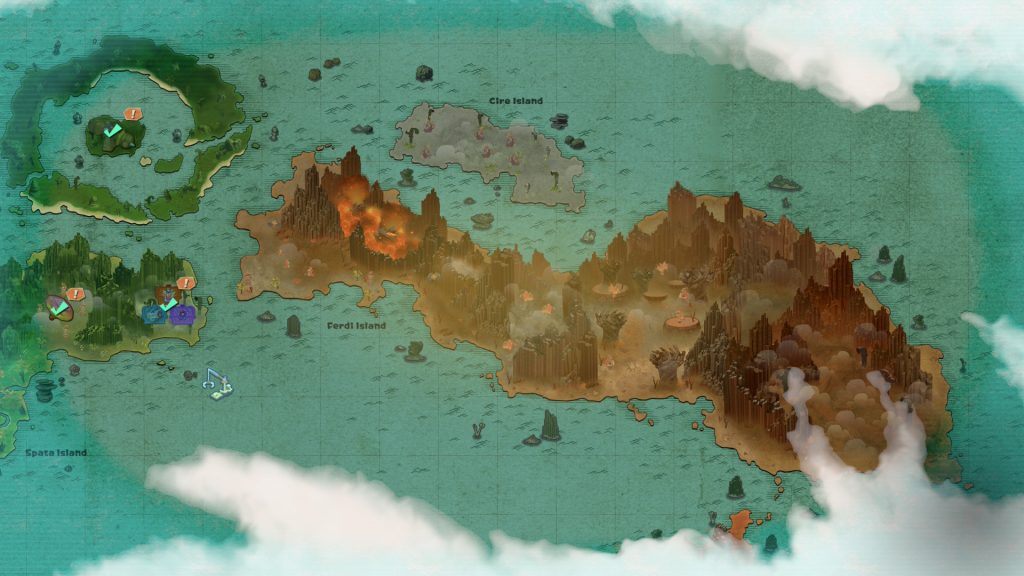
Another key strength is exploration Splatoon Raiders doesn’t always boil down dungeon finding to following a map marker. It sometimes gives the players tools like a compass and asks them to look about the area themselves instead. This makes the world feel like more than just a place to get from one objective to another and exploration becomes a fun aspect of the experience in and of itself.
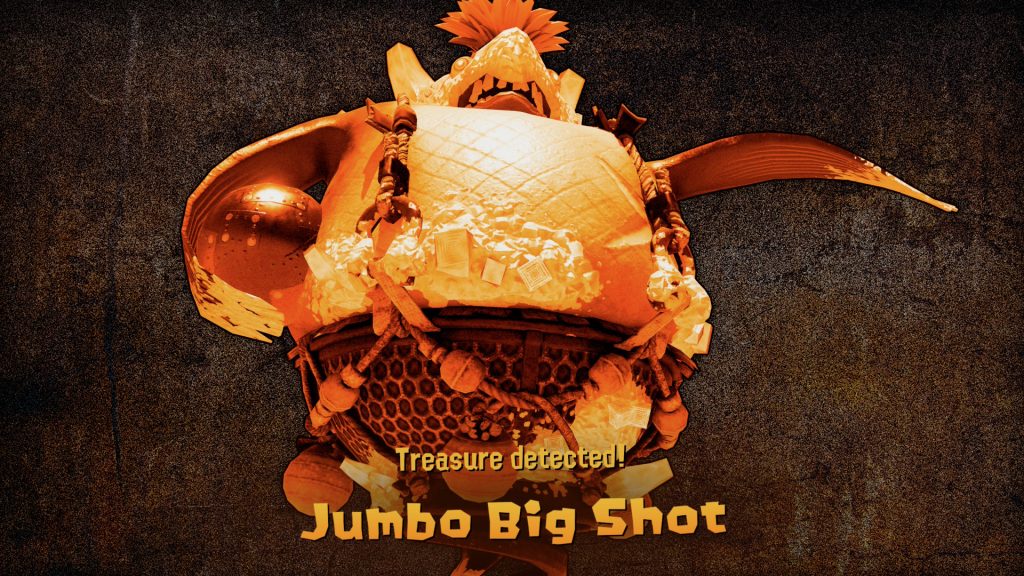
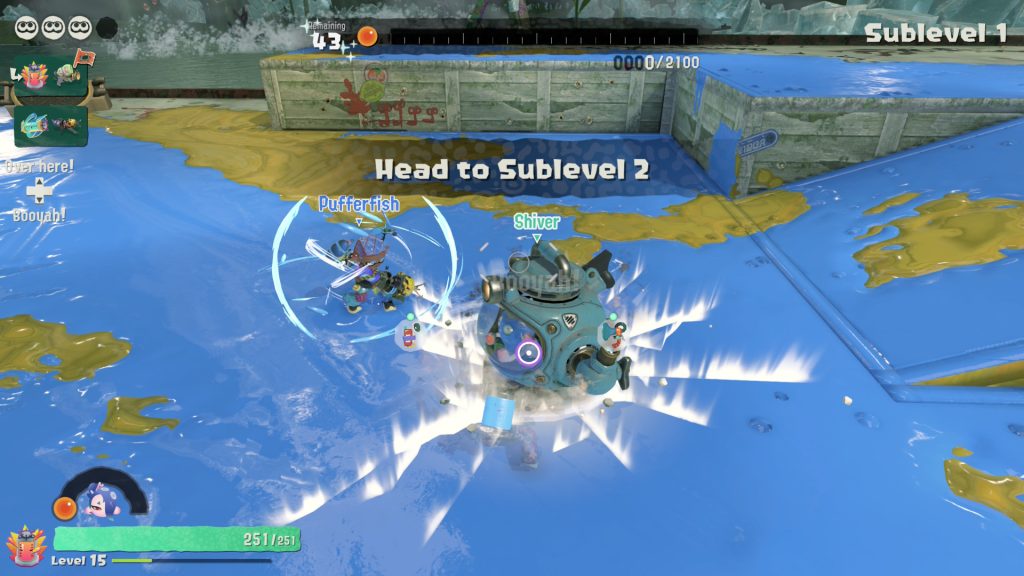
This variation continues over into battle as well. The possibility to utilize tanks with varied abilities and gadgets provides the players more choice to build the battle style they choose, and makes the customization more than just choosing a weapon. Add to it a good arsenal of weaponry including close-range options and a diversified enemy roster and the combat manages to avoid becoming repetitive even at the conclusion of the game. Boss fights are a highlight here as well. Each boss has its own design, attack patterns and unique identity, and the game never feels like it’s just repeating an old enemy with a bigger health bar. Those mini-bosses you fight throughout the stages? They come back as Elite enemies. It’s a smart choice, since it makes the game’s progression feel more natural and keeps the battle from feeling stale.
The level design is great, but the progression method doesn’t always feel satisfying. Some of the best rewards in the game are too late. For example, the very first five-star weapon is gained right before the climactic battle, and various crucial upgrade systems, including gadget component upgrades and the option to customize the power of five-star weapons, are unlocked only after finishing the story. So a lot of the RPG systems in the game only open up once the main adventure is basically over. If these elements had been implemented earlier, character advancement would have seemed more fulfilling, and experimenting with different builds during the campaign may have provided another relevant dimension to the experience.
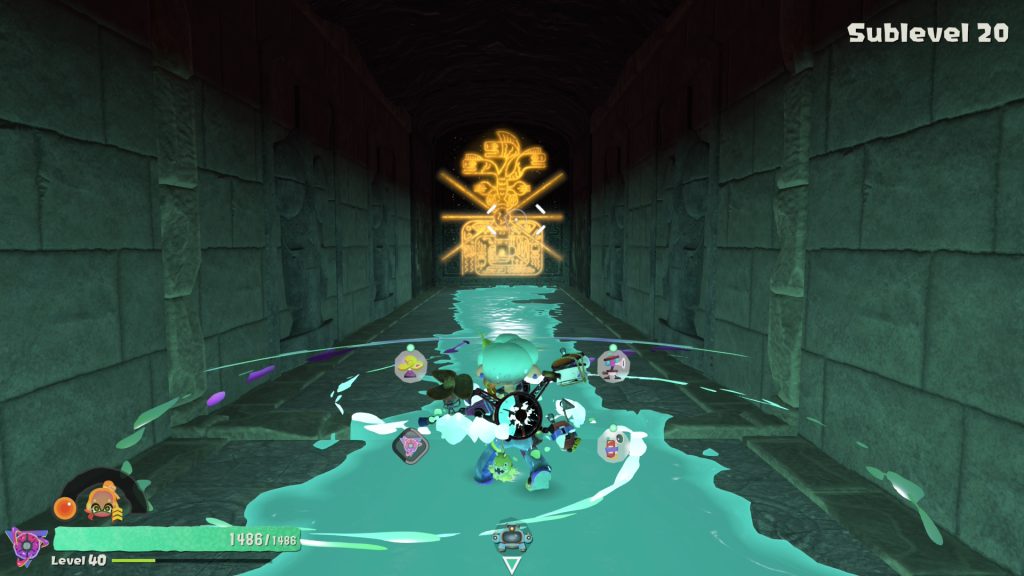
But the game is heavy on replayability. Increasing the difficulty doesn’t just make adversaries tougher or more numerous, it also provides higher rewards, providing players a real reason to replay stages they have already finished. Another great inclusion is the ability to call on other players to help, or join in on someone else’s mission. This adds replay value while making the tougher parts of the game more fluid, more accessible. Meanwhile, the system doesn’t evolve into a simple solution to avoid any challenge because of the cooldown before another help request can be sent.
Unfortunately, Splatoon Raiders can’t keep its rapid-fire pace throughout. The adventure is decently paced for the most part, but the last island drags its heels a bit, with objectives growing substantially longer. It’s extremely annoying when you fail one of these phases and have to begin it again from the start. Consequently, a portion that should have been the high point of the journey can occasionally seem more draining than exhilarating.
When Darkness Becomes the Best Canvas
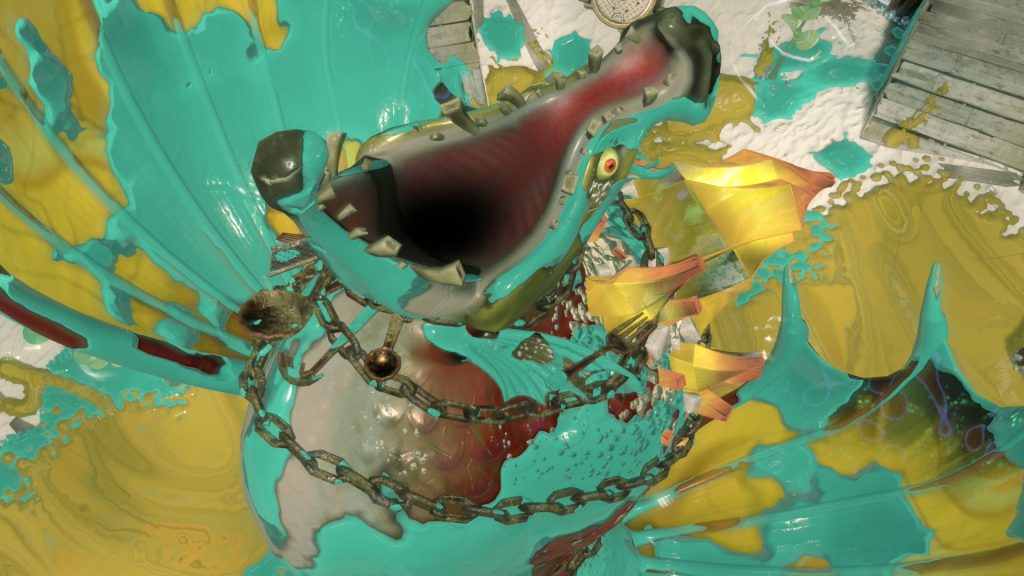
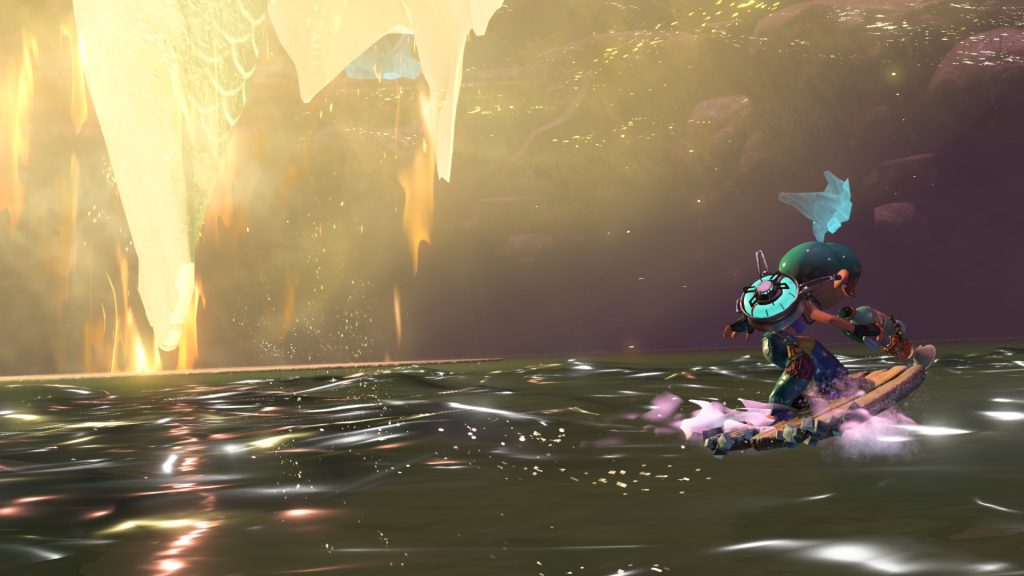
One of the most notable improvements that Splatoon Raiders brings to the table over Splatoon 3 lies in its art direction. The game keeps the colorful personality of the series, but this time color is not only a visual effect, but in some instances becomes part of the visual experience itself.
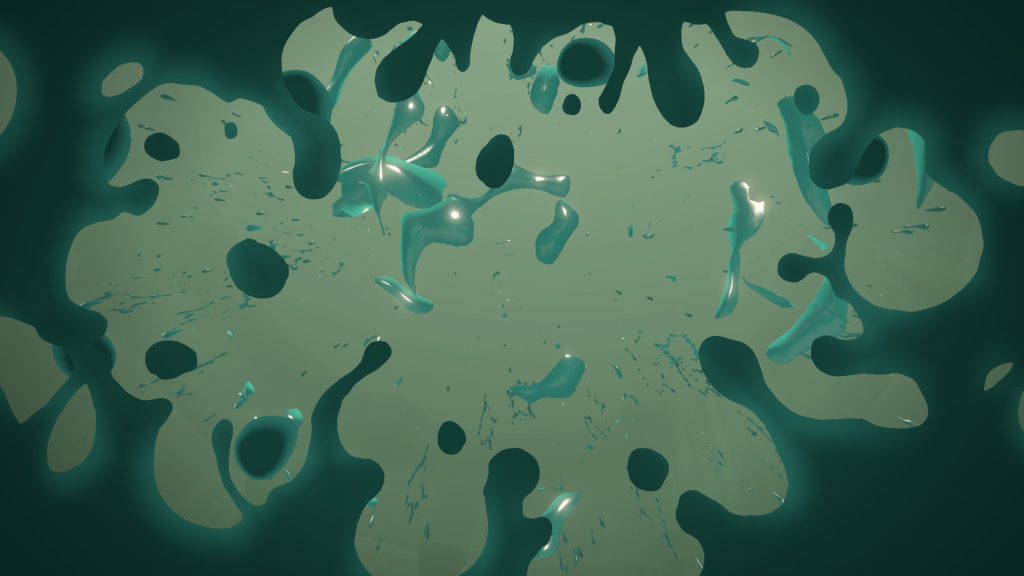
This is a great example of one of the last stages in the game, where players are engulfed in darkness, and every ink shot briefly illuminates areas of the scene. The way the colors bounce off the walls and surrounding surfaces produces a visual impact that is not only absolutely gorgeous to look at, but it also makes firing your weapons feel meaningfully different.
Overall, Splatoon Raiders manages to hold onto the series’ iconic visual style while taking a substantial step ahead from Splatoon 3, offering some of the most gorgeous and unforgettable images the franchise has seen to yet.
An Industry That Moved On; Splatoon Raiders Didn’t
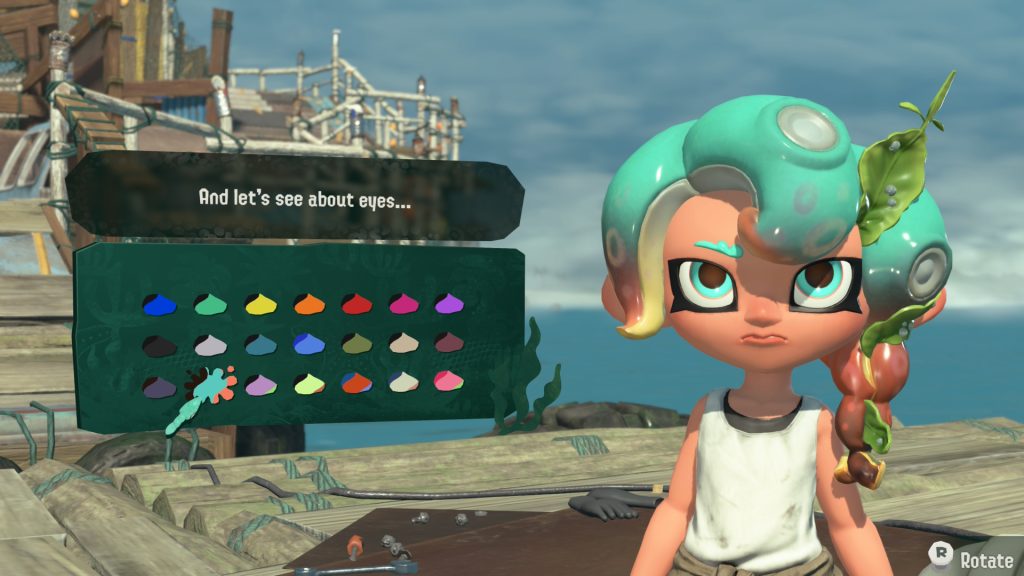
Splatoon Raiders has a surprising flaw in the way it deals with accessibility. While speech is a vital element for character introduction and advancing the plot ahead, there is no dialogue narration or other features that might make the experience more accessible to a wider range of players. The visually handicapped are given absolutely no method to fully follow character conversation, meaning they miss a major chunk of even the game’s relatively straightforward narrative. With accessibility features becoming a bigger priority in the gaming industry, the lack of a separate accessibility area in the Splatoon Raiders settings is a glaring problem.
Smooth Sailing, from start to finish
From a technological perspective, Splatoon Raiders performs incredibly well. I played the game docked and for a short while in portable mode on the Nintendo Switch 2 and had no major technical issues in either setup. The frame rate is consistently smooth and steady throughout, letting players to focus on the gameplay and level design without being distracted by performance issues.
The creators say that Motion Controls will also be offered from the very beginning for users who prefer that control method. At the same time, the feature can easily be off from the start via the settings. It’s a nice option that gives players the choice of customizing the experience to their liking, whether they want to aim with motion or continue with the classic controls.
Verdict
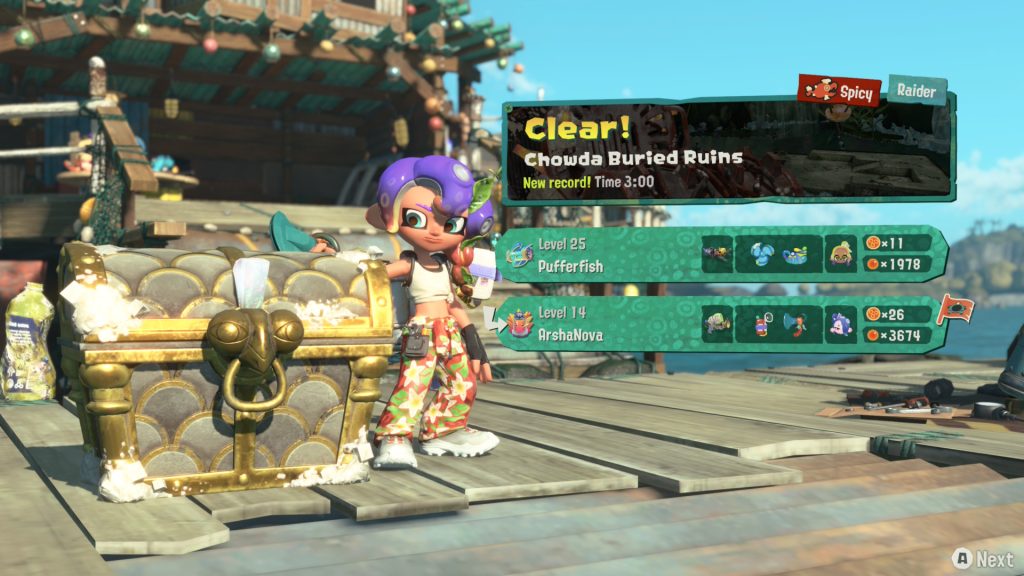
Despite the slow start, Splatoon Raiders eventually becomes a fun and engrossing experience. Creative level design, different dungeons, intriguing boss battles, fluid fighting, and excellent replay value make it one of the best spin-offs the Splatoon franchise has produced.
The most obvious problems are its bland tale, slow start, growth incentives that don’t pace well, extended end-game and no real accessibility options. But if you’ve never played a Splatoon game — or even a loot-driven shooter — then Splatoon Raiders might be one of the better entry points into the series.
This review is based on the Nintendo Switch 2 version
Score: 83/100

Other Articles
Microlandia Review
Midnight Moments Review